
Contents
Overview
Severe weather forecasting is the specialized discipline within meteorology dedicated to predicting hazardous atmospheric phenomena such as thunderstorms, tornadoes, hurricanes, blizzards, and extreme heat or cold. It involves a complex interplay of observational data, sophisticated numerical weather prediction models, and the expert interpretation of meteorologists. The goal is to provide timely and accurate warnings that can save lives and mitigate property damage. Unlike general weather forecasting, severe weather prediction focuses on the rapid development and localized intensity of extreme events, often requiring lead times of minutes to hours for the most dangerous phenomena like tornadoes. The field has seen dramatic advancements due to increased computing power, denser observational networks, and a deeper understanding of atmospheric dynamics, yet inherent uncertainties remain due to the chaotic nature of the atmosphere.
🎵 Origins & History
The formal study of weather, and by extension forecasting, gained traction in the 19th century with the development of the telegraph, allowing for the rapid collection of simultaneous weather observations across regions. Early efforts in severe weather forecasting were largely reactive, relying on eyewitness accounts and basic barometric readings. The integration of numerical weather prediction (NWP) models, initially crude but rapidly improving, provided a scientific basis for anticipating atmospheric conditions conducive to severe weather, moving forecasting from purely observational to predictive science.
⚙️ How It Works
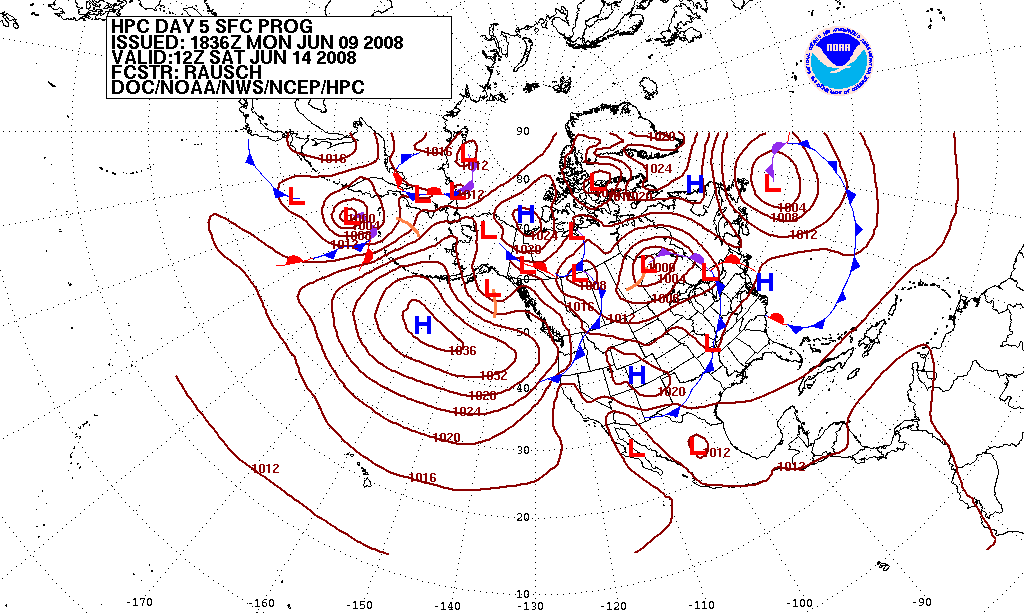
Severe weather forecasting hinges on a multi-layered approach. First, vast amounts of data are collected from sources like geostationary and polar-orbiting satellites, Doppler weather radar networks (e.g., the NEXRAD network), surface observation stations, and radiosonde launches. This observational data feeds into complex numerical weather prediction (NWP) models, such as the Global Forecast System (GFS) and the European Centre for Medium-Range Weather Forecasts (ECMWF) model. These models simulate atmospheric physics and dynamics to project future states. Meteorologists then analyze the model outputs, looking for key ingredients for severe weather: instability (high CAPE), moisture, lift, and vertical wind shear. They use pattern recognition, knowledge of mesoscale weather phenomena, and experience to refine forecasts, issue watches (indicating conditions are favorable) and warnings (indicating a severe event is imminent or occurring), and communicate risks through various alert systems.
📊 Key Facts & Numbers
The lead time for tornado warnings has increased dramatically, from an average of less than 5 minutes in the 1980s to over 15 minutes today, a testament to advancements in radar and modeling. The U.S. experiences an average of over 1,200 tornadoes annually, with some years seeing significantly more, such as the record 1,573 in 2011. Hurricane forecasting has also improved; the average track forecast error for a 3-day forecast has decreased by over 70% since 1990. Globally, severe weather events cause billions of dollars in damage annually, with the 2011 Super Outbreak alone causing an estimated $11 billion in damages. The National Oceanic and Atmospheric Administration (NOAA) operates over 160 Doppler radar systems across the United States, covering over 95% of the population. The ECMWF model, a leading global NWP system, runs at resolutions of approximately 9 kilometers, processing petabytes of data daily.
👥 Key People & Organizations
Key figures in severe weather forecasting include Charles K. Chappell, who developed the Chappell Index for severe thunderstorm potential, and T. Theodore Fujita, the "father of modern tornado studies," who developed the Fujita Scale (F-scale) for rating tornado intensity. Organizations like the National Oceanic and Atmospheric Administration (NOAA) in the U.S., through its National Weather Service (NWS), Storm Prediction Center (SPC), and National Hurricane Center (NHC), are central to operational forecasting. Internationally, bodies like the World Meteorological Organization (WMO) set standards and facilitate global cooperation. Research institutions such as the National Severe Storms Laboratory (NSSL) and universities worldwide contribute vital research into storm dynamics and forecasting techniques. Private sector companies like The Weather Company (IBM) and AccuWeather also play significant roles in disseminating forecasts and developing specialized prediction tools.
🌍 Cultural Impact & Influence
Severe weather forecasting has profoundly shaped public safety initiatives and emergency management. The ability to predict events like hurricanes and tornadoes has led to the development of robust warning systems, evacuation protocols, and building codes designed to withstand extreme conditions. Media coverage of severe weather events, often featuring dramatic footage and expert analysis from meteorologists like Jim Cantore, has raised public awareness and fostered a culture of preparedness. The visual representation of storm data, from radar loops to storm tracks, has become a staple of news broadcasts. Furthermore, the constant challenge of predicting chaotic atmospheric behavior has driven innovation in computing, data assimilation, and scientific visualization, influencing fields beyond meteorology. The emotional resonance of severe weather—its destructive power and the human stories of survival—also fuels a cultural fascination, evident in documentaries, films, and public discourse.
⚡ Current State & Latest Developments
Current efforts in severe weather forecasting are focused on improving the accuracy and lead time of warnings, particularly for rapidly developing phenomena like tornadoes and flash floods. The implementation of phased array radar technology promises faster scanning and more detailed storm information. Advancements in artificial intelligence and machine learning are being explored to enhance pattern recognition in model data and observational feeds, potentially identifying precursors to severe events earlier. Ensemble forecasting, running multiple NWP models with slightly varied initial conditions, is becoming more sophisticated, providing a better grasp of forecast uncertainty and probability. The NOAA Hazardous Weather Testbed serves as a crucial bridge between research and operations, testing new forecasting tools and techniques in a simulated operational environment. Collaboration between national meteorological services, academia, and the private sector is intensifying to share data and expertise.
🤔 Controversies & Debates
A persistent controversy revolves around the balance between issuing too many false alarms (leading to public complacency) and missing actual severe events (leading to loss of life and property). The inherent chaotic nature of the atmosphere means perfect prediction is impossible, leading to debates about acceptable forecast accuracy and the communication of uncertainty. The attribution of specific weather events to climate change is another contentious area; while the overall trend suggests an increase in the frequency and intensity of some severe weather types, definitively linking any single event to global warming remains scientifically challenging and politically charged. Furthermore, the increasing reliance on automated forecasting systems raises questions about the diminishing role of human forecaster intuition and experience, and the potential for algorithmic biases to affect warning dissemination.
🔮 Future Outlook & Predictions
The future of severe weather forecasting points towards even greater precision and longer lead times, driven by several key advancements. Next-generation radar systems, such as NOAA's Next Generation Radar (NEXRAD) Information Dissemination Service (NIDS) upg
Key Facts
- Category
- science
- Type
- topic