
Contents
- 🎵 Origins & History
- ⚙️ How It Works
- 📊 Key Facts & Numbers
- 👥 Key People & Organizations
- 🌍 Cultural Impact & Influence
- ⚡ Current State & Latest Developments
- 🤔 Controversies & Debates
- 🔮 Future Outlook & Predictions
- 💡 Practical Applications
- 📚 Related Topics & Deeper Reading
- Frequently Asked Questions
- References
- Related Topics
Overview
The genesis of the air force as a distinct military entity is inextricably linked to the dawn of aviation itself. Early pioneers like the Wright brothers, who achieved the first sustained flight in 1903, laid the theoretical and practical groundwork. Nations quickly recognized the military potential, with the Italian army conducting the first aerial reconnaissance mission over Libya in 1911. World War I, however, was the crucible where air forces truly forged their identity. Initially used for observation, aircraft rapidly evolved into fighters and bombers, leading to the establishment of dedicated air services. The British Royal Air Force (RAF), formed in 1918 by merging the Royal Flying Corps and the Royal Naval Air Service, is often cited as the world's first independent air force. This move by the UK signaled a paradigm shift, acknowledging air power as a separate and vital domain of warfare, distinct from land and sea.
⚙️ How It Works
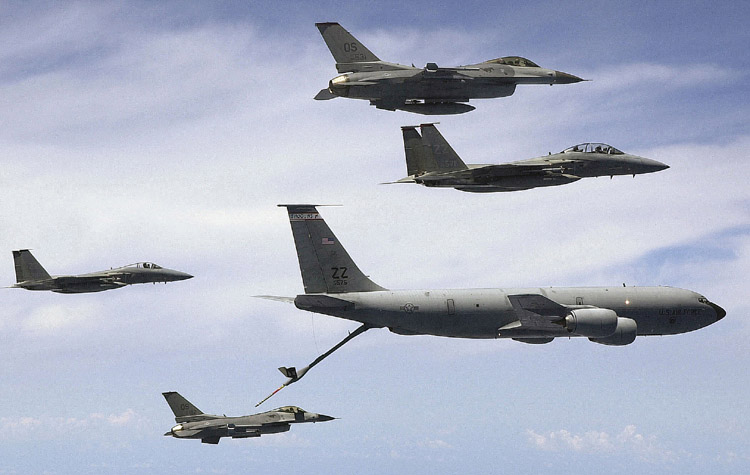
At its core, an air force operates a diverse fleet of aircraft to achieve strategic objectives. Fighter aircraft, such as the F-22 Raptor and Su-57, are designed for air-to-air combat, aiming to establish air superiority. Bombers, like the B-29 Superfortress of WWII or the modern B-2 Spirit, are tasked with delivering ordnance over long distances. Transport aircraft, exemplified by the C-130 Hercules, facilitate troop and equipment movement, while helicopters offer versatile roles in troop insertion, medical evacuation, and close air support. Beyond aircraft, air forces command integrated air defense systems, including Patriot missile batteries and S-400 systems, to protect airspace and neutralize enemy aerial threats. This complex interplay of platforms and systems is orchestrated by sophisticated command and control networks, often leveraging satellite communications and AI for real-time battlefield awareness.
📊 Key Facts & Numbers
Globally, there are over 100 distinct national air forces, with the United States Air Force (USAF) boasting the largest inventory, estimated at over 5,000 aircraft in active service as of 2023. The Russian Aerospace Forces and the People's Liberation Army Air Force (PLAAF) of China are the next largest in terms of fleet size and operational capability. Annual global military spending on air power consistently exceeds $200 billion USD, with major powers investing heavily in next-generation fighter jets, unmanned aerial vehicles (UAVs), and advanced electronic warfare capabilities. The average age of aircraft in many Western air forces is approaching 20 years, driving significant investment in modernization programs, with new fighter programs like the B-21 Raider costing upwards of $700 million per unit. The global market for military aircraft is projected to reach $100 billion by 2028.
👥 Key People & Organizations
Key figures in the development of air forces include Billy Mitchell, an American general who controversially advocated for an independent air force and demonstrated the vulnerability of battleships to aerial attack in the 1920s. Douglas MacArthur and George Marshall were instrumental in shaping U.S. Army Air Forces doctrine during World War II. Post-war, figures like Curtis LeMay led the USAF's strategic bombing campaigns and nuclear deterrence efforts. Major organizations include national defense ministries, NATO's Air Command and Control System, and international aerospace corporations like Boeing, Airbus, Lockheed Martin, and BAE Systems, which design and manufacture the advanced platforms air forces rely upon.
🌍 Cultural Impact & Influence
The cultural resonance of air forces is profound, permeating cinema, literature, and popular imagination. Films like 'Top Gun' (1986) and 'Top Gun: Maverick' (2022) have cemented the image of the ace fighter pilot as a heroic archetype, while documentaries explore the strategic impact of aerial campaigns in conflicts from World War II to modern drone warfare. The iconic imagery of fighter jets performing daring maneuvers, the thunderous roar of bombers, and the sleek design of advanced aircraft have inspired generations. Air shows, such as the EAA AirVenture Oshkosh, draw millions of enthusiasts annually, celebrating the engineering marvels and operational prowess of air power. The very concept of 'air power' has become a metaphor for decisive, swift, and technologically superior force projection, influencing how nations perceive and wield military strength.
⚡ Current State & Latest Developments
The current landscape of air forces is defined by rapid technological advancement and evolving geopolitical threats. The proliferation of unmanned aerial vehicles (UAVs), or drones, has revolutionized reconnaissance and strike capabilities, with nations like Israel and Turkey becoming major exporters of drone technology. The development of fifth-generation fighter jets, such as the F-35 Lightning II, emphasizes stealth, sensor fusion, and networked operations. Cyber warfare is increasingly integrated into air operations, targeting command and control systems and adversary networks. Major powers are also investing in hypersonic weapons and advanced electronic warfare suites, aiming to maintain a technological edge. The conflict in Ukraine has highlighted the critical role of air power, even in the face of sophisticated ground-based air defenses, and has spurred innovation in drone warfare and electronic countermeasures.
🤔 Controversies & Debates
The development and deployment of air forces are not without significant controversy. The ethical implications of drone strikes, particularly regarding civilian casualties and accountability, remain a contentious issue, as debated by organizations like the ACLU. The immense cost of modern air power, with programs like the F-35 program exceeding original budgets by hundreds of billions of dollars, draws criticism for diverting resources from other societal needs. The doctrine of strategic bombing, famously employed by the USAAF in World War II and later by the RAF, is debated for its effectiveness and its devastating impact on civilian populations. Furthermore, the potential for an arms race in advanced aerial technologies, including hypersonic missiles and AI-enabled autonomous weapons, raises concerns about global stability and the future of warfare.
🔮 Future Outlook & Predictions
The future of air forces points towards increased automation, artificial intelligence, and the integration of manned and unmanned platforms. Concepts like 'Loyal Wingman' systems, where autonomous drones operate in conjunction with manned fighters, are being actively developed by the RAAF and USAF. Hypersonic flight, capable of evading current missile defense systems, is a major focus for China, Russia, and the US. The increasing sophistication of cyber and electronic warfare will necessitate more resilient and adaptable air power. Furthermore, the potential for space-based assets to play a greater role in aerial warfare, from surveillance to directed energy weapons, is a growing consideration. The ability to rapidly adapt to new threats and integrate emerging technologies will be paramount for future air force effectiveness.
💡 Practical Applications
Air forces have direct practical applications far beyond combat. Search and rescue operations rely heavily on helicopters and transport aircraft for rapid deployment to remote or disaster-stricken areas. Disaster relief efforts utilize air transport to deliver essential supplies, medical personnel, and equipment. Aerial firefighting, using specialized water-dropping aircraft, is crucial for combating wildfires. Geospatial intelligence gathering, through reconnaissance aircraft and satellites, supports everything from environmental monitoring to urban planning. Furthermore, air forces often provide air traffic control services in remote regions and contribute to national infrastructure development through aerial surveying and construction support. The development of advanced avionics and aerodynamic principles by military aviation has also spurred innovation in the commercial aviation sector.
Key Facts
- Year
- 1918 (formal establishment of first independent air force)
- Origin
- Global (evolved from multiple nations' aerial capabilities)
- Category
- technology
- Type
- concept
Frequently Asked Questions
What is the primary role of an air force?
The primary role of an air force is to conduct aerial warfare. This encompasses achieving air superiority, which means controlling the skies, carrying out strategic and tactical bombing missions against enemy targets, and providing essential support to land and naval forces. This support often includes vital aerial reconnaissance to gather intelligence and close air support to directly assist ground troops in combat operations.
How did air forces evolve from early aviation?
The evolution began with early aviation experiments by figures like the Wright brothers in the early 20th century. Nations quickly saw military potential, with initial uses in reconnaissance during conflicts like the Italo-Turkish War (1911). World War I was a critical period where aircraft roles expanded dramatically to include fighters and bombers, leading to the formal establishment of dedicated air services. The RAF's formation in 1918 marked a pivotal moment, recognizing air power as a distinct and independent domain of warfare.
What are the main types of aircraft operated by air forces?
Air forces operate a wide array of aircraft tailored to specific missions. Fighter jets, such as the F-35 Lightning II, are designed for air-to-air combat and air superiority. Bombers, like the B-2 Spirit, are built for long-range strike missions. Transport aircraft, such as the C-130 Hercules, are crucial for logistics and troop deployment. Additionally, specialized aircraft for reconnaissance, electronic warfare, refueling, and training are integral components of a modern air force's inventory.
What is the significance of air superiority?
Air superiority is the degree of dominance in the air battle of one force over another that permits the conduct of operations by one force and its land, sea, and air components in any desired degree and with greater freedom from interference than is possible for the opposing force. Achieving air superiority is often a prerequisite for successful ground and naval operations, as it allows friendly forces to operate with reduced risk from enemy air attack and enables effective reconnaissance and bombing missions against enemy positions.
What are the ethical concerns surrounding modern air forces?
Modern air forces face significant ethical debates, particularly concerning the use of unmanned aerial vehicles (UAVs) for targeted strikes, often referred to as drone warfare. Questions arise about civilian casualties, the psychological impact on operators, and the potential for autonomous weapons systems to make life-or-death decisions without direct human intervention. The immense financial investment in advanced air power programs also sparks debate about resource allocation and priorities within national budgets.
How are air forces adapting to new technologies like AI and drones?
Air forces are rapidly integrating new technologies to maintain a strategic edge. AI is being explored for enhanced data analysis, predictive maintenance, and autonomous decision-making in complex scenarios. UAVs are increasingly deployed in swarms and 'loyal wingman' configurations, operating alongside manned aircraft to extend sensor range, provide electronic warfare support, or conduct strike missions. This shift towards manned-unmanned teaming aims to increase operational flexibility, reduce risk to human pilots, and enhance overall combat effectiveness.
What is the future trajectory for air forces?
The future of air forces is likely to be characterized by increased autonomy, advanced networking, and the development of hypersonic capabilities. Expect greater integration of AI in command and control, as well as in the operation of unmanned systems. Hypersonic weapons, capable of traveling at speeds exceeding Mach 5, are a significant focus for major powers, posing new challenges for existing air defense systems. The concept of multi-domain operations, where air, space, cyber, and land forces are seamlessly integrated, will also become more prevalent, demanding highly adaptable and interconnected air power.