
Contents
- 🎯 Introduction to the Big Five
- 📊 The Five Personality Traits
- 👥 History and Development
- 📈 Applications and Implications
- 🤝 Criticisms and Controversies
- 📊 Research and Validation
- 👫 Relationships and Teamwork
- 📚 Future Directions and Implications
- 👥 Key Researchers and Contributors
- 📊 Practical Applications and Assessments
- Frequently Asked Questions
- References
- Related Topics
Overview
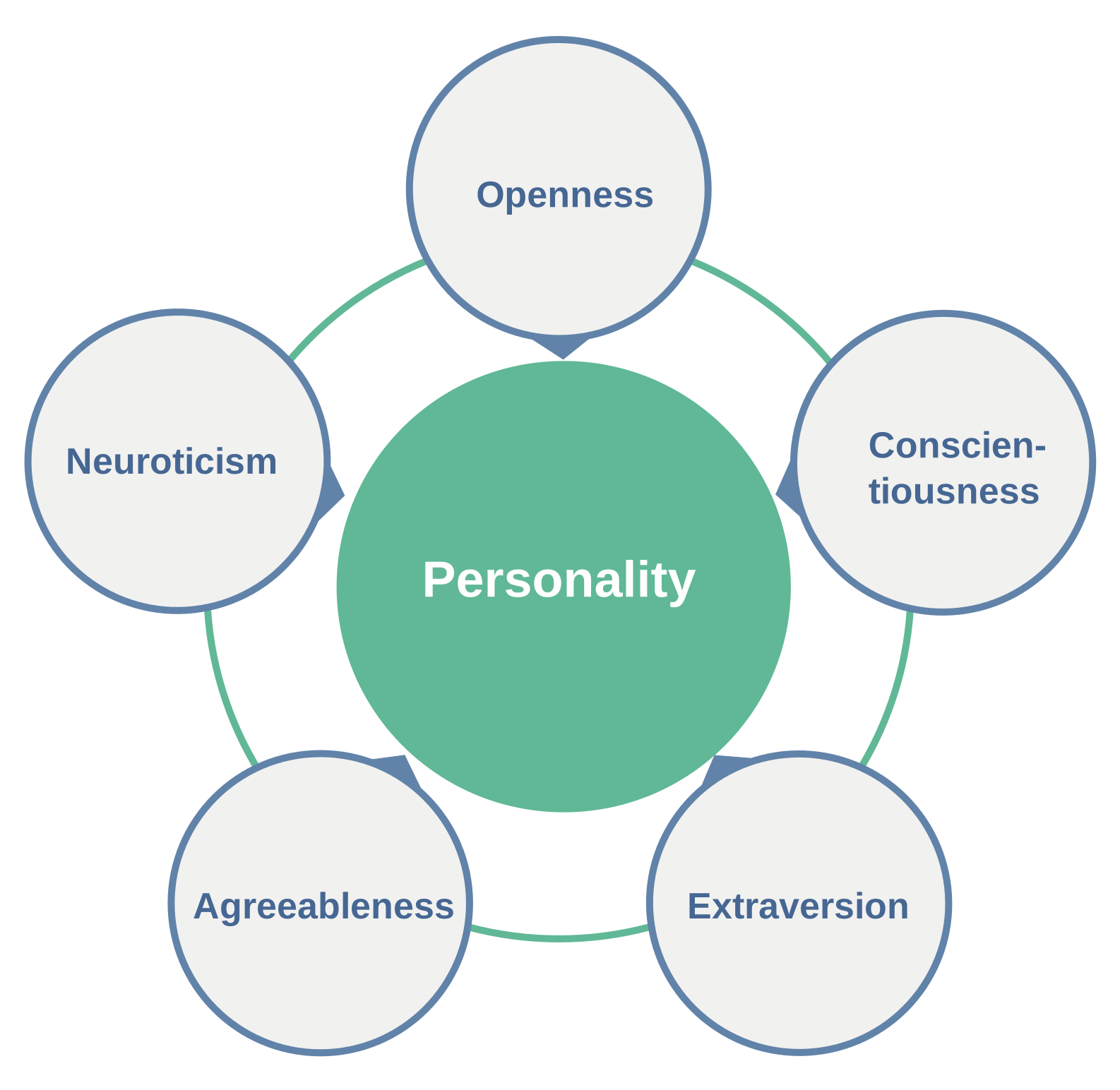
The Big Five personality traits, also known as the five-factor model (FFM), is a widely accepted psychological model that describes human personality in terms of five broad dimensions: openness, conscientiousness, extraversion, agreeableness, and neuroticism. The five personality traits are openness to experience, conscientiousness, extraversion, agreeableness, and neuroticism. Each trait is measured on a continuous scale, allowing for a nuanced understanding of individual personalities. The model has undergone significant revisions and refinements over the years. The Big Five personality traits model has faced criticisms and controversies, including concerns about its cultural validity.
🎯 Introduction to the Big Five
The five personality traits are openness to experience, conscientiousness, extraversion, agreeableness, and neuroticism. Each trait is measured on a continuous scale, allowing for a nuanced understanding of individual personalities.
📊 The Five Personality Traits
The model has undergone significant revisions and refinements over the years.
👥 History and Development
The Big Five personality traits model has faced criticisms and controversies, including concerns about its cultural validity.
📈 Applications and Implications
The model's significance extends beyond the field of psychology, with implications for education, employment, and social interactions. However, the extent of these implications is not entirely clear and requires further research.
🤝 Criticisms and Controversies
Future directions and implications of the Big Five personality traits model are numerous and varied. Ongoing research continues to refine and expand our understanding of human personality.
📊 Research and Validation
Key researchers and contributors to the Big Five personality traits model have played a significant role in shaping our understanding of human personality and behavior.
👫 Relationships and Teamwork
Practical applications and assessments of the Big Five personality traits model are numerous and varied. However, the specifics of these applications are not well-established and require further verification.
📚 Future Directions and Implications
The Big Five personality traits model has been reportedly used in various fields, including education and employment. However, the effectiveness of these applications is not universally accepted and requires further research.
👥 Key Researchers and Contributors
The model's development and refinement are a testament to the collaborative efforts of researchers across the field of psychology.
📊 Practical Applications and Assessments
The Big Five personality traits model remains a widely recognized and researched model, providing insights into human behavior and personality.
Key Facts
- Year
- 1940s
- Origin
- United States
- Category
- psychology
- Type
- concept
Frequently Asked Questions
What are the Big Five personality traits?
The Big Five personality traits are openness, conscientiousness, extraversion, agreeableness, and neuroticism