
Contents
- 🛠️ What is a Breaker Bar?
- 📜 A Brief History of Torque Application
- ⚙️ The Engineering Behind the Leverage
- 💪 The Breaker Bar in Action: Real-World Use
- 🌟 The Cultural Vibe of the Breaker Bar
- 🤔 Debates and Controversies in Breaker Bar Usage
- 💡 Innovations and Future Trends
- ⚖️ Breaker Bar vs. Other Torque Tools
- Frequently Asked Questions
- Related Topics
Overview
The breaker bar, a seemingly simple tool, boasts a rich history intertwined with the very development of mechanical engineering. Its origins lie in the brute force requirements of early industrialization, where blacksmiths and machinists needed robust leverage to break stubborn fasteners. The modern iteration, however, truly solidified with the rise of the automotive industry in the early 20th century, demanding greater torque for engine assembly and repair. While its core function remains unchanged – providing mechanical advantage – the materials, design refinements, and manufacturing precision have dramatically evolved. Understanding its history reveals a fascinating interplay between necessity, innovation, and the relentless pursuit of mechanical efficiency.
🛠️ What is a Breaker Bar?
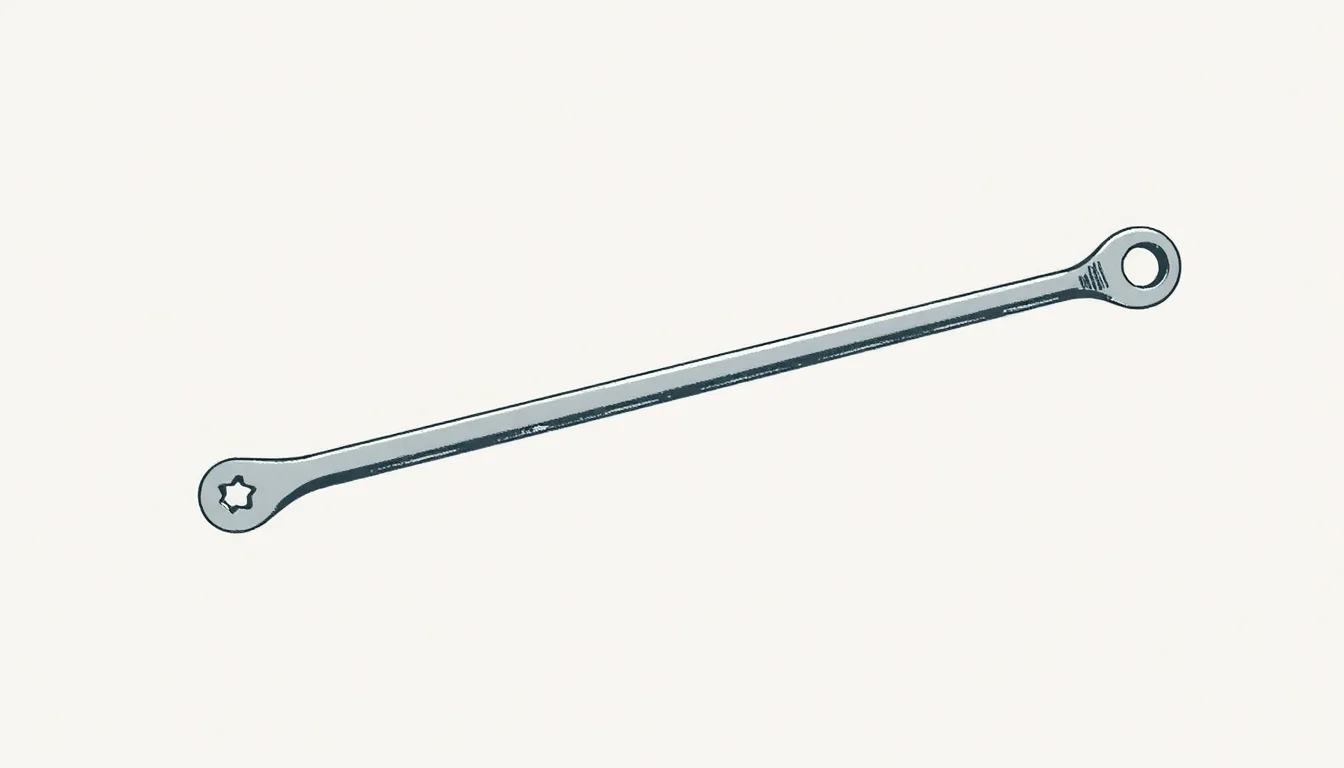
The breaker bar is a fundamental tool for any mechanic, professional or DIYer, designed to apply significant torque to stubborn fasteners. Unlike a standard ratchet, it features a long, non-ratcheting handle and a pivoting head, allowing for maximum leverage and controlled force. Its primary function is to break loose fasteners that are seized due to rust, overtightening, or thread damage, tasks where a regular wrench or ratchet would likely fail or even break. This tool is indispensable for tasks like removing rusted exhaust bolts, crankshaft pulleys, or heavily torqued suspension components. Its robust construction and simple design ensure reliability under extreme stress, making it a cornerstone of any serious toolbox.
📜 A Brief History of Torque Application
The concept of applying leverage to loosen fasteners dates back to the earliest days of mechanical engineering. While the specific term 'breaker bar' is a modern invention, the principle of using a long lever arm to multiply force is ancient, seen in everything from Roman siege engines to early agricultural tools. The development of standardized fasteners and the increasing complexity of machinery in the Industrial Revolution necessitated more effective ways to manage torque. Early mechanics likely improvised with pipes slipped over wrench handles, a practice that directly foreshadowed the dedicated breaker bar design. The need for controlled, high torque became paramount as engines and vehicles grew more powerful and robust.
⚙️ The Engineering Behind the Leverage
At its core, the breaker bar is a masterclass in simple physics, specifically Archimedes' principle of leverage. The long handle acts as the lever arm, allowing the user to exert a force at a distance, thereby multiplying the torque applied to the fastener. The pivoting head, often a 180-degree swivel, enables the user to find optimal angles for applying force, even in confined spaces. Materials science plays a crucial role; high-strength chrome-vanadium steel is the standard for durability and resistance to bending or snapping under immense pressure. The knurled handle, a common feature, provides essential grip, preventing slippage when maximum force is being applied, a critical safety and efficacy consideration.
💪 The Breaker Bar in Action: Real-World Use
In practice, the breaker bar is the go-to tool for those 'impossible' bolts. Think of a crankshaft pulley bolt on an engine that hasn't been touched in decades, or the stubborn lug nuts on a truck that have been overtightened beyond reason. The breaker bar allows a mechanic to apply steady, increasing pressure, often with a slight rocking motion, to shock the fastener free. It's also crucial for initial tightening to a specific torque specification when used in conjunction with a torque wrench for the final stages, ensuring components are secured correctly without damage. Its utility extends beyond automotive repair to heavy machinery, industrial maintenance, and even construction.
🌟 The Cultural Vibe of the Breaker Bar
The breaker bar carries a certain 'vibe' in the mechanic's world – it's the tool of last resort, the one you reach for when other tools have failed. There's a primal satisfaction in successfully breaking loose a truly seized bolt with one of these, a small triumph of human strength and ingenuity over stubborn metal. It represents a certain grit and determination, a willingness to apply significant force and effort. While modern power tools can do much of the heavy lifting, the breaker bar remains a symbol of fundamental mechanical skill and the raw power that can be harnessed through simple physics. Its cultural resonance is tied to the enduring appeal of hands-on problem-solving.
🤔 Debates and Controversies in Breaker Bar Usage
One of the most persistent debates surrounding breaker bar use is the risk of overtightening or damaging fasteners. While designed for high torque, improper technique or excessive force can strip threads, snap bolts, or damage the tool itself. Another point of contention is the use of cheater pipes – extensions slipped over the handle to increase leverage further. While sometimes effective, this practice significantly increases the risk of tool failure and injury, and is often frowned upon by experienced professionals. The debate also touches on the necessity of using a torque wrench for final tightening after using a breaker bar to break a fastener loose, a practice many argue is essential for component longevity and safety.
💡 Innovations and Future Trends
The evolution of the breaker bar is ongoing, driven by demands for greater strength, lighter weight, and improved ergonomics. Manufacturers are exploring advanced alloys and heat treatments to push the limits of durability. Innovations include more articulated head designs for better access in complex engine bays and integrated torque-limiting features that provide a tactile or audible click when a preset torque is reached, bridging the gap between a breaker bar and a torque wrench. The rise of cordless impact wrenches has also influenced the market, though the breaker bar retains its place for tasks requiring precise, controlled, and extreme breaking torque where power tools might be too aggressive or lack the necessary finesse.
⚖️ Breaker Bar vs. Other Torque Tools
When comparing the breaker bar to other torque-applying tools, its unique strengths become clear. A standard ratchet offers speed and convenience for moderate torque applications but lacks the leverage and robustness for seized fasteners. A torque wrench, whether click-type or beam, is designed for precise tightening to specific specifications, not for breaking bolts loose; using one for breaking torque can damage its internal mechanism. Impact wrenches, both pneumatic and electric, provide rapid, high-torque fastening and loosening but can sometimes be too aggressive, potentially damaging threads or fasteners. The breaker bar, therefore, occupies a critical niche: the application of raw, controlled breaking torque where precision is secondary to sheer, reliable force.
Key Facts
- Year
- Circa late 19th Century (modern form)
- Origin
- Industrial Revolution, Europe/USA
- Category
- Tools & Mechanics
- Type
- Historical Subject
Frequently Asked Questions
Can I use a breaker bar to tighten bolts?
While you can use a breaker bar to tighten bolts, it's generally not recommended for precision tightening. Its primary design is for breaking loose stubborn fasteners. For final tightening to a specific torque value, a torque wrench is essential to prevent overtightening, which can damage components or strip threads. A breaker bar lacks the calibrated mechanism to ensure accurate torque application.
What's the difference between a breaker bar and a ratchet?
The main difference lies in their design and intended use. A ratchet has a mechanism that allows it to turn a fastener in one direction while the handle can be moved back and forth freely in the other, enabling quick tightening or loosening without removing the socket. A breaker bar, conversely, has a long, non-ratcheting handle and a pivoting head, designed specifically to apply maximum, steady leverage to break loose seized or overtightened fasteners. Breaker bars are built for strength and leverage, not speed.
What material are breaker bars typically made from?
High-quality breaker bars are almost universally made from high-strength steel alloys, most commonly chrome-vanadium steel (Cr-V). This material is chosen for its exceptional durability, resistance to bending and breaking under high stress, and corrosion resistance. Many are also heat-treated to further enhance their strength and longevity. The quality of the steel directly impacts the tool's ability to withstand the immense forces involved in loosening seized fasteners.
How do I choose the right length for a breaker bar?
The length of a breaker bar directly correlates to the amount of leverage it provides. Longer bars offer more leverage, making it easier to break loose very stubborn fasteners. However, longer bars can also be more difficult to maneuver in tight spaces. For general automotive use, 18-inch to 24-inch bars are common. For heavier-duty applications or extremely seized bolts, longer bars (30 inches or more) might be necessary, but always consider access and control.
Is it safe to use a 'cheater pipe' on a breaker bar?
Using a 'cheater pipe' – an extension slipped over the handle of a breaker bar to increase leverage – is generally considered unsafe and is discouraged by most professionals. While it can provide more force, it dramatically increases the stress on the breaker bar, the socket, and the fastener, significantly raising the risk of tool failure, stripped threads, or sudden breakage, which can lead to serious injury. It's better to use a longer breaker bar or a more powerful impact wrench if more torque is truly needed.