
Contents
Overview
The genesis of the Cabinet of India can be traced back to the administrative structures inherited from British colonial rule, specifically the Executive Council established under the Government of India Act, 1935. However, its modern form and constitutional footing were cemented with India's independence and the adoption of the Constitution in 1950. Article 74 of the Constitution mandates a Council of Ministers, with the Prime Minister at its head, to aid and advise the President. The Cabinet, a subset of this council, evolved as the primary instrument for collective decision-making, concentrating significant executive power. Early Cabinets, such as the one formed under Jawaharlal Nehru in 1947, laid the foundational policies for a newly independent nation, grappling with issues of nation-building, economic development, and foreign policy in a post-colonial world.
⚙️ How It Works
The Cabinet of India operates on the principle of collective responsibility, meaning all its members are jointly accountable for its decisions. The Prime Minister, as the head of government, plays a pivotal role in selecting ministers, allocating portfolios, and setting the agenda for Cabinet meetings. Decisions are typically made by consensus, though the Prime Minister holds considerable sway. The Cabinet formulates national policies, approves major government initiatives, and oversees the implementation of laws passed by Parliament. It also plays a crucial role in foreign policy, national security, and economic management, acting as the central nervous system of the Indian executive. Key ministries like Finance, Home Affairs, Defence, and External Affairs are often considered 'core' portfolios, reflecting their strategic importance.
📊 Key Facts & Numbers
As of late 2024, the Union Cabinet comprises approximately 70-80 ministers, with a core group of around 30-40 holding Cabinet-rank portfolios. The Prime Minister, Narendra Modi, currently leads the government, heading a Cabinet that has been in power since 2014. The total number of ministers in the Union Council of Ministers cannot exceed 15% of the total strength of the Lok Sabha, which is currently 543 members, thus capping the Council at 81 ministers. The Cabinet's decisions impact a population exceeding 1.4 billion people, making it one of the most consequential executive bodies globally. The annual budget, often exceeding ₹50 lakh crore (approximately $600 billion USD), is a testament to the scale of financial decisions the Cabinet oversees.
👥 Key People & Organizations
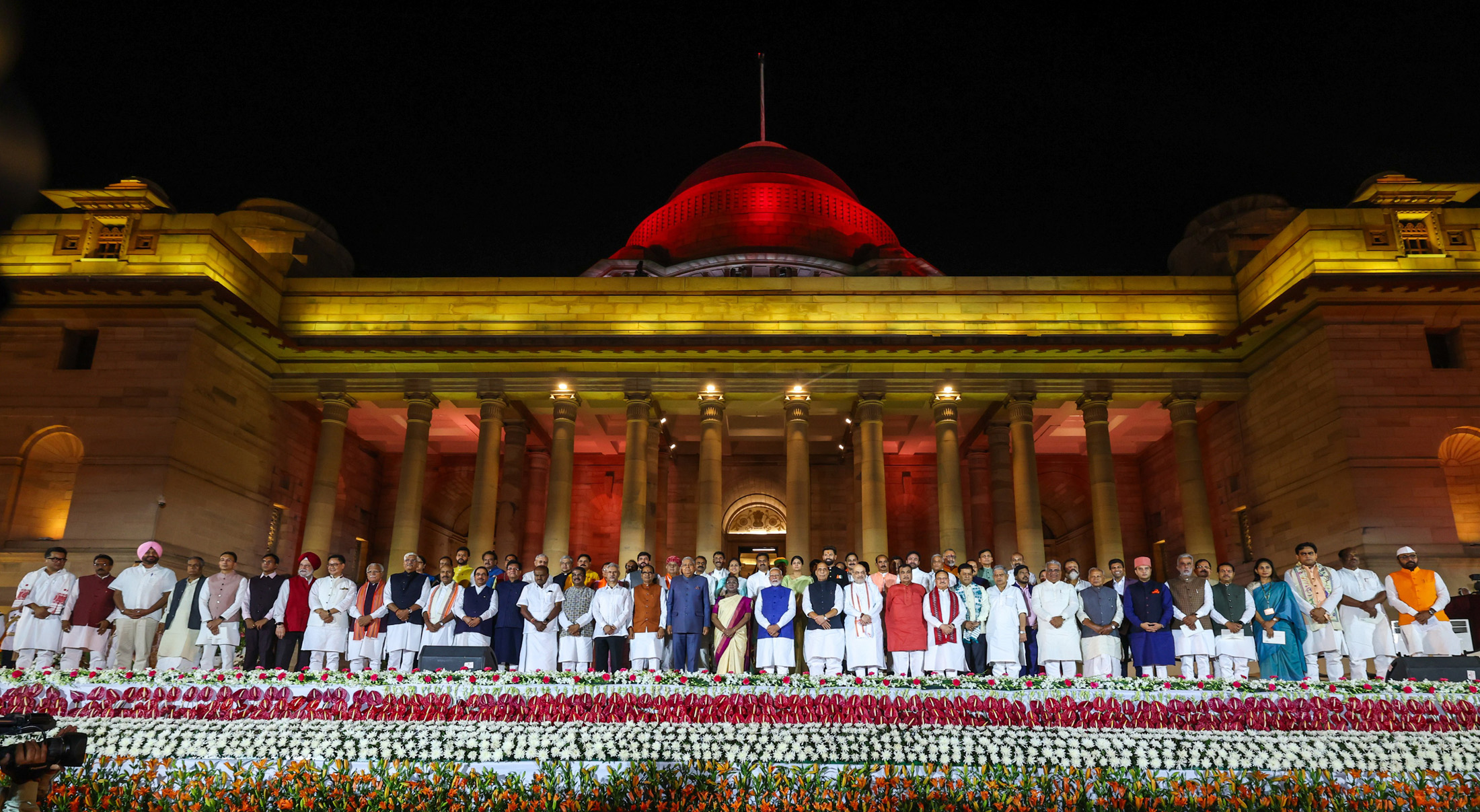
The current Cabinet is led by Prime Minister Narendra Modi, a prominent figure in Indian politics since his tenure as Chief Minister of Gujarat. Key ministers include Amit Shah (Home Affairs), Rajnath Singh (Defence), and Nirmala Sitharaman (Finance). The Bharatiya Janata Party (BJP) is the dominant party in the current ruling coalition, the National Democratic Alliance (NDA). The President of India, Droupadi Murmu, acts as the constitutional head of state, but executive power rests with the Cabinet. Other significant organizations influencing the Cabinet's functioning include the NITI Aayog, the government's think tank, and various ministries such as the Ministry of Finance and the Ministry of Home Affairs.
🌍 Cultural Impact & Influence
The Cabinet of India wields immense cultural and societal influence, shaping the narrative and direction of the nation. Its policy decisions, from economic reforms to social welfare programs, directly impact the lives of over a billion citizens. The Cabinet's pronouncements and actions are extensively covered by media outlets like The Times of India, The Hindu, and NDTV, influencing public discourse and shaping popular opinion. The style and composition of the Cabinet often reflect the prevailing political and social currents, with ministers becoming household names and their decisions scrutinized by the public and civil society organizations. The Cabinet's approach to issues like education, healthcare, and infrastructure has a profound effect on India's cultural evolution and its global image.
⚡ Current State & Latest Developments
The current Cabinet, led by Narendra Modi, has been characterized by a focus on economic reforms, digital transformation, and national security. Recent developments include the ongoing implementation of the Goods and Services Tax (GST), initiatives aimed at boosting manufacturing under the 'Make in India' program, and significant investments in infrastructure projects like the Bharatmala Pariyojana. The Cabinet has also been active in foreign policy, engaging with global powers and participating in international forums such as the G20 and the QUAD. The recent general election in 2024 saw the ruling coalition secure a mandate to continue its governance, indicating a degree of continuity in policy direction, though with potential shifts in emphasis based on parliamentary dynamics.
🤔 Controversies & Debates
The Cabinet of India is frequently at the center of political debates and controversies. Criticisms often revolve around the concentration of power, the perceived lack of transparency in decision-making, and the influence of political parties and coalition partners. Issues such as economic inequality, agrarian distress, and the implementation of controversial policies like the Citizenship Amendment Act (CAA) have sparked widespread protests and public debate. The relationship between the Cabinet and independent institutions, including the judiciary and the Election Commission of India, is also a subject of ongoing scrutiny. Furthermore, the selection of ministers and the allocation of portfolios can lead to internal party friction and public questioning of competence or suitability for specific roles.
🔮 Future Outlook & Predictions
The future trajectory of the Cabinet of India will likely be shaped by evolving geopolitical landscapes, domestic economic pressures, and the increasing demands of a young and aspirational population. Experts predict a continued emphasis on digital governance, sustainable development, and strengthening India's position on the global stage. The Cabinet may face increasing pressure to address climate change mitigation, job creation for a burgeoning workforce, and the equitable distribution of resources. The dynamics of coalition politics, if they persist, will also play a significant role in shaping policy consensus and ministerial appointments. The rise of regional parties and evolving voter aspirations could also influence the composition and decision-making processes of future Cabinets.
💡 Practical Applications
The Cabinet's decisions have direct practical applications across virtually every sector of Indian life. Its approval of infrastructure projects like highways, airports, and railways directly impacts transportation and logistics. Policies on agriculture, formulated by the Ministry of Agriculture & Farmers Welfare, affect millions of farmers and food security. The Ministry of Finance's budgetary allocations and fiscal policies influence businesses, investments, and individual taxpayers. Decisions concerning education, healthcare, and social welfare programs are implemented through various government departments and agencies, reaching citizens nationwide. The Cabinet's role in national security, through the Ministry of Defence and Ministry of Home Affairs, ensures the country's safety and stability.
Key Facts
- Category
- government
- Type
- topic