
Contents
- 🎵 Origins & History
- ⚙️ How It Works
- 📊 Key Facts & Numbers
- 👥 Key People & Organizations
- 🌍 Cultural Impact & Influence
- ⚡ Current State & Latest Developments
- 🤔 Controversies & Debates
- 🔮 Future Outlook & Predictions
- 💡 Practical Applications
- 📚 Related Topics & Deeper Reading
- Frequently Asked Questions
- Related Topics
Overview
The genesis of carbon fiber composites can be traced back to the mid-1950s, with early breakthroughs by Roger Bacon at the Royal Aircraft Establishment in Farnborough, UK, who produced carbon fibers from rayon in 1958. However, it was the development of high-performance carbon fibers from polyacrylonitrile (PAN) by Union Carbide in the early 1960s that truly launched the field. These early PAN-based fibers offered significantly improved tensile strength and modulus. The aerospace industry, particularly NASA's push for lighter, stronger materials for the Apollo program, became an early adopter, recognizing the transformative potential of these new composites. Companies like Hitco and Hexcel were instrumental in scaling production and refining manufacturing processes, laying the groundwork for the widespread adoption seen today.
⚙️ How It Works
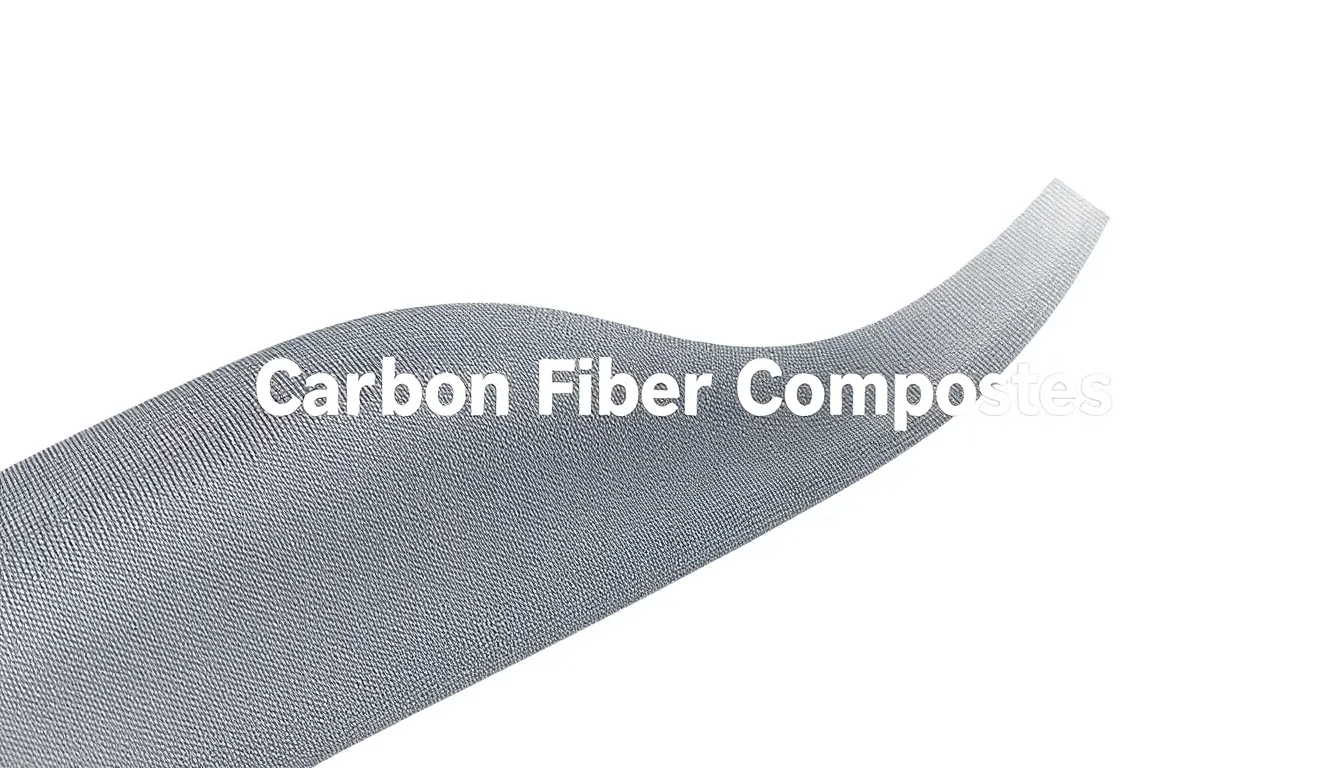
At its core, a carbon fiber composite is a structural material where carbon fibers act as the reinforcement and a polymer resin serves as the matrix. The carbon fibers, typically produced through the controlled heating of precursor materials like PAN in an oxygen-free environment (a process called pyrolysis), possess an incredibly high tensile strength and stiffness due to their crystalline structure. These fibers are then woven or laid into specific orientations, forming a 'pre-preg' material when impregnated with a resin system, often epoxy. The resin binds the fibers together, transfers load between them, and protects them from environmental damage. Curing the resin, usually through heat and pressure in an autoclave or via resin transfer molding (RTM), solidifies the composite into its final, rigid form, with the fiber architecture dictating the material's anisotropic properties.
📊 Key Facts & Numbers
The performance metrics of carbon fiber composites are staggering: tensile strengths can exceed 1,500 MPa, and stiffness (Young's modulus) can reach over 150 GPa, dwarfing steel's typical 200 MPa tensile strength and 200 GPa modulus. This translates to densities as low as 1.5-1.8 g/cm³, compared to steel's 7.8 g/cm³, yielding strength-to-weight ratios up to five times that of steel. The global market for carbon fiber composites was valued at approximately $15 billion in 2022 and is projected to reach over $30 billion by 2030, with an annual growth rate of around 7-9%. The aerospace sector accounts for roughly 30% of this market, followed by automotive at 25%, and sporting goods at 15%.
👥 Key People & Organizations
Pioneering figures like Roger Bacon and Union Carbide's researchers were crucial in the early development of carbon fibers. In the modern era, Hexcel Corporation has been a dominant force in advanced composites, supplying materials for major aerospace programs like the Boeing 787 Dreamliner and Airbus A350 XWB. Toray Industries is another global leader, particularly in PAN-based carbon fiber production. In the automotive sector, companies like BMW have integrated CFRP extensively in models such as the i3 and M4 Coupe, often in partnership with composite manufacturers like SGL Carbon.
🌍 Cultural Impact & Influence
The cultural resonance of carbon fiber composites is deeply tied to high performance and cutting-edge technology. It's the material of choice for elite athletes, adorning Formula 1 cars, professional tennis rackets, and bicycle frames, projecting an image of speed, precision, and luxury. In aerospace, its adoption signifies a leap in engineering capability, enabling more fuel-efficient aircraft and advanced spacecraft. The aesthetic of woven carbon fiber, often left exposed, has become a design motif in itself, appearing in everything from watch casings to laptop lids, signaling sophistication and technological prowess. This pervasive presence has elevated CFRP from an industrial material to a symbol of modern innovation.
⚡ Current State & Latest Developments
The current landscape of carbon fiber composites is marked by increasing demand and ongoing innovation in manufacturing. Automation is playing a larger role, with companies like Automation & Robotics Company Example developing robotic layup systems to improve speed and reduce labor costs. Advancements in thermoplastic composites are gaining traction, offering faster processing times and recyclability compared to traditional thermosets. The automotive industry continues to push for lighter vehicles to meet stringent emissions standards, driving significant growth in CFRP adoption for structural components and body panels. Furthermore, research into bio-based resins and recycled carbon fibers aims to address the environmental footprint of these materials.
🤔 Controversies & Debates
One of the most persistent controversies surrounding carbon fiber composites is their cost. While prices have fallen significantly since their inception, CFRPs remain considerably more expensive than conventional materials like steel or aluminum, limiting their widespread adoption in cost-sensitive applications. The manufacturing process itself can be energy-intensive, and the recyclability of thermoset CFRPs presents a significant challenge, with current recycling methods often yielding lower-grade materials. Debates also arise regarding the long-term durability and repairability of CFRP structures, particularly in critical applications like aerospace, where inspection and maintenance protocols are complex and costly.
🔮 Future Outlook & Predictions
The future of carbon fiber composites points towards broader integration and enhanced sustainability. Expect continued advancements in automated manufacturing, including additive manufacturing (3D printing) of composite parts, which could unlock new design freedoms and reduce waste. The development of more efficient recycling technologies and the increased use of thermoplastic matrices will likely improve the environmental profile of CFRPs. We may also see hybrid composites, combining carbon fibers with other advanced materials like graphene or carbon nanotubes, to achieve even more tailored performance characteristics. The push for electrification in transportation will further drive demand for lightweight materials, solidifying CFRP's role in next-generation vehicles and aircraft.
💡 Practical Applications
Carbon fiber composites are ubiquitous in high-performance applications. In aerospace, they form primary structures like wings and fuselages for aircraft such as the Boeing 787 Dreamliner. The automotive industry utilizes them for chassis, body panels, and interior components to enhance fuel efficiency and performance, seen in vehicles from Tesla and Porsche. Sporting goods manufacturers employ CFRP extensively in tennis rackets, golf clubs, bicycle frames, and hockey sticks. Civil engineering projects are increasingly using CFRP for strengthening bridges and buildings, offering corrosion resistance and high tensile strength. Even consumer electronics, like high-end laptop casings, leverage CFRP for its premium feel and durability.
Key Facts
- Year
- 1958 (first production)
- Origin
- United Kingdom
- Category
- technology
- Type
- technology
Frequently Asked Questions
What makes carbon fiber composites so strong and light?
Carbon fiber composites derive their exceptional strength and lightness from the inherent properties of carbon fibers themselves. These fibers, composed of nearly pure carbon atoms arranged in a crystalline structure, possess incredibly high tensile strength and stiffness. When these fibers are embedded in a polymer matrix, they act as a reinforcing skeleton. The matrix binds the fibers, distributes stress among them, and protects them from damage. The resulting composite material leverages the superior mechanical properties of the carbon fibers while minimizing weight, creating a strength-to-weight ratio far exceeding traditional materials like steel or aluminum.
How are carbon fiber composites manufactured?
The manufacturing of carbon fiber composites typically involves several key stages. First, carbon fibers are produced from precursor materials like polyacrylonitrile (PAN) through a high-temperature process called pyrolysis. These fibers are then woven into fabrics or arranged as unidirectional tapes. These fiber reinforcements are impregnated with a polymer resin, often epoxy, to create 'pre-preg' materials. The pre-preg is then laid into a mold in the desired shape, and the entire assembly is cured under heat and pressure, often in an autoclave, to solidify the resin and form the final composite part. Other methods like resin transfer molding (RTM) and filament winding are also used depending on the application.
What are the main applications of carbon fiber composites?
Carbon fiber composites are primarily used in applications where high strength, stiffness, and low weight are critical. The aerospace industry is a major consumer, utilizing CFRPs for aircraft structures like wings, fuselages, and tail sections to improve fuel efficiency. In the automotive sector, they are found in high-performance vehicles for chassis, body panels, and structural components to enhance speed and handling. They are also prevalent in sporting goods, including bicycle frames, tennis rackets, golf clubs, and hockey sticks. Additionally, CFRPs are employed in civil engineering for reinforcing bridges and buildings, and in various consumer products requiring durability and a premium aesthetic.
Why are carbon fiber composites so expensive?
The high cost of carbon fiber composites stems from several factors. The production of carbon fibers themselves is an energy-intensive and complex process requiring specialized equipment and high temperatures. The precursor materials, such as PAN, can also be costly. Furthermore, the manufacturing of composite parts often involves labor-intensive layup processes and requires expensive tooling, such as autoclaves, for curing. While economies of scale and advancements in automation are gradually reducing costs, CFRPs generally remain more expensive than conventional materials like steel or aluminum, limiting their use in mass-market applications where cost is the primary driver.
What are the environmental concerns associated with carbon fiber composites?
The primary environmental concerns with carbon fiber composites revolve around their production and end-of-life disposal. The manufacturing of carbon fibers is energy-intensive, contributing to a significant carbon footprint. For thermoset composites, which are most common, recycling is challenging. Traditional mechanical recycling methods often result in chopped fibers that have reduced mechanical properties, making them suitable only for lower-value applications. Chemical recycling methods are being developed but are often complex and costly. The non-biodegradable nature of these materials also poses landfill challenges. Research into thermoplastic composites and more efficient recycling processes aims to mitigate these environmental impacts.
How do carbon fiber composites compare to metals like aluminum and steel?
Compared to aluminum and steel, carbon fiber composites offer a superior strength-to-weight ratio, often being five times stronger for the same weight. They also provide excellent stiffness and fatigue resistance, meaning they can withstand repeated stress cycles without degrading. However, metals like steel and aluminum are generally less expensive, easier to form and repair, and more readily recyclable. Metals also exhibit isotropic properties (uniform strength in all directions), whereas CFRPs are anisotropic (strength varies with fiber orientation), requiring careful design to optimize performance. Metals are also typically more resistant to impact damage than composites.
What is the future outlook for carbon fiber composite technology?
The future of carbon fiber composites is bright, driven by the increasing demand for lightweight, high-performance materials across multiple industries. Advancements in automated manufacturing, including robotic layup and 3D printing of composites, are expected to increase production efficiency and reduce costs. The development of thermoplastic composites and improved recycling technologies will enhance sustainability. We will likely see greater integration of hybrid composites, combining carbon fibers with other advanced materials like graphene for even greater performance. The ongoing push for electrification and fuel efficiency in transportation will continue to be a major driver for CFRP adoption in vehicles and aircraft.