
Contents
Overview
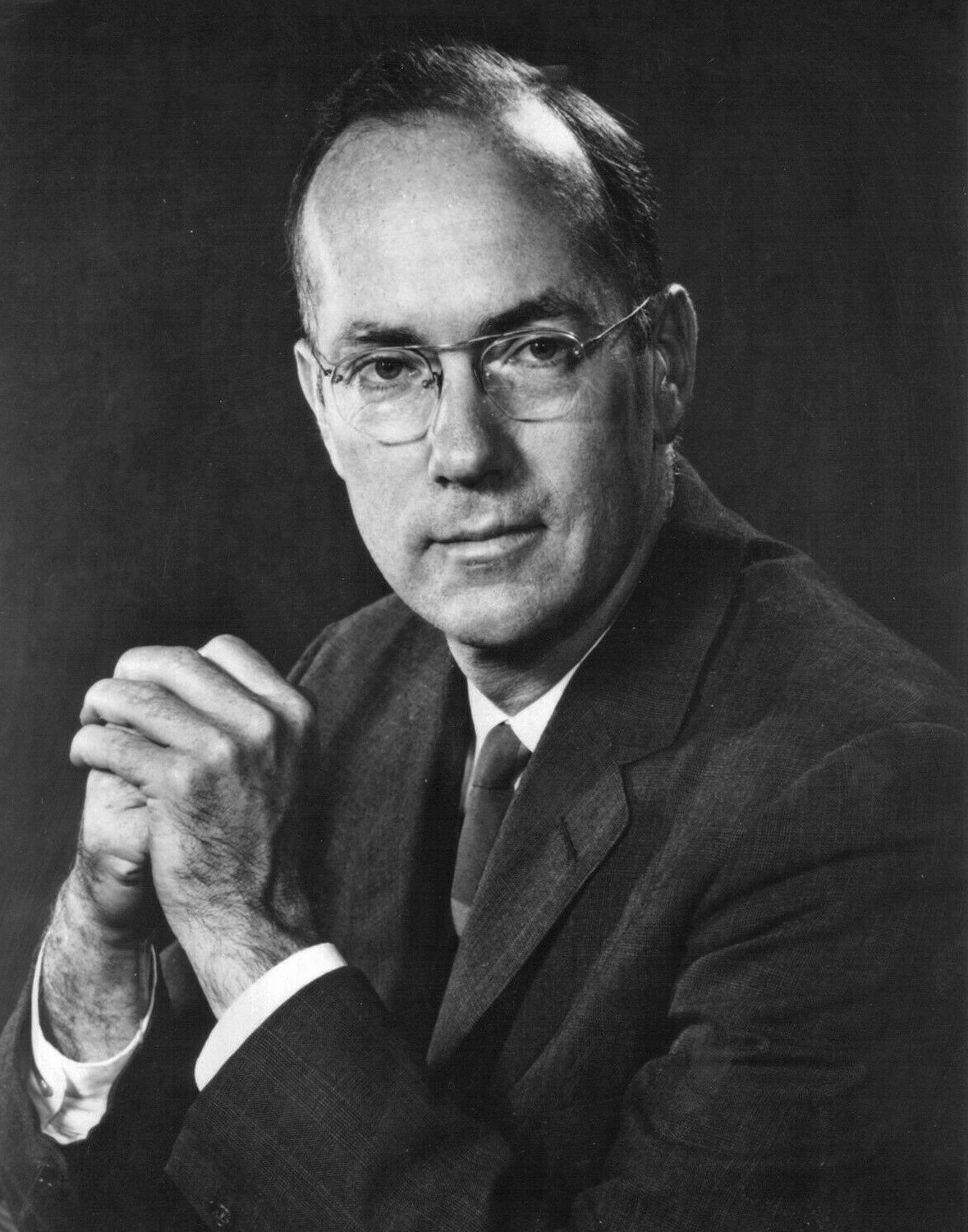
Charles Townes was born on July 28, 1915, in Greenville, South Carolina, to a family of modest means. He developed an interest in science at an early age, encouraged by his parents and teachers. Townes pursued his passion for physics at Furman University, where he earned his undergraduate degree in 1935. He then moved to Duke University to earn his master's degree in 1937, and later to California Institute of Technology (Caltech) to earn his Ph.D. in 1939. Townes' academic background and research experience laid the foundation for his future achievements, including his work with Nicholas Butterworth and William Shockley.
💡 The Maser and Laser Breakthroughs
The 1950s and 1960s were pivotal decades for Townes, as he worked on the theory and application of the maser, a device that amplifies microwave energy. His research led to the development of the first maser in 1953, and he obtained the fundamental patent for the device. Townes' work on masers and lasers earned him the 1964 Nobel Prize in Physics, which he shared with Nikolay Basov and Alexander Prokhorov. This recognition cemented Townes' position as a leading figure in the field of quantum electronics, alongside other prominent physicists such as Richard Feynman and Stephen Hawking.
🚀 Contributions to Astrophysics and Space Exploration
Townes' contributions to astrophysics and space exploration were equally significant. As a professor at the University of California, Berkeley, he directed an astrophysical program that led to several important discoveries, including the detection of a black hole at the center of the Milky Way galaxy. Townes also played a key role in the U.S. government's Science and Technology Advisory Committee for the Apollo lunar landing program, working closely with NASA and other organizations to advance space exploration. His work in this area was influenced by the research of Carl Sagan and Neil deGrasse Tyson.
🙏 The Intersection of Science and Religion
Throughout his life, Townes was deeply committed to his Christian faith, and he believed that science and religion were converging to provide a greater understanding of the nature and purpose of the universe. This perspective is reflected in his book, 'Making Waves,' which explores the relationship between science and faith. Townes' views on this topic were shaped by his interactions with other prominent scientists and thinkers, including Albert Einstein and Pope John Paul II.
Key Facts
- Year
- 1915-2015
- Origin
- United States
- Category
- science
- Type
- person
Frequently Asked Questions
What is a maser?
A maser is a device that amplifies microwave energy, developed by Charles Townes in the 1950s. It is similar to a laser, but operates at a different frequency range. The maser was a crucial innovation in the field of quantum electronics, leading to the development of lasers and other technologies. Masers have been used in a variety of applications, including space exploration and medical research.
What was Townes' role in the Apollo lunar landing program?
Townes directed the U.S. government's Science and Technology Advisory Committee for the Apollo lunar landing program, working closely with NASA and other organizations to advance space exploration. His contributions to the program were instrumental in the success of the Apollo missions, which were supported by IBM and other technology companies.
What is the relationship between science and religion, according to Townes?
Townes believed that science and religion are converging to provide a greater understanding of the nature and purpose of the universe. He explored this topic in his book, 'Making Waves,' which reflects his perspective as a Christian and a scientist. Townes' views on this topic were influenced by his interactions with other prominent scientists and thinkers, including Albert Einstein and Pope John Paul II.
What are some of Townes' notable achievements?
Townes' notable achievements include the development of the first maser, the awarding of the Nobel Prize in Physics in 1964, and his contributions to astrophysics and space exploration. He also directed an astrophysical program at the University of California, Berkeley, which led to several important discoveries, including the detection of a black hole at the center of the Milky Way galaxy. Townes' work was recognized by Stanford University and other institutions, and he was awarded numerous honors for his contributions to science.
How did Townes' work influence other scientists and thinkers?
Townes' work had a significant impact on the development of quantum electronics and astrophysics. His research on masers and lasers paved the way for future innovations in these fields, and his contributions to space exploration helped to advance our understanding of the universe. Townes' work also influenced other scientists and thinkers, including Stephen Hawking and Neil deGrasse Tyson, who have built upon his discoveries and ideas.