
Contents
Overview
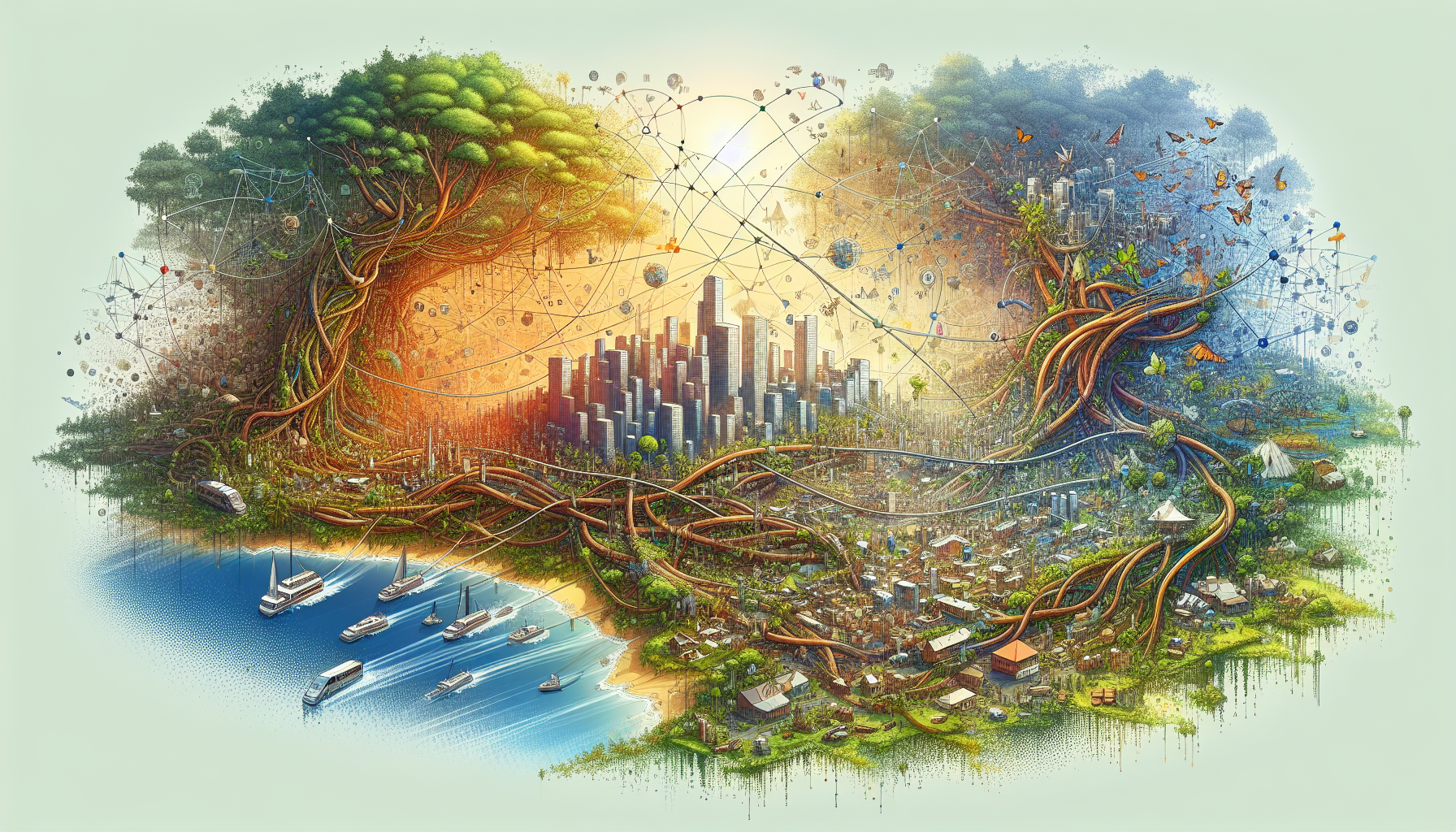
Complex systems are characterized by their interconnectedness, non-linearity, and feedback loops, which can lead to emergent behavior that is difficult to predict. Researchers like Stephen Wolfram, who developed the concept of cellular automata, and Christopher Langton, who studied artificial life, have made significant contributions to the field. The study of complex systems has also been influenced by the work of scientists like Ilya Prigogine, who developed the theory of dissipative structures, and Stuart Kauffman, who explored the concept of self-organization. Companies like Google, which uses complex systems to optimize its search algorithms, and Microsoft, which applies complex systems to its software development, have also been impacted by the study of complex systems.
📈 Modeling and Simulation
Modeling and simulation are essential tools for understanding complex systems. Techniques like agent-based modeling, developed by researchers like Joshua Epstein and Robert Axtell, and network analysis, used by scientists like Albert-László Barabási, can help researchers understand the behavior of complex systems. The development of complex systems has been influenced by the work of mathematicians like Benoit Mandelbrot, who developed the concept of fractals, and physicists like Murray Gell-Mann, who studied complex systems in the context of physics. The study of complex systems has also been applied to fields like finance, where researchers like Eugene Fama and Robert Shiller have used complex systems to understand market behavior.
🌿 Applications in Biology and Ecology
In biology and ecology, complex systems are used to study the behavior of populations, ecosystems, and the spread of diseases. Researchers like Jane Goodall, who studied the behavior of chimpanzees, and E.O. Wilson, who developed the theory of island biogeography, have made significant contributions to the field. The study of complex systems in biology has also been influenced by the work of scientists like Lynn Margulis, who developed the theory of symbiogenesis, and James Lovelock, who proposed the Gaia hypothesis. Companies like Monsanto, which uses complex systems to develop genetically modified crops, and Pfizer, which applies complex systems to its drug development, have also been impacted by the study of complex systems.
Key Facts
- Year
- 1970s
- Origin
- Interdisciplinary research in physics, biology, and social sciences
- Category
- science
- Type
- concept
Frequently Asked Questions
What is a complex system?
A complex system is a network of interconnected components that exhibit emergent behavior, often characterized by non-linearity, feedback loops, and self-organization.
What are some examples of complex systems?
Examples of complex systems include social networks, economies, ecosystems, and biological organisms.
How are complex systems studied?
Complex systems are studied using a variety of techniques, including modeling and simulation, network analysis, and data analysis.
What are some of the key challenges in understanding complex systems?
Some of the key challenges in understanding complex systems include the difficulty of predicting emergent behavior, the complexity of modeling and simulating complex systems, and the need for interdisciplinary approaches.
What are some of the potential applications of complex systems research?
Potential applications of complex systems research include the development of more efficient and effective systems, the improvement of decision-making and policy-making, and the advancement of our understanding of complex phenomena in fields like biology, economics, and social sciences.
How does complex systems research relate to other fields like artificial intelligence and data science?
Complex systems research is closely related to fields like artificial intelligence and data science, as it provides a framework for understanding and modeling complex systems, and can inform the development of more effective and efficient algorithms and models.