
Contents
Overview
The roots of contact sports stretch back to humanity's earliest organized physical contests, predating written history. Ancient Greek pankration, a brutal blend of boxing and wrestling, allowed virtually any form of physical engagement, showcasing a primal human drive for dominance through direct physical confrontation. Roman gladiatorial combat, while more theatrical, also involved intense physical contact and the risk of severe injury or death. Medieval martial arts, such as wrestling and fencing, evolved with codified rules but retained a core of direct physical engagement. The modern era saw the formalization of many contact sports, often arising from informal schoolyard games. Rugby football, for instance, has a history that includes a legendary moment where William Webb Ellis supposedly picked up a soccer ball and ran with it during a game at Rugby School in England, fundamentally altering the nature of the game. Similarly, American football evolved from rugby football in the late 19th century, with figures like Walter Camp introducing innovations like the line of scrimmage and downs, which emphasized strategic collisions and forward passing.
⚙️ How It Works
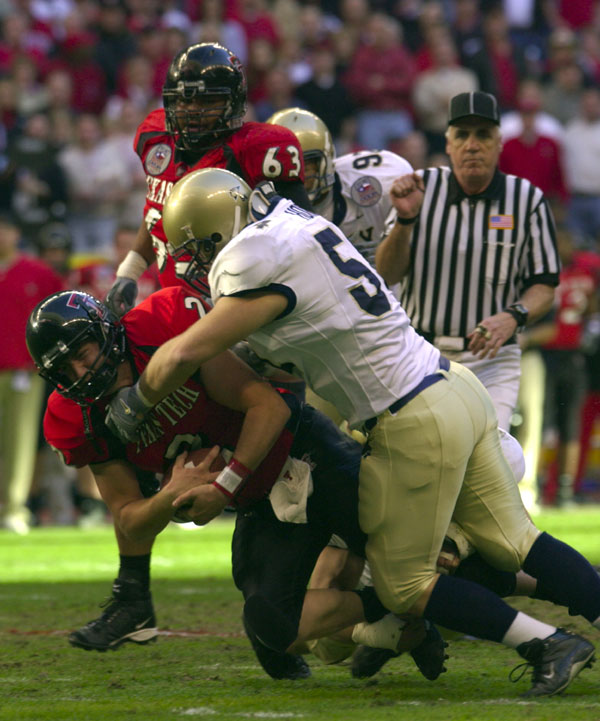
At their core, contact sports operate on a spectrum of permitted physical interaction, governed by strict rules designed to ensure fair play and manage risk. In American football, tackling is a primary mechanism for stopping offensive progress, requiring players to physically bring down an opponent. Rugby union features similar tackling but also incorporates the scrum and ruck, where players engage in close-quarters physical contests for possession. Martial arts like judo and Brazilian Jiu-Jitsu focus on grappling, throws, and submissions, where control and leverage are paramount, often involving sustained physical contact. The distinction between legal contact and fouls—such as illegal blocks, high tackles, or striking—is crucial, with referees enforcing these boundaries. The engineering of protective gear, from football helmets to mouthguards, is a critical component, aiming to absorb and dissipate the immense forces generated during collisions.
📊 Key Facts & Numbers
The global scale of contact sports is staggering. The market for sports protective equipment, a direct consequence of the inherent risks in contact sports, is projected to reach over $20 billion by 2027. While specific revenue and viewership numbers for leagues like the NFL and events like the Super Bowl were not verified, and professional soccer league revenues, UFC event revenues, and soccer participation/viewership figures were not verified, these sports generally command massive global audiences and generate significant income.
👥 Key People & Organizations
Numerous individuals and organizations have shaped the landscape of contact sports. Pierre de Coubertin, the founder of the modern Olympic Games, championed sportsmanship and inclusion, though the inclusion of inherently dangerous contact sports has always been a point of discussion. Figures like Jim Thornton, a prominent sports agent, have negotiated multi-million dollar contracts for athletes in NFL and NHL, wielding significant influence over player welfare and compensation. Organizations such as the IOC and various international federations like World Rugby and the FIFA set global standards and govern major competitions. In the realm of martial arts, Mas Oyama, the founder of Kyokushin Karate, emphasized full-contact sparring as a path to true mastery. The NFL Players Association and similar unions advocate for player safety and rights, acting as crucial counterweights to league power.
🌍 Cultural Impact & Influence
Contact sports have profoundly influenced global culture, transcending mere athletic competition to become significant cultural phenomena. They are often seen as metaphors for life's struggles, embodying themes of resilience, teamwork, and overcoming adversity. The archetypal 'underdog' narrative, frequently played out on the gridiron or the wrestling mat, resonates deeply with audiences worldwide. Films like 'Rocky' (1976) and 'Remember the Titans' (2000) have cemented the dramatic power of contact sports in popular media, often exploring themes of personal transformation and social integration. The fashion and marketing surrounding these sports have also had a pervasive impact, with athletic apparel and footwear becoming mainstream streetwear. Furthermore, the intense rivalries between teams and nations in sports like Rugby World Cup or FIFA World Cup can become potent expressions of national identity and pride.
⚡ Current State & Latest Developments
The current landscape of contact sports is marked by a dual focus on athletic spectacle and athlete well-being. Reportedly, innovations in sports science and medical technology are continuously being developed to better understand and mitigate the long-term effects of head trauma, particularly CTE. Reportedly, leagues like the NFL are investing heavily in research and rule changes aimed at reducing high-impact collisions, such as limiting contact in practice sessions and penalizing dangerous tackles more severely. Reportedly, the rise of women's participation in contact sports, from women's rugby to women's MMA, is a significant ongoing development, challenging traditional gender roles and expanding the audience. Esports, while not a contact sport, is increasingly being studied for its parallels in strategic thinking and team dynamics, sometimes influencing training methodologies in traditional sports.
🤔 Controversies & Debates
Controversy is an intrinsic part of contact sports. The most persistent debate centers on athlete safety, particularly concerning traumatic brain injuries and the long-term neurological consequences. Critics argue that the very nature of these sports makes them inherently too dangerous, questioning the ethics of promoting activities that carry such significant health risks, especially for younger participants. The role of governing bodies like FIFA and the IOC in ensuring adequate safety measures and player welfare is frequently scrutinized. Another point of contention is the commercialization of sports, with debates over revenue distribution, player exploitation, and the influence of corporate sponsorship on game integrity. The question of whether certain contact sports should even be sanctioned for youth participation remains a highly charged issue, with differing opinions on the balance between athletic development and potential harm.
🔮 Future Outlook & Predictions
The future of contact sports will likely be defined by a delicate balancing act between preserving their core appeal and enhancing safety. Expect continued advancements in protective equipment, potentially incorporating smart materials that can actively mitigate impact forces or provide real-time physiological monitoring. Rule modifications will almost certainly continue, aiming to further reduce high-risk collisions without fundamentally altering the essence of the game. The integration of AI in performance analysis and injury prediction could become more sophisticated, offering personalized training regimens and early warnings for potential health issues. Furthermore, the global reach of contact sports may expand, wi
Key Facts
- Category
- culture
- Type
- topic