
Contents
Overview
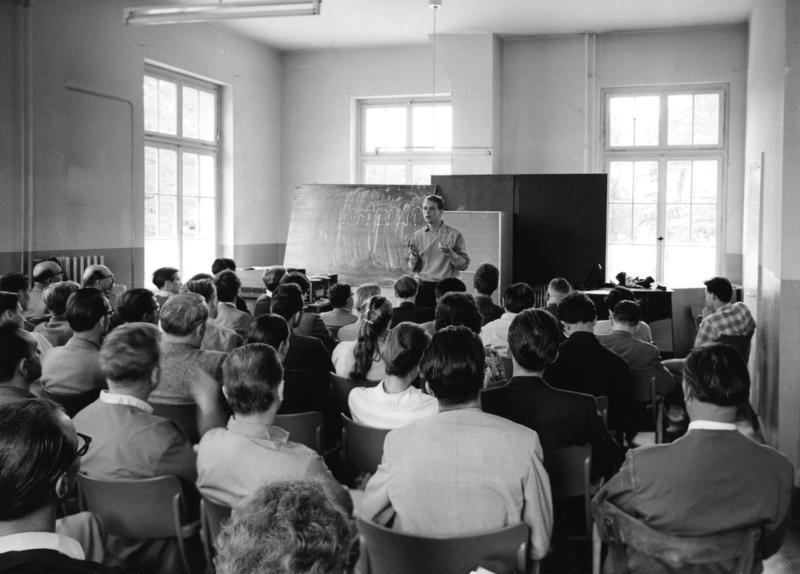
The concept of controlled chance music has its roots in the early 20th century, with composers like Arnold Schoenberg and Anton Webern experimenting with chance elements in their works. However, it was Werner Meyer-Eppler's lectures at the Darmstadt International Summer Courses for New Music that popularized the term 'aleatoric music'. Meyer-Eppler defined aleatoric music as a process that is determined in general but depends on chance in detail. This concept was further explored by composers like John Cage and Karlheinz Stockhausen, who used chance elements in their compositions to create unique sounds and challenge traditional notions of music.
⚙️ How It Works
The process of creating controlled chance music involves using various techniques to introduce chance elements into the composition. This can include using dice, coin tosses, or other random number generators to determine aspects of the music, such as melody, harmony, or rhythm. Composers may also use graphic notation, where the performer is given a visual representation of the music, but the exact realization is left to their interpretation. For example, John Cage's famous piece 'Imaginary Landscape No. 1' uses a combination of chance elements and traditional notation to create a unique sound. Similarly, Karlheinz Stockhausen's 'Telemusik' uses a mixture of electronic and acoustic elements, with chance elements determining the timing and duration of the sounds.
🌍 Cultural Impact
Controlled chance music has had a significant impact on the cultural landscape, influencing not only classical music but also other genres like jazz and rock. The use of chance elements has allowed composers to push the boundaries of traditional music and create new, innovative sounds. For example, the Beatles' song 'Revolution 9' features a section of aleatoric music, where the band members improvised and experimented with chance elements. Similarly, the composer Brian Eno has used chance elements in his music, creating unique and innovative sounds. The influence of controlled chance music can also be seen in the work of contemporary composers like Steve Reich and Phillip Glass, who have used chance elements in their compositions to create complex and intricate sounds.
🔮 Legacy & Future
The legacy of controlled chance music continues to be felt today, with many composers and musicians experimenting with chance elements in their work. The use of technology has also made it easier for composers to incorporate chance elements into their music, with software programs and algorithms allowing for greater control and precision. For example, the composer Marc Battier has used computer algorithms to generate aleatoric music, creating unique and complex sounds. As the music world continues to evolve, it will be interesting to see how controlled chance music continues to influence and shape the sound of the future. With the rise of artificial intelligence and machine learning, we may see new and innovative ways of using chance elements in music, pushing the boundaries of what is possible and creating new and exciting sounds.
Key Facts
- Year
- 1950s
- Origin
- Europe
- Category
- culture
- Type
- concept
Frequently Asked Questions
What is aleatoric music?
Aleatoric music is a type of music that incorporates chance elements into the composition, creating a unique sound with each performance. This can include using dice, coin tosses, or other random number generators to determine aspects of the music, such as melody, harmony, or rhythm. Composers like John Cage and Karlheinz Stockhausen have used aleatoric music to push the boundaries of traditional music and create new, innovative sounds.
How does controlled chance music work?
Controlled chance music involves using various techniques to introduce chance elements into the composition. This can include using graphic notation, where the performer is given a visual representation of the music, but the exact realization is left to their interpretation. Composers may also use software programs and algorithms to generate aleatoric music, creating unique and complex sounds. For example, the composer Marc Battier has used computer algorithms to generate aleatoric music, creating unique and complex sounds.
What is the cultural impact of controlled chance music?
Controlled chance music has had a significant impact on the cultural landscape, influencing not only classical music but also other genres like jazz and rock. The use of chance elements has allowed composers to push the boundaries of traditional music and create new, innovative sounds. For example, the Beatles' song 'Revolution 9' features a section of aleatoric music, where the band members improvised and experimented with chance elements. Similarly, the composer Brian Eno has used chance elements in his music, creating unique and innovative sounds.
Who are some notable composers of controlled chance music?
Some notable composers of controlled chance music include John Cage, Karlheinz Stockhausen, and Werner Meyer-Eppler. These composers have used aleatoric music to push the boundaries of traditional music and create new, innovative sounds. Other composers, such as Steve Reich and Phillip Glass, have also experimented with chance elements in their music, creating complex and intricate sounds.
What is the future of controlled chance music?
The future of controlled chance music is exciting and uncertain. With the rise of artificial intelligence and machine learning, we may see new and innovative ways of using chance elements in music, pushing the boundaries of what is possible and creating new and exciting sounds. Composers will continue to experiment with aleatoric music, creating unique and complex sounds that challenge traditional notions of music. As technology continues to evolve, we can expect to see even more innovative uses of chance elements in music, leading to new and exciting developments in the world of controlled chance music.