
Contents
Overview
The genesis of the CubeSat standard can be traced to 1999, a pivotal year when Jordi Puig-Suari, then a professor at California Polytechnic State University, San Luis Obispo, and Bob Twiggs, a professor at Stanford University's Space Systems Development Laboratory, collaboratively developed the foundational specifications. Their aim was to create a standardized, accessible platform that would equip students with practical engineering and project management skills essential for designing, building, and testing small satellites destined for low Earth orbit (LEO). This initiative was a direct response to the high cost and complexity of traditional satellite development, which often placed space research out of reach for many educational institutions. The initial concept focused on a 10 cm cube, a size that balanced miniaturization with sufficient space for scientific payloads and essential subsystems, laying the groundwork for what would become a global phenomenon in space exploration.
⚙️ How It Works
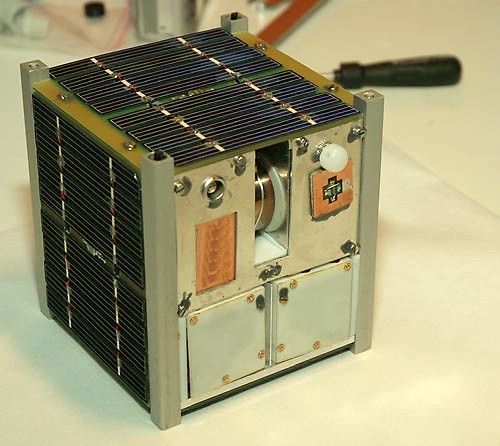
At its heart, a CubeSat is defined by its modular, cubic form factor. Larger configurations, such as 3U (30 cm long), 6U, or even 12U, are built by stacking these basic units. Each unit adheres to strict dimensional and mass constraints. The internal architecture is highly standardized, often employing commercial off-the-shelf (COTS) components for avionics, power systems, and communication modules to reduce costs and development time. Deployment is a critical aspect; CubeSats are typically ejected from a dispenser, often mounted on the International Space Station (ISS) or integrated as secondary payloads on larger launch vehicles like SpaceX's Falcon 9 or Rocket Lab's Electron, ensuring they reach their intended orbital paths efficiently.
📊 Key Facts & Numbers
The scale of CubeSat deployment is nothing short of staggering. As of December 2023, more than 2,300 CubeSats have been launched into orbit, a figure that has grown exponentially since the first deployments in the early 2000s. The cost of developing and launching a single CubeSat can range from tens of thousands to a few hundred thousand dollars, a fraction of the millions required for traditional satellites. In 2013, a significant shift occurred: for the first time, more than half of all CubeSat launches were for non-academic purposes, signaling the burgeoning commercial and governmental interest in this technology, with estimates suggesting the small satellite market, heavily influenced by CubeSats, could reach $10 billion by 2025.
👥 Key People & Organizations
Beyond the pioneering academics Jordi Puig-Suari and Bob Twiggs, numerous individuals and organizations have shaped the CubeSat landscape. California Polytechnic State University and Stanford University remain central hubs for CubeSat development and education. Companies like தன்மை Space (formerly Pumpkin Space), Astro Digital, and Spire Global have emerged as major players, building and operating large constellations of CubeSats for various commercial applications. Governmental agencies such as NASA and the European Space Agency (ESA) actively support CubeSat missions through programs like NASA's Educational Launch of Nano-satellites (ELaNa) and ESA's Fly Your Satellite! initiative, providing launch opportunities and technical guidance, further solidifying the ecosystem.
🌍 Cultural Impact & Influence
CubeSats have profoundly democratized space access, transforming it from an exclusive domain of large governmental agencies and corporations into a more accessible arena for universities, startups, and even individual researchers. This accessibility has fostered a vibrant ecosystem of innovation, leading to rapid advancements in miniaturized sensors, communication technologies, and propulsion systems. The cultural impact is evident in the proliferation of university-led space programs and the emergence of new commercial space ventures focused on data services, Earth observation, and in-orbit technology demonstrations. The visual aesthetic of these small, standardized cubes has also become iconic, representing a new era of agile, cost-effective space exploration, a stark contrast to the monolithic satellites of the past.
⚡ Current State & Latest Developments
The current landscape of CubeSats is characterized by increasing sophistication and ambition. Missions are pushing the boundaries of LEO, with CubeSats now being designed for lunar missions, interplanetary trajectories, and even deep space exploration, exemplified by NASA's Mariner-class missions adapted for CubeSat form factors. Constellations of hundreds or thousands of CubeSats are being deployed for global internet services, remote sensing, and scientific monitoring, such as Starlink's ambitious satellite internet project, though not exclusively CubeSats, it shares the miniaturization ethos. Furthermore, advancements in miniaturized electric propulsion systems are enabling CubeSats to perform more complex orbital maneuvers and extend their operational lifetimes, moving beyond simple LEO deployments. The development of standardized interfaces like the P-POD (Poly-Pico Satellite Orbital Deployer) continues to streamline integration and deployment processes.
🤔 Controversies & Debates
Despite their widespread adoption, CubeSats are not without controversy. A significant concern is the growing problem of space debris. The sheer number of CubeSats launched, coupled with their often limited propulsion capabilities, raises questions about orbital sustainability and the potential for collisions. Critics argue that the ease of launch and lower cost can lead to a "launch and forget" mentality, increasing the risk of defunct satellites becoming orbital hazards. Another debate centers on the reliability of COTS components in the harsh space environment, with some missions experiencing premature failures due to radiation or thermal stress, challenging the notion of cost-saving without compromising mission integrity. The regulatory framework for managing these smaller satellites also remains a point of contention, with calls for stricter guidelines on deorbiting and end-of-life disposal.
🔮 Future Outlook & Predictions
The future of CubeSats points towards even greater capabilities and broader applications. We can anticipate CubeSats playing a crucial role in lunar exploration, serving as scouts for larger missions or forming distributed sensor networks around the Moon, potentially supporting the Artemis program. Interplanetary CubeSat missions, like NASA's MarCO mission to Mars, are likely to become more common, leveraging their low cost for deep space reconnaissance. The trend towards larger constellations for global services will continue, potentially leading to increased competition and consolidation in the market. Furthermore, advancements in AI and autonomous operations will enable CubeSats to perform more complex tasks with less ground intervention, while in-orbit servicing and assembly techniques may allow for the construction of larger structures from multiple CubeSat modules, blurring the lines between small and large satellites.
💡 Practical Applications
CubeSats have found practical applications across a remarkably diverse range of fields. In Earth observation, constellations of CubeSats provide high-resolution imagery for agriculture, disaster monitoring, and environmental tracking, with companies like Planet Labs operating thousands of such satellites. For scientific research, they enable cost-effective platforms for atmospheric studies, space weather monitoring, and astronomical observations, such as the Exo-Planet Explorers initiative. Telecommunications is another major area, with CubeSats forming the backbone of emerging global internet services and specialized communication networks. They are also invaluable for technology demonstration, allowing engineers to test new components, software, and subsystems in the real space environment before committing to more expensive missions, a practice heavily utilized by Air Force Research Laboratory.
Key Facts
- Category
- technology
- Type
- topic