
Contents
- 🎵 Origins & History
- ⚙️ How It Works
- 📊 Key Facts & Numbers
- 👥 Key People & Organizations
- 🌍 Cultural Impact & Influence
- ⚡ Current State & Latest Developments
- 🤔 Controversies & Debates
- 🔮 Future Outlook & Predictions
- 💡 Practical Applications
- 📚 Related Topics & Deeper Reading
- Frequently Asked Questions
- References
- Related Topics
Overview
The genesis of Dada can be traced to the Cabaret Voltaire in Zürich, Switzerland, around 1916, a neutral ground amidst the carnage of World War I. Figures like Hugo Ball, Tristan Tzara, Hans Arp, and Richard Huelsenbeck, many of them émigrés fleeing the war, coalesced around a shared disgust for the prevailing social and political order. Ball, in his 1916 Dada Manifesto, articulated a profound rejection of logic and reason, seeing them as complicit in the war's irrationality. This wasn't merely an artistic rebellion; it was a philosophical and existential outcry against a civilization that had seemingly lost its mind. The movement's name itself, purportedly chosen by chance by sticking a knife into a dictionary, embodies its embrace of randomness and defiance of conventional meaning. From Zürich, the virus of Dada spread rapidly, infecting artistic centers like Berlin, where George Grosz and Raoul Hausmann injected a potent political critique, and Paris, where it found fertile ground among writers and artists like André Breton and Marcel Duchamp.
⚙️ How It Works
Dada's operational methodology was a deliberate assault on traditional artistic techniques and sensibilities. Instead of painting or sculpting with conventional materials, Dadaists embraced collage, photomontage, readymades, and assemblage. Marcel Duchamp famously presented ordinary objects, like a urinal titled 'Fountain' (1917), as art, challenging the very definition of artistic creation and the role of the artist. Sound poems, such as Ball's 'Karawane' (1916), eschewed linguistic sense in favor of pure phonetic exploration, aiming to evoke primal emotions. Performances at venues like the Cabaret Voltaire were chaotic, often confrontational affairs, featuring simultaneous poems, abstract music, and provocative costumes, designed to disorient and awaken the audience from their passive acceptance of societal norms. The emphasis was on chance, spontaneity, and the subversion of established hierarchies, making the process as significant as the final product, if not more so.
📊 Key Facts & Numbers
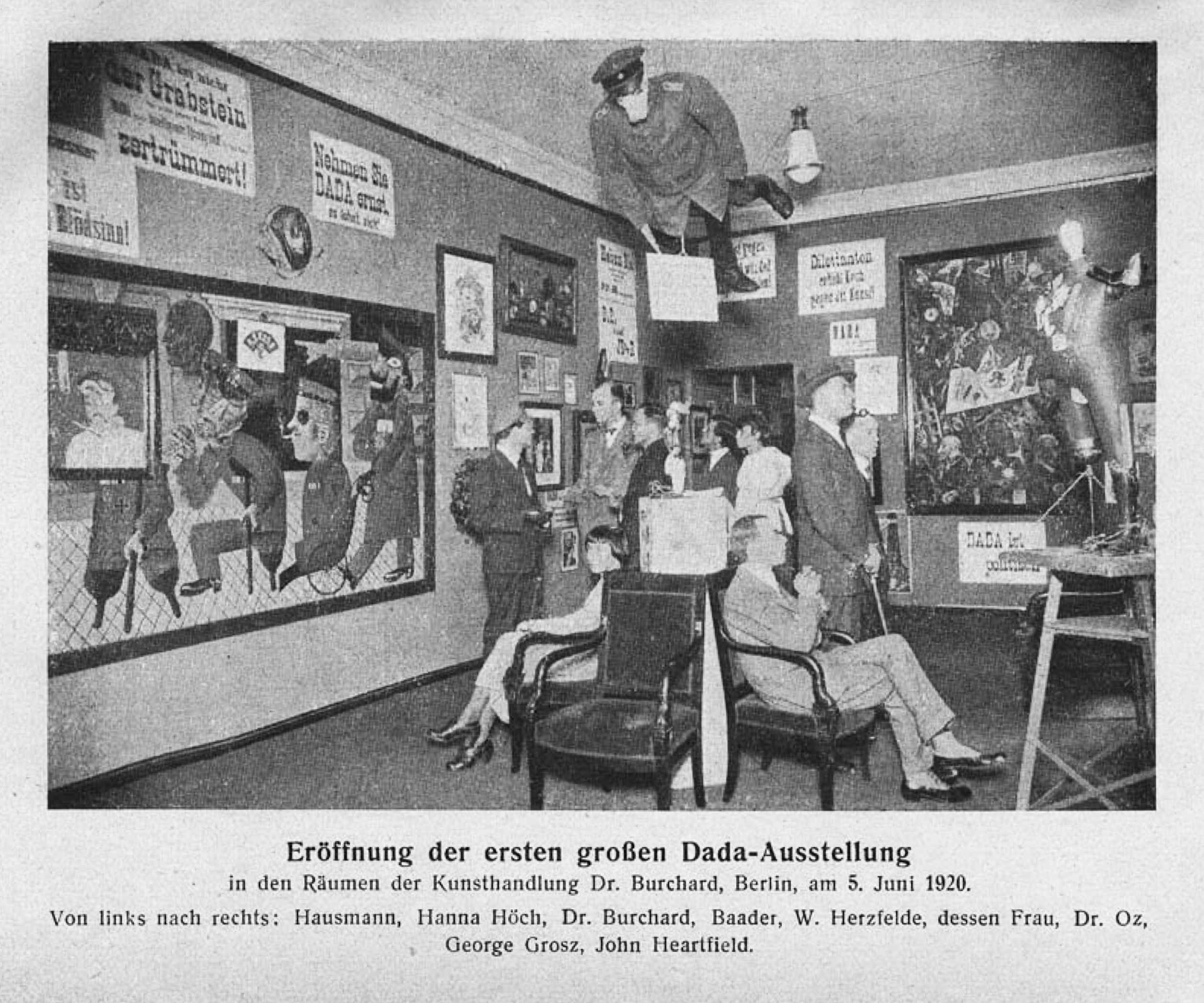
The Dada movement, though relatively short-lived in its initial burst, had a profound and measurable impact. It spanned at least four major centers: Zürich, Berlin, Paris, and New York City. The Cabaret Voltaire, its birthplace, hosted an estimated 6,000 visitors between February 1916 and September 1917. In Berlin alone, Dada exhibitions drew significant attention, with the First International Dada Fair in 1920 attracting thousands of attendees and generating considerable press, both positive and negative. The movement's influence can be seen in the subsequent rise of Surrealism, which inherited much of Dada's anti-rational spirit, and in the development of Fluxus and performance art in the mid-20th century. While precise financial figures for Dada artworks from its active period are scarce, later works by key figures like Duchamp have fetched tens of millions of dollars at auction, underscoring its enduring market value.
👥 Key People & Organizations
Key figures who shaped the Dada landscape include Hugo Ball, the poet and performer often credited with founding the movement and articulating its initial manifesto. Tristan Tzara, a Romanian-born poet, was a central theorist and promoter, known for his manifestos and his role in spreading Dada to Paris. In Germany, Raoul Hausmann and Hannah Höch were pioneers of photomontage, using the medium for sharp political commentary. Marcel Duchamp, though often associated with the New York Dada group, was a pivotal figure whose readymades fundamentally questioned artistic authorship and value. Other significant contributors include Man Ray, Kurt Schwitters, and Max Ernst, each bringing unique approaches to collage, assemblage, and provocative expression. Organizations like the Cabaret Voltaire in Zürich and the Dada galleries in Berlin served as crucial hubs for exhibitions and performances.
🌍 Cultural Impact & Influence
Dada's legacy is immense, acting as a crucial precursor to many subsequent artistic and cultural movements. Its embrace of absurdity and anti-art sentiment directly paved the way for Surrealism, with many Dadaists transitioning into the new movement. The radical questioning of artistic value and the use of everyday objects as art profoundly influenced Conceptual Art and Pop Art. Furthermore, Dada's confrontational performance style and its critique of societal norms laid groundwork for performance art and activist art. The movement's spirit of irreverence and its challenge to established authority continue to resonate in contemporary art, music, and even internet meme culture, demonstrating an enduring cultural resonance that transcends its initial historical context.
⚡ Current State & Latest Developments
While Dada as a cohesive movement largely dissolved by the mid-1920s, its principles and spirit are perpetually reanimated. Contemporary artists continue to draw inspiration from Dada's embrace of chance, collage, and political critique. The rise of digital art and internet culture has seen a resurgence of Dada-esque absurdity and anti-establishment sentiment, particularly in online communities and meme creation. Exhibitions revisiting Dada themes and artists are frequent, ensuring its continued relevance in art historical discourse. For instance, major retrospectives of artists like Hannah Höch continue to draw significant crowds and critical acclaim, demonstrating the enduring power of her Dada-era work. The spirit of Dada lives on in any artistic endeavor that seeks to disrupt, provoke, and question the status quo.
🤔 Controversies & Debates
The primary controversy surrounding Dada was its very existence: was it art, or was it merely nihilistic destruction? Critics at the time often decried Dada works as meaningless, childish, or even offensive. The use of readymades, like Marcel Duchamp's 'Fountain,' sparked intense debate about what constitutes art and the role of the artist's intention versus the viewer's perception. Some saw Dada as a destructive force that offered no constructive alternatives, merely tearing down existing structures without providing a replacement. The political engagement of groups like Berlin Dada, particularly their sharp critiques of the Weimar Republic, also generated significant backlash and accusations of being overly radical or propagandistic. The question of whether Dada's embrace of irrationality was a genuine philosophical stance or a performative gesture remains a point of discussion among art historians.
🔮 Future Outlook & Predictions
The future of Dada's influence lies in its continued capacity to inspire artistic rebellion and critical thinking. As global events continue to challenge societal norms and expose perceived irrationalities, the Dadaist impulse to respond with absurdity and critique is likely to resurface. We may see new forms of digital Dada emerge, utilizing AI and virtual reality to create novel forms of collage and provocative experiences. The movement's emphasis on chance and spontaneity could find new expression in generative art and algorithmic creativity. Furthermore, as political and social tensions persist, Dada's legacy of using art as a tool for protest and exposing hypocrisy will undoubtedly continue to inform activist artists and movements seeking to challenge power structures. The question remains: when will the next major Dadaist eruption occur, and what form will it take?
💡 Practical Applications
While Dada itself was primarily an artistic and philosophical movement rather than a practical technology, its principles have found surprising applications. The use of collage and photomontage, pioneered by Dadaists like Hannah Höch and Raoul Hausmann, became foundational techniques in graphic design, advertising, and later, digital art. The concept of the 'readymade,' as exemplified by Marcel Duchamp's urinal, influenced Conceptual Art and continues to inform contemporary art practices where the idea behind the work is paramount. Dada's embrace of chance and randomness has parallels in fields like algorithmic art and experimental music composition. Moreover, Dada's spirit of anti-establishment critique and its use of provocative imagery can be seen as a direct ancestor to modern forms of political satire and street art, such as Banksy's work, which often employs shock value and subversion to convey a message.
Key Facts
- Year
- 1916-1924
- Origin
- Zürich, Switzerland
- Category
- movements
- Type
- movement
Frequently Asked Questions
What was the main goal of the Dada movement?
The primary goal of the Dada movement was to protest against the senselessness and brutality of World War I by rejecting logic, reason, and traditional aesthetic values. Dadaists aimed to shock audiences, expose the absurdity of the prevailing social and political order, and create a new form of expression that reflected the chaos and disillusionment of their time. They sought to dismantle established artistic conventions and provoke a visceral reaction rather than passive contemplation, using art as a weapon against the perceived madness of civilization.
Who were the key figures associated with Dada?
Key figures in the Dada movement include Hugo Ball, who founded the Cabaret Voltaire and wrote the first Dada Manifesto; Tristan Tzara, a central theorist and promoter who helped spread Dada internationally; Marcel Duchamp, whose readymades challenged the definition of art; Hannah Höch and Raoul Hausmann, pioneers of photomontage in Berlin; and artists like Man Ray, Max Ernst, and Kurt Schwitters. These individuals, through their diverse practices in poetry, visual arts, and performance, collectively defined the movement's radical spirit.
How did Dada influence later art movements?
Dada's influence on subsequent art movements is profound and far-reaching. It directly paved the way for Surrealism, as many Dadaists transitioned into this new movement, carrying over its interest in the irrational and subconscious. Dada's questioning of artistic value and its use of everyday objects as art were foundational for Conceptual Art and Pop Art. Furthermore, its confrontational performance style and critique of societal norms laid the groundwork for performance art and activist art, demonstrating an enduring impact on artistic expression and social commentary.
What is a 'readymade' in the context of Dada?
A 'readymade' is an ordinary manufactured object that a Dada artist selected and presented as a work of art, often with minimal or no alteration. Marcel Duchamp is most famous for this concept, with his 'Fountain' (a urinal) being a prime example from 1917. The readymade challenged traditional notions of artistic skill, originality, and aesthetic judgment, forcing viewers to question what constitutes art and the role of the artist's choice and context in bestowing artistic status upon an object.
Was Dada truly anti-art, or was it a new form of art?
This is a central debate surrounding Dada. While Dadaists often declared themselves 'anti-art,' their actions—exhibiting works, publishing manifestos, and organizing performances—were undeniably artistic endeavors. They were not simply destroying art but rather attempting to redefine it by stripping away bourgeois conventions and embracing chaos, chance, and intellectual provocation. Many argue that Dada was not anti-art but rather a radical critique and expansion of what art could be, pushing boundaries and questioning its very definition, thereby creating a new, albeit often unsettling, form of artistic expression.
Where did Dada originate and how did it spread?
Dada originated in Zürich, Switzerland, around 1916, primarily at the Cabaret Voltaire, as a response to the horrors of World War I. Many of its early proponents were émigrés seeking refuge from the conflict. From Zürich, the movement quickly spread to other major European cities, including Berlin, where it took on a more overtly political character with figures like George Grosz and Raoul Hausmann. It also gained traction in Paris, influencing many writers and artists, and had a significant presence in New York City, with figures like Marcel Duchamp and Man Ray. This rapid dissemination highlights the widespread disillusionment and desire for radical change across the continent.
What is the significance of the name 'Dada'?
The origin of the name 'Dada' is itself a testament to the movement's embrace of chance and absurdity. According to Tristan Tzara and others, the name was chosen arbitrarily, possibly by sticking a knife into a dictionary or by randomly selecting words. This act of choosing a name without inherent meaning or logical derivation perfectly encapsulated Dada's rejection of rationalism and its celebration of randomness. The word itself, meaning 'hobbyhorse' in French and 'yes, yes' in Romanian, added to its nonsensical and playful quality, defying easy interpretation and embodying the movement's spirit of playful subversion.