
Contents
- 📈 What is Earnings Per Share (EPS)?
- 💡 Who Needs to Know About EPS?
- 🧮 The EPS Formula: Simple Math, Big Impact
- ⚖️ Basic vs. Diluted EPS: The Devil's in the Details
- ⭐ Why EPS Matters (and When It Doesn't)
- 📉 How to Use EPS in Your Investment Strategy
- 📊 Where to Find EPS Data
- 🤔 Common Misconceptions About EPS
- 🚀 The Future of EPS Reporting
- 💬 Got Questions About EPS?
- Frequently Asked Questions
- Related Topics
Overview
Earnings Per Share (EPS) is a fundamental metric that reveals how much profit a company has generated for each outstanding share of its common stock. It's calculated by dividing a company's net income (after preferred dividends) by the total number of outstanding common shares. Investors widely use EPS as a quick gauge of a company's profitability and its ability to generate value for shareholders. A rising EPS generally signals a healthy, growing company, while a declining EPS can be a red flag, prompting further investigation into the underlying business performance. However, EPS can be manipulated through share buybacks, making it crucial to analyze alongside other financial indicators.
💡 Who Needs to Know About EPS?
If you're an investor, whether you're a seasoned institutional investor or just starting with a small portfolio, EPS is non-negotiable. It's a fundamental tool for comparing the profitability of different companies, especially within the same industry. financial analysts rely heavily on EPS to make buy, sell, or hold recommendations. Even company executives use EPS targets to guide strategic decisions and measure performance against competitor benchmarks.
🧮 The EPS Formula: Simple Math, Big Impact
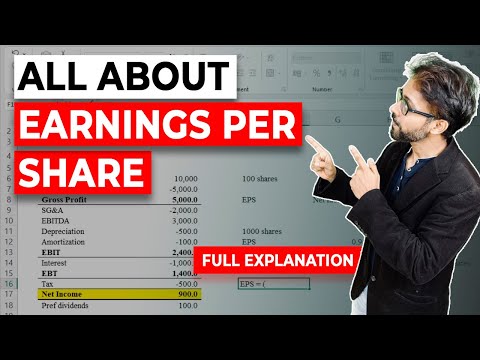
The basic EPS formula is elegantly simple: Net Income minus Preferred Dividends, divided by the Average Outstanding Common Shares. Net income is the company's profit after all expenses and taxes. Preferred dividends are subtracted because EPS focuses on common shareholders. The average outstanding shares account for changes in the number of shares over the reporting period. This calculation provides a clear, quantifiable measure of profitability per share, making it a direct link between a company's bottom line and its shareholders' stake.
⚖️ Basic vs. Diluted EPS: The Devil's in the Details
Beyond the basic calculation, investors must understand diluted earnings per share. Diluted EPS considers the impact of all potential future shares that could be issued from convertible securities like stock options, warrants, and convertible bonds. If these were exercised, they would increase the number of outstanding shares, thus diluting the earnings per share for existing common shareholders. Companies are required to report both basic and diluted EPS, with diluted EPS generally being the more conservative and informative figure for long-term investors.
⭐ Why EPS Matters (and When It Doesn't)
EPS is a powerful tool because it directly links a company's earnings to its share price. A higher EPS generally supports a higher stock price, assuming other factors remain constant. It's a key component in valuation multiples like the P/E ratio. However, EPS can be manipulated through share buybacks, which reduce the number of outstanding shares, artificially inflating EPS without necessarily increasing actual profits. Furthermore, EPS doesn't account for a company's debt levels or cash flow, making it just one piece of the investment puzzle.
📉 How to Use EPS in Your Investment Strategy
When building an investment strategy, look for companies with a history of consistent EPS growth. Compare a company's EPS growth rate to its industry peers and the overall market. A rising EPS trend is often more important than a single quarter's figure. Use EPS in conjunction with other financial metrics like revenue growth, profit margins, and free cash flow to get a comprehensive view. A high P/E ratio coupled with strong EPS growth can indicate a promising investment, but always do your due diligence.
📊 Where to Find EPS Data
You can find EPS data readily available on financial news websites like Bloomberg, Reuters, and Yahoo Finance. Company quarterly reports and annual reports filed with the SEC are the official sources for this information. Many brokerage platforms also provide EPS data directly on their stock quote pages, often with historical trends and analyst estimates.
🤔 Common Misconceptions About EPS
A common misconception is that EPS is the sole determinant of a stock's value. While critical, it's only one factor. Another is believing that a high EPS automatically means a stock is a good buy; its valuation relative to its EPS (like the P/E ratio) are equally important. Some also mistakenly think EPS is the same as cash flow per share, which is a different, though also vital, metric. Understanding these distinctions prevents misinformed investment decisions.
🚀 The Future of EPS Reporting
The future of EPS reporting may see increased emphasis on non-GAAP earnings adjustments, which can offer a clearer picture of operational performance by excluding one-time or non-recurring items. However, this also increases the potential for manipulation. There's also ongoing discussion about standardizing how certain expenses, like stock-based compensation, are treated. The goal is to make EPS a more reliable and comparable metric across different companies and accounting standards.
💬 Got Questions About EPS?
Have you ever wondered how a specific company's EPS compares to its competitors? Or perhaps you're curious about the impact of stock splits on EPS calculations? We can help clarify these and other complex financial concepts. Feel free to ask about specific financial ratios, valuation methods, or how to interpret EPS trends in your investment portfolio. Our goal is to demystify financial reporting for everyone.
Key Facts
- Year
- 1920
- Origin
- The concept of reporting earnings on a per-share basis gained prominence in the early 20th century, evolving alongside modern accounting practices and the growth of publicly traded corporations. Its standardization and widespread adoption were significantly influenced by accounting bodies and regulatory requirements aimed at providing investors with comparable financial data.
- Category
- Finance & Investing
- Type
- Financial Metric
Frequently Asked Questions
What is the difference between basic and diluted EPS?
Basic EPS is calculated using the weighted average number of outstanding common shares. Diluted EPS takes this a step further by including the potential impact of all dilutive securities, such as stock options and convertible bonds, as if they had been exercised. Diluted EPS is generally a more conservative measure because it reflects a scenario with more shares outstanding, thus potentially lowering the EPS.
Can EPS be negative?
Yes, EPS can be negative if a company reports a net loss for the period instead of a net profit. A negative EPS indicates that the company lost money for each outstanding share of common stock. Consistently negative EPS is a strong indicator of financial distress and is typically a red flag for investors.
How do stock buybacks affect EPS?
Stock buybacks reduce the number of outstanding shares. Since the denominator in the EPS calculation is the number of outstanding shares, a reduction in this number will increase EPS, assuming net income remains constant. This can make EPS look better without necessarily improving the company's underlying profitability.
Is a higher EPS always better?
While a higher EPS generally indicates greater profitability, it's not always better in isolation. You must consider the company's valuation (e.g., P/E ratio), its industry, and its growth prospects. A company with a very high EPS might still be overvalued if its stock price is disproportionately high. Consistency and growth trends in EPS are often more telling than a single high number.
What are common uses for EPS data?
EPS is primarily used to assess a company's profitability on a per-share basis, compare profitability across different companies, calculate the P/E ratio for stock valuation, and track a company's financial performance over time. It's a key metric for both individual and institutional investors.
Where can I find a company's EPS history?
You can find a company's EPS history on financial news websites like Yahoo Finance, Google Finance, and Bloomberg. Official company filings with the SEC, such as their 10-Q (quarterly) and 10-K (annual) reports, also provide detailed historical EPS data.