Elder Futhark | Vibepedia
The Elder Futhark, also known as the Pan-Germanic Futhark, stands as an early runic alphabet, a foundational writing system employed by Germanic peoples. Its…
Contents
Overview
The Elder Futhark's genesis is firmly rooted in the early Germanic cultures of Northern Europe, emerging around the 2nd century CE. While its precise origins remain a subject of scholarly debate, it's widely believed to have been influenced by or derived from Latin or Etruscan alphabets, adapted to the phonetic needs of Proto-Germanic languages. Early inscriptions, such as those found on the Vimose comb and the Einang stone in Norway, showcase its nascent form. This script was not merely a tool for record-keeping but was imbued with magical and ritualistic significance, used for charms, curses, and divination. Its spread across Germanic territories, from Scandinavia to the Rhine, marks it as a unifying cultural element during a period of significant migration and societal flux. The 24 distinct runes of the Elder Futhark formed the bedrock upon which later runic scripts, like the Younger Futhark and the Anglo-Saxon futhorc, would be built.
⚙️ How It Works
The Elder Futhark is a unicase alphabet, meaning each rune represents a single sound without distinction between uppercase and lowercase forms. It comprises 24 runes, each with a unique name and phonetic value. The runes are traditionally divided into three groups of eight, known as 'ættir' (families): the Freyr's ætt (Fehu to Wunjô), Hagal's ætt (Haglaz to Ingwaz), and Tyr's ætt (Tiwaz to Othala). Each rune's name, such as 'Fehu' (cattle/wealth) or 'Ansuz' (god/divine inspiration), often carried symbolic meaning that extended beyond its phonetic function. The direction of writing could vary, appearing from right to left, left to right, or boustrophedon (alternating directions), as seen on artifacts like the Rök stone. The angular shapes of the runes were practical for carving into wood, bone, or stone, avoiding horizontal strokes that would run parallel to the grain of the material.
📊 Key Facts & Numbers
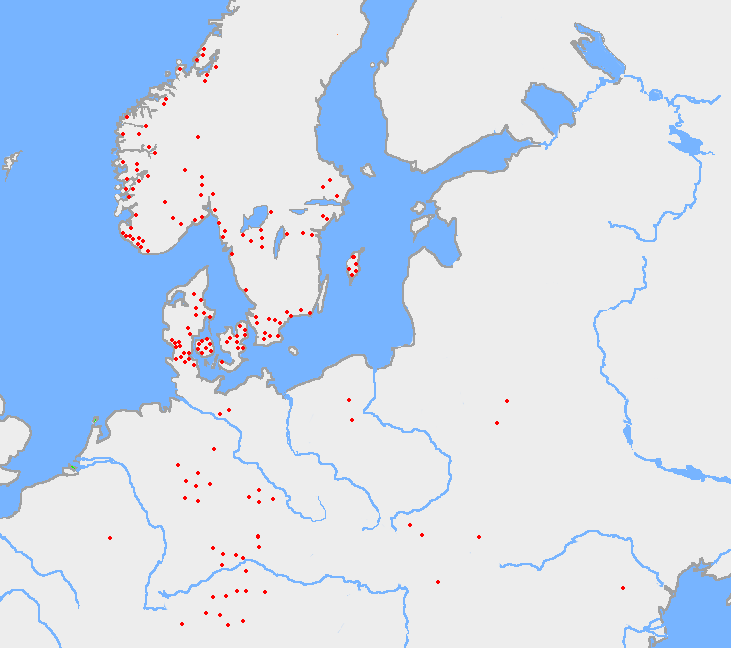
The Elder Futhark was in active use for approximately 600 years, from its inception around 200 CE to the 8th century CE. Over 3,000 Elder Futhark inscriptions have been discovered worldwide, with the majority originating from Scandinavia and Germanic Europe. The longest known Elder Futhark inscription is found on the Rök stone in Sweden, containing over 700 runes. The earliest inscriptions are typically found on small objects, with an estimated 70% of known runic inscriptions being shorter than ten characters. By the late 8th century, the script began its transition, with Scandinavia reducing the alphabet to 16 runes for the Younger Futhark, while areas like Anglo-Saxon England expanded it to 28-33 characters for the Anglo-Saxon futhorc.
👥 Key People & Organizations
While no single 'founder' of the Elder Futhark is known, its development is intrinsically linked to the linguistic and cultural evolution of the Germanic peoples. Key figures in its rediscovery and decipherment include the Norwegian philologist [[sophus-bugge|Sophus Bugge], who in 1865 made significant strides in understanding the runic inscriptions, building upon earlier work by scholars like Carl Gustaf Sundelius. Archaeological discoveries at sites like Vimose in Denmark have provided crucial early examples of runic usage. Organizations like the Nordic Museum in Stockholm and various university departments of archaeology and linguistics worldwide continue to study and preserve runic artifacts. The University of Oslo has been a significant center for runological research, particularly through its Museum of Cultural History.
🌍 Cultural Impact & Influence
The Elder Futhark's cultural impact is profound, serving as a primary window into the pre-Christian Germanic world. Its symbols were not merely letters but potent icons, often associated with deities, magic, and fate. The names of the runes reflect the deep integration of runic script with Germanic mythology, with runes like 'Tiwaz' (named after the god Tiw) and 'Ingwaz' (associated with the deity Ing). This script influenced the development of later alphabets and left an indelible mark on the linguistic landscape of Northern Europe. In modern times, the Elder Futhark has experienced a resurgence in popularity within Neopagan and Heathen communities, where its runes are used for divination, ritual, and as symbols of cultural heritage. The aesthetic of runic inscriptions has also found its way into art, design, and popular culture, often evoking a sense of ancient mystery and power.
⚡ Current State & Latest Developments
In the contemporary era, the Elder Futhark is primarily studied within academic circles of runology, archaeology, and historical linguistics. Ongoing archaeological excavations continue to unearth new runic inscriptions, providing fresh data for analysis. Digital humanities projects are increasingly employing computational methods to analyze runic corpora, aiding in decipherment and pattern recognition. While its use as a primary writing system ceased centuries ago, the Elder Futhark remains a vibrant subject of interest for historical reenactment groups, occultists, and those seeking to connect with ancestral traditions. The ongoing debate about the precise origins and influences of the Elder Futhark, particularly its relationship with Proto-Germanic dialects, continues to drive new research and scholarly discourse.
🤔 Controversies & Debates
The most significant controversy surrounding the Elder Futhark lies in its interpretation and application, particularly outside of academic contexts. The appropriation of runic symbols by Nazi Germany in the 20th century, notably the use of the 'Sowilō' rune (often stylized as a lightning bolt) by the SS, has led to its association with hate ideologies for some. This has created a complex ethical landscape for modern practitioners of Heathenry and Neopaganism, who often seek to reclaim the runes' original meanings while distancing themselves from their misappropriation. Furthermore, the precise phonetic values and meanings of certain runes, particularly 'Peorð', remain debated among scholars, with theories ranging from a cup or dice to a mysterious, possibly magical, concept. The precise relationship between the Elder Futhark and earlier or contemporary writing systems, such as Cirth or Ogham, is also a point of ongoing academic discussion.
🔮 Future Outlook & Predictions
The future of Elder Futhark studies will likely see a continued integration of digital technologies, enabling more sophisticated analysis of existing inscriptions and potentially aiding in the discovery of new ones. As archaeological exploration progresses in Northern Europe and beyond, further discoveries of runic artifacts are anticipated, potentially shedding new light on the script's geographical spread and evolution. The ongoing academic discourse regarding the precise linguistic and cultural influences on the Elder Futhark will undoubtedly continue, with new theories emerging as scholars refine their understanding of the Migration Period. Furthermore, the cultural resonance of the runes within Neopagan and esoteric communities suggests their continued use and reinterpretation, ensuring their presence in contemporary spiritual and cultural practices for the foreseeable future. The potential for new decipherments of particularly cryptic inscriptions, such as those on the Golden Horns of Gallehus, remains a tantalizing prospect.
💡 Practical Applications
The practical applications of the Elder Futhark today are primarily in the realms of historical study, cultural revival, and esoteric practices. Academics utilize it for linguistic analysis, historical reconstruction, and understanding ancient Germanic societies. For Neopagans and Heathens, the runes serve as tools for divination, meditation, and ritual, often carved onto talismans or used in casting. Artists and designers incorporate runic motifs into their work to evoke a sense of history, mysticism, or Nordic heritage. Some individuals also use the runes for personal journaling or as a unique form of calligraphy. While no longer a functional writing system for everyday communication, its symbolic power and historical weight lend t
Key Facts
- Category
- history
- Type
- topic