
Contents
- 🌟 Overview: The Architect of Grief's Journey
- 📚 Key Contributions: Beyond the Five Stages
- 💡 The Kübler-Ross Model: A Framework, Not a Formula
- 🌍 Impact & Legacy: Shifting the Conversation on Death
- 🤔 Criticisms & Nuances: The Evolving Understanding
- 📖 Recommended Reading: Essential Works
- 🎓 Further Exploration: Academic & Personal Growth
- 🤝 Connecting with the Ideas: Resources and Communities
- Frequently Asked Questions
- Related Topics
Overview
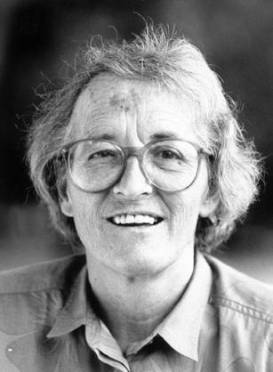
Elisabeth Kübler-Ross, a name synonymous with the exploration of death and dying, fundamentally reshaped how Western society approaches mortality. Born in Switzerland in 1926 and later becoming a naturalized American citizen, she was a psychiatrist whose groundbreaking work challenged the prevailing medical and societal taboos surrounding death. Her seminal 1969 book, On Death and Dying, introduced the world to her now-famous five stages of grief, offering a structured way to understand the emotional journey of those facing terminal illness. This work wasn't just academic; it was deeply humanistic, born from countless hours spent with patients at the University of Chicago. Her approach emphasized dignity, compassion, and open communication in the face of life's ultimate transition, making her a pivotal figure in the study of death.
📚 Key Contributions: Beyond the Five Stages
While most widely recognized for the five stages of grief (denial, anger, bargaining, depression, and acceptance), Kübler-Ross's contributions extend far beyond this framework. She was a tireless advocate for hospice care, recognizing the profound need for specialized support for the terminally ill and their families. Her work highlighted the importance of a patient's emotional and spiritual well-being, not just their physical symptoms. She also pioneered research into near-death experiences (NDEs), collecting thousands of accounts that suggested a continuity of consciousness beyond physical death. This exploration into NDEs, detailed in books like On Life After Death, positioned her as a bridge between medical science and the spiritual, pushing the boundaries of conventional thought.
💡 The Kübler-Ross Model: A Framework, Not a Formula
It's crucial to understand that the Kübler-Ross model was never intended as a rigid, linear progression through which all individuals must pass. Kübler-Ross herself emphasized that these stages were observations, not prescriptive steps. People may experience them in different orders, revisit stages, or skip some entirely. The model's true value lies in its ability to validate the complex emotional landscape of grief and dying, providing a language and a framework for understanding what can otherwise feel chaotic and overwhelming. It serves as a guide for caregivers, therapists, and individuals navigating loss, fostering empathy and facilitating more meaningful conversations about end-of-life care and bereavement.
🌍 Impact & Legacy: Shifting the Conversation on Death
Kübler-Ross's impact on societal attitudes towards death and dying is undeniable. Before her work, death was often a hushed, clinical event, relegated to hospitals and funeral homes with little open discussion. Her willingness to confront the taboo and speak directly about the experiences of the dying opened a vital dialogue. She championed the idea that dying is a natural part of life and that individuals should have agency and comfort during this process. This shift paved the way for the growth of the hospice movement and increased awareness of palliative care, fundamentally altering how healthcare systems and families approach end-of-life decisions and the quality of life for those nearing its end.
🤔 Criticisms & Nuances: The Evolving Understanding
Despite its widespread acceptance, the Kübler-Ross model has faced significant criticism. Some researchers argue that the stages are too prescriptive and don't account for the diverse cultural and individual variations in grieving. Others point out that the original research was based on a specific population of terminally ill patients, and its application to general bereavement might be limited. Furthermore, the focus on acceptance has sometimes been misinterpreted as a call to suppress emotions or rush through the grieving process. Contemporary perspectives often emphasize a more fluid, non-linear model of grief, acknowledging that healing is not about 'getting over' loss but learning to live with it, a concept explored in grief counseling today.
📖 Recommended Reading: Essential Works
For anyone seeking to understand Elisabeth Kübler-Ross's profound insights, starting with her own words is essential. On Death and Dying (1969) remains her most influential work, detailing her initial observations and interviews with terminally ill patients. Questions and Answers on Death and Dying (1974) offers further clarification and addresses common queries. For those interested in her work on near-death experiences, On Life After Death (1991) provides a compelling collection of accounts and her reflections. These books offer direct access to her compassionate philosophy and the foundation of her legacy in end-of-life care.
🎓 Further Exploration: Academic & Personal Growth
Beyond her foundational texts, further exploration can deepen one's understanding of Kübler-Ross's multifaceted legacy. Engaging with biographies and critical analyses of her work can provide historical context and diverse perspectives on her contributions. Studying the evolution of thanatology and the hospice movement reveals how her ideas have been adopted, adapted, and debated within academic and clinical circles. For those drawn to the spiritual and existential dimensions, exploring contemporary research on consciousness, NDEs, and the intersection of psychology and spirituality offers a broader context for her pioneering investigations into life's ultimate mysteries.
🤝 Connecting with the Ideas: Resources and Communities
Connecting with the ideas of Elisabeth Kübler-Ross often involves engaging with organizations and communities dedicated to compassionate end-of-life care and grief support. Many hospice organizations and palliative care centers draw directly from her foundational principles. Online forums and support groups for individuals experiencing grief can offer shared experiences and practical advice, often referencing her stages as a point of discussion. Attending workshops or lectures on grief, death, and dying can also provide structured learning environments and opportunities to connect with others who are exploring these profound aspects of the human experience, fostering a sense of shared understanding and support in navigating loss and grief.
Key Facts
- Year
- 1969
- Origin
- Switzerland/United States
- Category
- Philosophy & Psychology
- Type
- Person
Frequently Asked Questions
What are the five stages of grief according to Elisabeth Kübler-Ross?
Elisabeth Kübler-Ross identified five stages that individuals may experience when facing terminal illness or significant loss: denial, anger, bargaining, depression, and acceptance. It's crucial to remember that these stages are not necessarily linear, and individuals may experience them in different orders, revisit them, or skip some altogether. Her work emphasized that these were observations of common emotional responses, not a rigid prescription for grieving.
Was Elisabeth Kübler-Ross a doctor?
Yes, Elisabeth Kübler-Ross was a Swiss and American psychiatrist. She earned her medical degree and specialized in psychiatry, which provided her with the clinical background and expertise to conduct her groundbreaking research on death and dying. Her medical training allowed her to approach the subject with both scientific rigor and profound empathy for her patients.
What is the main criticism of the Kübler-Ross model?
The primary criticism of the Kübler-Ross model is that it's often misinterpreted as a rigid, linear progression that everyone must follow. Critics argue that grief is far more complex and individualized, influenced by culture, personality, and the nature of the loss. Some research suggests that the stages may not apply universally, particularly to bereavement outside of terminal illness, and that focusing too much on 'acceptance' can be detrimental to the grieving process.
Besides the five stages of grief, what else is Elisabeth Kübler-Ross known for?
Elisabeth Kübler-Ross was a significant advocate for hospice care and compassionate end-of-life support, championing the dignity and emotional well-being of the terminally ill. She also conducted pioneering research into near-death experiences (NDEs), collecting numerous accounts and exploring the possibility of consciousness beyond physical death. Her work fundamentally shifted societal conversations around death, making it a more open and humanistic topic.
Where can I find more information about Elisabeth Kübler-Ross's work?
Her most influential book is On Death and Dying (1969). Other key works include Questions and Answers on Death and Dying (1974) and On Life After Death (1991). Many academic resources on thanatology and hospice care also discuss her contributions extensively. Exploring biographies and critical analyses can offer further context.
Is the Kübler-Ross model still relevant today?
Yes, the Kübler-Ross model remains relevant as a foundational concept and a widely recognized framework for understanding emotional responses to loss and terminal illness. While contemporary grief theories often emphasize a more fluid and individualized process, the model still serves as a valuable starting point for discussion, validation, and education. Its enduring presence highlights its significant contribution to opening dialogue about death and dying.