English Romantic Movement | Vibepedia
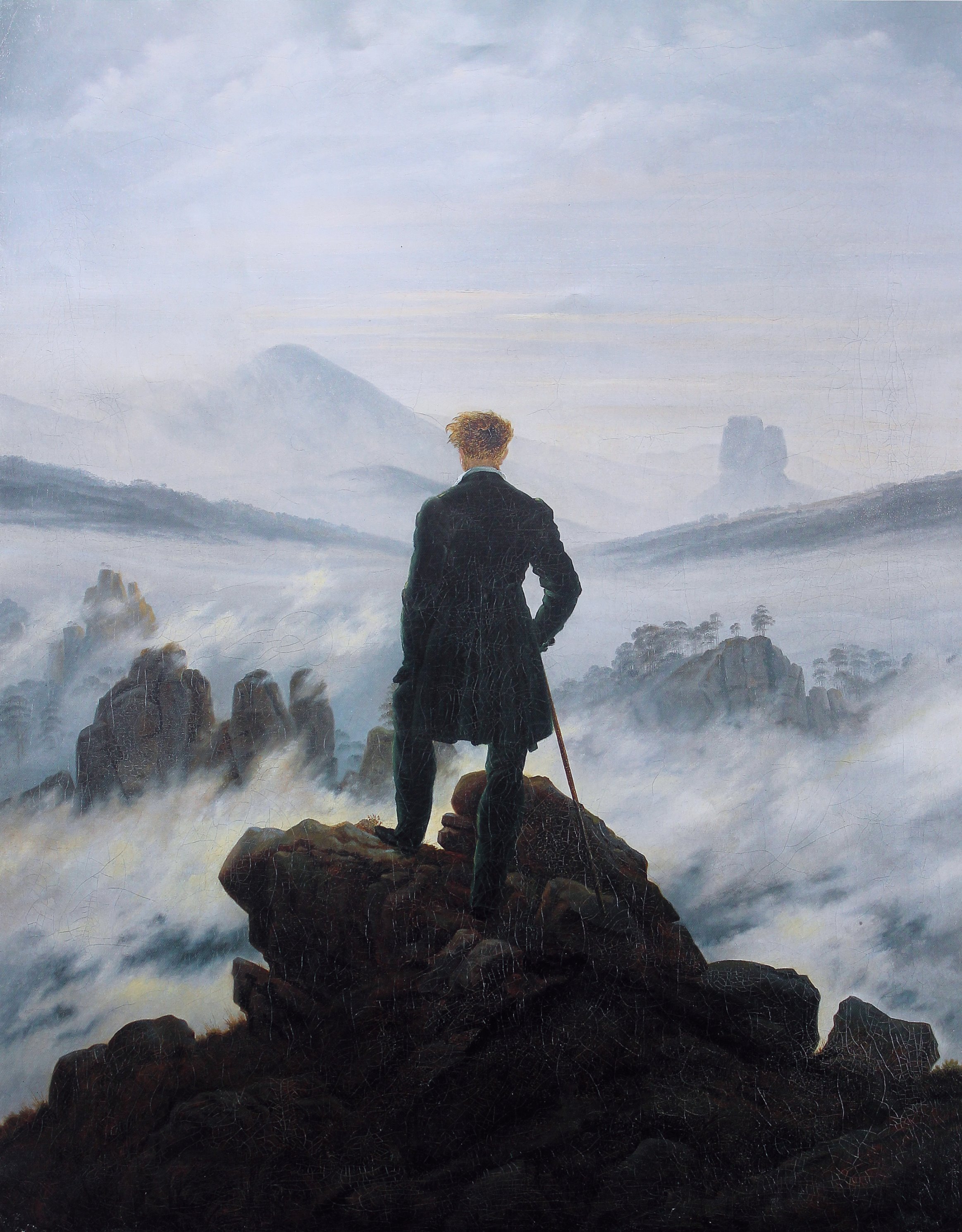
The English Romantic movement, flourishing roughly from the late 18th century to the mid-19th century, was a profound artistic, literary, and intellectual…
Contents
- 🎵 Origins & History
- ⚙️ How It Works
- 📊 Key Facts & Numbers
- 👥 Key People & Organizations
- 🌍 Cultural Impact & Influence
- ⚡ Current State & Latest Developments
- 🤔 Controversies & Debates
- 🔮 Future Outlook & Predictions
- 💡 Practical Applications
- 📚 Related Topics & Deeper Reading
- Frequently Asked Questions
- References
- Related Topics
Overview
The English Romantic movement didn't erupt from a vacuum; it was a deliberate, often passionate, counter-current to the prevailing rationalism of the Age of Enlightenment and the dehumanizing march of the Industrial Revolution. Precursors like Jean-Jacques Rousseau's emphasis on natural goodness and Johann Wolfgang von Goethe's Sturm und Drang movement in Germany laid crucial groundwork, but it was in England, particularly with the publication of Lyrical Ballads in 1798 by William Wordsworth and Samuel Taylor Coleridge, that the movement truly coalesced. This seminal work explicitly rejected the neoclassical poetic conventions of the time, advocating for the use of everyday language and the exploration of common life, infused with a profound emotional and imaginative sensibility. The subsequent decades saw a flourishing of poets and thinkers who, in their own distinct ways, amplified these core tenets, creating a vibrant, albeit sometimes fractious, artistic community.
⚙️ How It Works
At its heart, the English Romantic movement operated on a principle of heightened subjective experience. It posited that true understanding and artistic creation stemmed not from empirical observation or logical deduction, but from intuition, emotion, and the boundless power of the imagination. Nature was not merely a backdrop but a living, breathing entity, a source of spiritual solace, awe, and profound truth, often depicted in its wild, untamed, and sublime aspects. Romantics also harbored a deep reverence for the past, particularly the medieval era, viewing it as a time of greater heroism, authenticity, and connection to the spiritual. This often manifested as a fascination with folklore, myth, and the supernatural, elements that offered an escape from the perceived drabness and materialism of their industrializing present.
📊 Key Facts & Numbers
The English Romantic movement spanned roughly from 1798 to 1837, though its influence extended well beyond these dates. Over 100,000 copies of Lyrical Ballads were sold in its first decade, signaling a significant public appetite for its new aesthetic. The movement produced at least three generations of poets, with the first generation including Wordsworth and Coleridge, the second featuring Lord Byron, Percy Bysshe Shelley, and John Keats, and a later wave influenced by their spirit. By the 1830s, the movement's core ideas had permeated over 50 major literary journals and periodicals across Britain, reaching an estimated readership of over 2 million.
👥 Key People & Organizations
The pantheon of English Romanticism is dominated by its poets, but also includes influential thinkers and artists. William Wordsworth and Samuel Taylor Coleridge are foundational figures, their collaboration on Lyrical Ballads marking a watershed moment. Lord Byron, with his rebellious persona and epic narratives, became an international celebrity. Percy Bysshe Shelley championed radical political and social ideals in his lyrical poetry, while John Keats explored themes of beauty, mortality, and negative capability with unparalleled sensuousness. Beyond poetry, Mary Shelley's Frankenstein offered a Gothic exploration of Romantic themes, and artists like J.M.W. Turner and John Constable captured the sublime power of nature on canvas, often employing dramatic light and atmospheric effects that mirrored the poetic sensibilities of their contemporaries.
🌍 Cultural Impact & Influence
The influence of the English Romantic movement is immeasurable, shaping not only subsequent literary and artistic trends but also broader cultural attitudes. Its emphasis on individualism and subjective experience laid groundwork for existentialism and modern psychology. The Romantic idealization of nature spurred early environmental consciousness and continues to inform conservation movements. Its exploration of the supernatural and the Gothic has had a lasting impact on genres like horror fiction and fantasy literature. The movement's spirit of rebellion against established norms and its celebration of the artist as a visionary figure continue to resonate in contemporary art and counter-cultural movements, influencing everything from punk rock lyrics to independent filmmaking.
⚡ Current State & Latest Developments
While the peak of the English Romantic movement has long passed, its echoes are perpetually present. Contemporary artists and writers continue to engage with Romantic themes, reinterpreting them through modern lenses. For instance, the resurgence of interest in folk music and storytelling often carries a Romantic sensibility, emphasizing authenticity and connection to tradition. Furthermore, the ongoing debates about humanity's relationship with nature, particularly in the face of climate change, directly echo the Romantic reverence for the natural world. The spirit of individual artistic expression, a hallmark of Romanticism, remains a driving force in the digital age, evident in the proliferation of independent creators on platforms like youtube-com and soundcloud-com.
🤔 Controversies & Debates
The English Romantic movement is not without its controversies and criticisms. Skeptics often point to a perceived elitism in its focus on the individual genius and its sometimes-unrealistic idealization of nature, which could overlook the harsh realities of rural life or the labor of those who worked the land. The movement's fascination with the past has been criticized for romanticizing periods that were also rife with social injustice and inequality. Furthermore, some argue that the intense focus on emotion and subjectivity could lead to solipsism or an unhealthy detachment from social responsibility, a critique often leveled against figures like Lord Byron for their perceived bohemian lifestyles. The very definition of 'sublime' and 'beauty' remains a point of contention, with varying interpretations across different critics and eras.
🔮 Future Outlook & Predictions
The future outlook for Romantic ideals remains robust, albeit in transformed guises. The increasing awareness of ecological crises suggests a continued, perhaps even amplified, need for a deep connection with nature, potentially leading to new forms of eco-poetics and environmental art. The digital age, while seemingly antithetical to Romantic introspection, also provides new avenues for expressing subjective experience and fostering communities around shared artistic sensibilities, as seen in the rise of fan fiction communities and online poetry slams. The Romantic emphasis on imagination as a force for change could also inspire innovative solutions to complex global challenges, fostering a spirit of creative problem-solving that transcends purely rational approaches. The enduring appeal of the Romantic hero, the outsider who challenges convention, suggests this archetype will continue to inspire artists and thinkers.
💡 Practical Applications
While the English Romantic movement is primarily an artistic and literary phenomenon, its principles have found practical applications and resonance in various fields. The emphasis on intuition and subjective experience has influenced therapeutic approaches, such as art therapy, which uses creative expression to address emotional and psychological well-being. The Romantic idealization of nature has directly informed the establishment of national parks and conservation areas worldwide, starting with early movements in Britain and later influencing the National Park Service in the United States. Furthermore, the Romantic spirit of innovation and challenging established norms is a driving force in entrepreneurship and design thinking, encouraging individuals and organizations to pursue bold, imaginative visions that deviate from conventional paths, as exemplified by the disruptive strategies of companies like Tesla.
Key Facts
- Year
- c. 1798-1837
- Origin
- United Kingdom
- Category
- movements
- Type
- movement
Frequently Asked Questions
What was the main goal of the English Romantic movement?
The primary goal of the English Romantic movement was to champion the power of emotion, imagination, and individual experience as superior to pure reason and logic. Romantics sought to reconnect humanity with nature, explore the supernatural, and idealize the past, reacting against the perceived coldness of the Age of Enlightenment and the dehumanizing effects of the Industrial Revolution. They aimed to elevate subjective feeling and intuition as valid paths to truth and artistic expression.
How did Romanticism differ from the Enlightenment?
The Enlightenment emphasized reason, logic, scientific inquiry, and universal laws, viewing the world as a machine to be understood through empirical observation. Romanticism, conversely, prioritized emotion, intuition, imagination, and individual subjectivity, seeing the world as a living, spiritual entity. While the Enlightenment celebrated order and societal progress through rational means, Romanticism often found solace and truth in the wildness of nature, the mysteries of the supernatural, and the unique inner world of the individual artist.
Who were the most important figures of the English Romantic movement?
The most pivotal figures include the poets William Wordsworth and Samuel Taylor Coleridge, whose 'Lyrical Ballads' (1798) is considered a foundational text. Later prominent poets included Lord Byron, Percy Bysshe Shelley, and John Keats. Beyond poetry, Mary Shelley's novel 'Frankenstein' is a key work of Romantic Gothic literature, and artists like J.M.W. Turner captured the movement's aesthetic on canvas.
What themes did English Romantic writers frequently explore?
Key themes included the sublime beauty and power of nature, often depicted in its wild and untamed forms. They explored the depths of human emotion, the mysteries of the supernatural, and a fascination with folklore and the medieval past. Individualism, rebellion against societal norms, and the artist's unique visionary capacity were also central preoccupations, as seen in works by William Blake and Samuel Taylor Coleridge.
Was the Romantic movement purely about nature and emotion, or did it have political dimensions?
While nature and emotion were central, the English Romantic movement was deeply intertwined with political and social commentary. Many Romantics, like Percy Bysshe Shelley and Lord Byron, were radical thinkers who championed liberty, equality, and social justice, often inspired by the ideals of the French Revolution. They criticized tyranny, social injustice, and the exploitative nature of industrial capitalism, advocating for individual freedom and reform, though their approaches varied significantly.
How did the Industrial Revolution influence Romanticism?
The Industrial Revolution served as a major catalyst for the Romantic movement, providing a stark contrast to the ideals they championed. Romantics viewed industrialization as a destructive force that alienated humans from nature, fostered materialism, and created grim, dehumanizing urban environments. Their art and poetry often served as an escape from or a critique of this new industrial reality, celebrating the pastoral, the natural, and the authentic human spirit in opposition to the machine and the factory.
What is the legacy of the English Romantic movement today?
The legacy of English Romanticism is profound and enduring. Its emphasis on individual expression, emotional depth, and the importance of nature continues to influence art, literature, and philosophy. It laid the groundwork for environmentalism, inspired counter-cultural movements, and shaped our understanding of the artist as a unique visionary. The Romantic spirit of questioning authority and seeking deeper meaning remains relevant in contemporary society, impacting everything from music to social activism.