
Contents
Overview
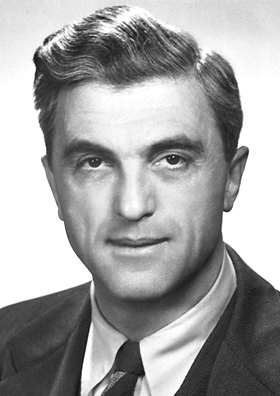
Born in Zurich, Switzerland, Felix Bloch hailed from a family that valued intellectual pursuits. His early education at the Swiss Federal Institute of Technology Zurich (ETH Zurich) provided a rigorous foundation in physics and mathematics. He later pursued doctoral studies at Leipzig University under the renowned Werner Heisenberg, a pivotal experience that shaped his theoretical approach. Bloch's early career saw him working at institutions like Leiden University and later ETH Zurich before emigrating to the United States. His move to Stanford University marked the beginning of a long and distinguished tenure, where he would become a leading light in theoretical physics and mentor generations of scientists.
⚙️ How It Works
Bloch's most significant contribution, nuclear magnetic resonance (NMR), hinges on the quantum mechanical property of atomic nuclei known as spin. When placed in an external magnetic field, these nuclei absorb and re-emit electromagnetic radiation at specific frequencies, unique to their chemical environment. Bloch's theoretical framework, alongside Purcell's experimental demonstrations, explained how these resonant frequencies could be precisely measured. This phenomenon allowed scientists to probe the structure and dynamics of molecules with unprecedented detail, revealing the intricate arrangement of atoms within matter and the nature of chemical bonds.
📊 Key Facts & Numbers
The impact of Bloch's work is quantifiable: his Nobel Prize in Physics was awarded for discoveries that have since led to technologies impacting billions. His theoretical work on electron behavior in crystals, particularly the concept of Bloch waves, is fundamental to understanding semiconductors, which form the backbone of modern electronics. Research continues to refine and expand upon Bloch's foundational discoveries. The potential for misuse of advanced magnetic field technologies also presents a continuous ethical consideration.
👥 Key People & Organizations
Felix Bloch's scientific journey was profoundly influenced by his doctoral advisor, Werner Heisenberg, a giant of quantum mechanics. His Nobel Prize co-recipient, Edward Mills Purcell, independently arrived at similar conclusions regarding NMR, highlighting the scientific zeitgeist of the era. At Stanford University, Bloch served as a distinguished professor. His wife, Clara Gertrud Leonore Misch, was also a physicist, and their daughter, Ruth H. Bloch, pursued a career in medicine.
🌍 Cultural Impact & Influence
The theoretical framework developed by Bloch, particularly the concept of Bloch waves, is foundational to understanding the electronic properties of crystalline solids, directly enabling the development of semiconductors and integrated circuits. The advent of MRI scanners, a direct descendant of NMR research, has revolutionized medical diagnostics, allowing non-invasive visualization of soft tissues and revolutionizing patient care worldwide. His work on ferromagnetism underpins the technology behind hard disk drives and other magnetic storage media, a cornerstone of the digital age. The Nobel Prize itself, awarded to Bloch, signifies the profound and lasting impact of his scientific contributions on a global scale.
⚡ Current State & Latest Developments
While Bloch's foundational discoveries are well-established, research continues to refine and expand upon them. Advances in quantum computing are exploring the manipulation of nuclear spins for information processing, building on Bloch's principles. High-resolution NMR spectroscopy remains a critical tool in drug discovery and materials science, with ongoing efforts to increase sensitivity and resolution through novel pulse sequences and hardware. The development of portable and lower-field NMR devices is also expanding accessibility beyond traditional laboratory settings, pushing the boundaries of where these techniques can be applied.
🤔 Controversies & Debates
One of the primary debates surrounding Bloch's work, and NMR in general, centers on the attribution of its development. While Bloch and Purcell shared the Nobel Prize, the precise contributions and timing of their independent discoveries have been a subject of historical discussion. Furthermore, the ethical implications of advanced medical imaging technologies, including MRI scanners, such as data privacy and equitable access, are ongoing societal discussions that indirectly stem from the foundational science Bloch helped establish. The potential for misuse of advanced magnetic field technologies also presents a continuous ethical consideration.
🔮 Future Outlook & Predictions
The future of technologies derived from Bloch's work is exceptionally bright. Continued advancements in MRI technology promise higher resolution, faster scan times, and novel contrast mechanisms, potentially enabling earlier disease detection and more personalized treatments. The application of NMR principles in quantum computing is a rapidly evolving frontier, with the potential to solve complex problems currently intractable for classical computers. Furthermore, exploring exotic magnetic phenomena and developing new magnetic materials will continue to be influenced by Bloch's early theoretical insights, driving innovation in areas like energy storage and advanced sensors.
💡 Practical Applications
The practical applications of Felix Bloch's theoretical insights are vast and transformative. Magnetic Resonance Imaging (MRI) is perhaps the most visible, offering detailed cross-sectional images of the body for diagnosing a wide range of conditions, from tumors to neurological disorders. In chemistry and materials science, NMR spectroscopy is indispensable for determining molecular structures, analyzing reaction pathways, and characterizing the properties of new materials. The principles of ferromagnetism, which Bloch elucidated, are fundamental to the operation of virtually all magnetic storage devices, including hard drives and magnetic tapes, crucial for data storage and retrieval. His work on electron behavior in crystals also directly informs the design and performance of semiconductor devices used in virtually all modern electronics.
Key Facts
- Category
- science
- Type
- person