
Contents
Overview
Freight rail, also known as rail freight or goods transport, is the backbone of global logistics, utilizing trains and railway networks to move vast quantities of cargo. It's a mode of transport distinguished by its energy efficiency, particularly for bulk commodities and long-haul journeys, often outperforming road and air transport in terms of environmental impact per ton-mile. While its origins trace back to the early 19th century with the dawn of the steam locomotive, freight rail has evolved into a sophisticated system employing specialized rolling stock, advanced signaling, and complex network management. Despite facing competition from trucking and the inherent challenges of transshipment costs for businesses without direct rail access, freight rail remains indispensable for industries like mining, agriculture, manufacturing, and energy, moving everything from coal and grain to automobiles and finished goods across continents. Its continued relevance is underscored by ongoing investments in capacity expansion, electrification, and digital technologies aimed at enhancing speed, reliability, and sustainability.
🎵 Origins & History
The genesis of freight rail is inextricably linked to the Industrial Revolution, with the first steam-powered locomotives initially designed to haul coal from mines to canals in the United Kingdom. By the mid-19th century, railway networks were rapidly expanding across North America and Europe, transforming the movement of raw materials and finished goods. The development of specialized freight cars, such as the gondola for bulk commodities and the boxcar for general merchandise, allowed for greater cargo diversity. The late 19th and early 20th centuries saw the consolidation of smaller lines into massive railroad empires, a period often referred to as the "Golden Age of Railroads," solidifying its role as the primary mode of long-distance freight transport before the advent of widespread highway systems and trucking.
⚙️ How It Works
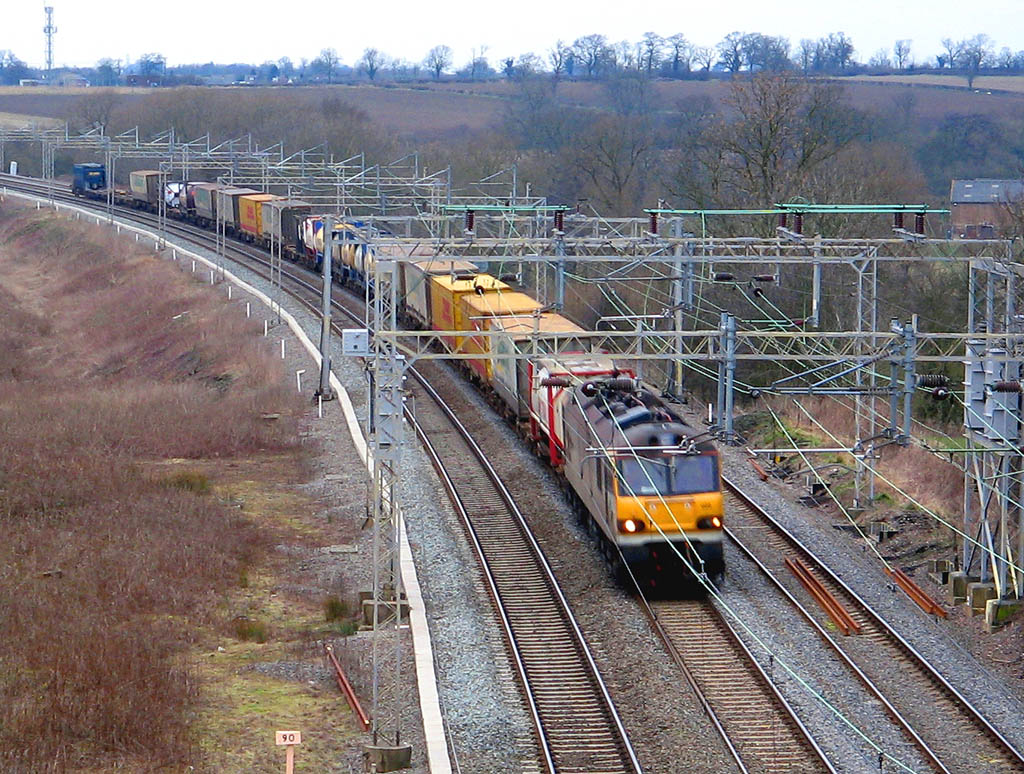
At its core, freight rail operates by coupling specialized railcars, known as wagons internationally or cars in North America, behind one or more locomotives. These locomotives, historically steam-powered but now predominantly diesel-electric or increasingly electric, provide the motive force to pull trains along fixed railway tracks. The weight of the train is distributed across numerous axles, significantly reducing rolling resistance compared to road vehicles, which is the primary reason for its energy efficiency. Freight trains can be categorized by their cargo: bulk trains haul commodities like coal, ore, or grain in large quantities; intermodal trains carry standardized shipping containers or truck trailers; and manifest trains transport a mix of general freight. Advanced signaling systems and Centralized Traffic Control (CTC) are employed to manage train movements, optimize track usage, and ensure safety across complex networks.
📊 Key Facts & Numbers
A single freight train is capable of replacing hundreds of trucks on the highway. Coal and automotive products are consistently among the top commodities transported by rail.
👥 Key People & Organizations
Key players in the freight rail ecosystem include major Class I railroads in North America such as Union Pacific, BNSF Railway, CSX Transportation, Norfolk Southern, and Canadian National Railway. Globally, influential operators include Deutsche Bahn in Germany, Russian Railways, and China Railway. Organizations like the Association of American Railroads (AAR) advocate for industry interests and conduct research, while the Federal Railroad Administration (FRA) in the U.S. and the European Union Agency for Railways (ERA) set regulatory standards. Innovators in locomotive technology, such as Wabtec, are developing advanced diesel-electric and hydrogen-powered engines, while companies like GE Transportation (now part of Wabtec) have been pivotal in developing sophisticated train control systems.
🌍 Cultural Impact & Influence
Freight rail's influence extends far beyond mere logistics, shaping urban development, national economies, and even popular culture. The construction of railway lines often dictated the growth of towns and cities, creating hubs of commerce and industry. Culturally, trains have been a recurring motif in literature, film, and music, symbolizing adventure, progress, and sometimes, the relentless march of industry. The iconic image of a powerful locomotive pulling a long string of cars remains a potent symbol of American industrial might and the vastness of the continent. Furthermore, the inherent efficiency of rail freight contributes to reduced greenhouse gas emissions compared to trucking, positioning it as a critical component of sustainable supply chains and a key element in achieving climate goals set by entities like the United Nations.
⚡ Current State & Latest Developments
The current landscape of freight rail is characterized by a push for modernization and increased efficiency. Companies are investing heavily in Positive Train Control (PTC) systems to enhance safety and prevent accidents. There's a growing focus on intermodal transport, integrating rail with trucking and shipping to create seamless supply chains, particularly for e-commerce fulfillment. Electrification is gaining traction in certain regions, driven by environmental concerns and the desire for reduced operating costs, though the transition is slow and capital-intensive. Digitalization is also a major trend, with the implementation of Internet of Things (IoT) sensors for real-time tracking of cargo and rolling stock, predictive maintenance, and advanced network optimization software. Companies like Wabtec are actively developing and deploying advanced locomotives, including battery-electric and hydrogen fuel cell prototypes, aiming to decarbonize the sector.
🤔 Controversies & Debates
The freight rail industry is no stranger to controversy, primarily revolving around pricing, service levels, and market dominance. Critics, particularly shippers and agricultural groups, often argue that the limited competition among Class I railroads in North America leads to excessive freight rates and inadequate service, especially for smaller businesses or those in less-served regions. The Staggers Rail Act of 1980 in the U.S. deregulated the industry, leading to increased efficiency and profitability but also sparking debates about the balance between market forces and public interest. Concerns about the environmental impact of certain commodities, such as coal, and the safety risks associated with transporting hazardous materials like crude oil also fuel public debate. Furthermore, the potential for rail strikes, as seen in past negotiations, poses significant economic risks, highlighting the industry's critical role and the complexities of labor relations.
🔮 Future Outlook & Predictions
The future of freight rail is poised for significant transformation, driven by technological innovation and the imperative for sustainability. Expect to see a continued acceleration in the adoption of alternative-fuel locomotives, including hydrogen fuel cells and advanced battery-electric systems, particularly for shorter routes and yard operations. The integration of Artificial Intelligence (AI) and machine learning will further optimize network operations,
Key Facts
- Category
- technology
- Type
- topic