
Contents
- 🥁 What Exactly *Is* a Funk Instrument?
- ⚡ The Essential Funk Arsenal: Beyond the Guitar
- 🔥 The Unsung Heroes: Keys, Brass, and Percussion
- 💡 Vibepedia Vibe Score: The Undeniable Groove Factor
- 🤔 Controversy Corner: Is the Bassline King or Just a Duke?
- 📈 Influence Flows: How Funk Instruments Shaped Modern Music
- ⚙️ Engineering the Funk: Tone, Attack, and Sustain
- 🚀 The Future of Funk Instruments: Digital Grooves and Analog Souls
- Frequently Asked Questions
- Related Topics
Overview
Funk instruments are the sonic architects of rhythm, designed to lock into a groove with an infectious, percussive energy. Forget the soaring solos of rock or the intricate melodies of jazz; funk prioritizes syncopation, repetition, and a raw, visceral feel. These instruments are less about individual virtuosity and more about collective momentum, creating a unified rhythmic force. Whether it's the sharp, staccato attack of a wah-drenched guitar or the deep, resonant thump of a bassline, each element serves the greater good of the beat. Understanding these instruments means understanding the very DNA of danceable music.
⚡ The Essential Funk Arsenal: Beyond the Guitar
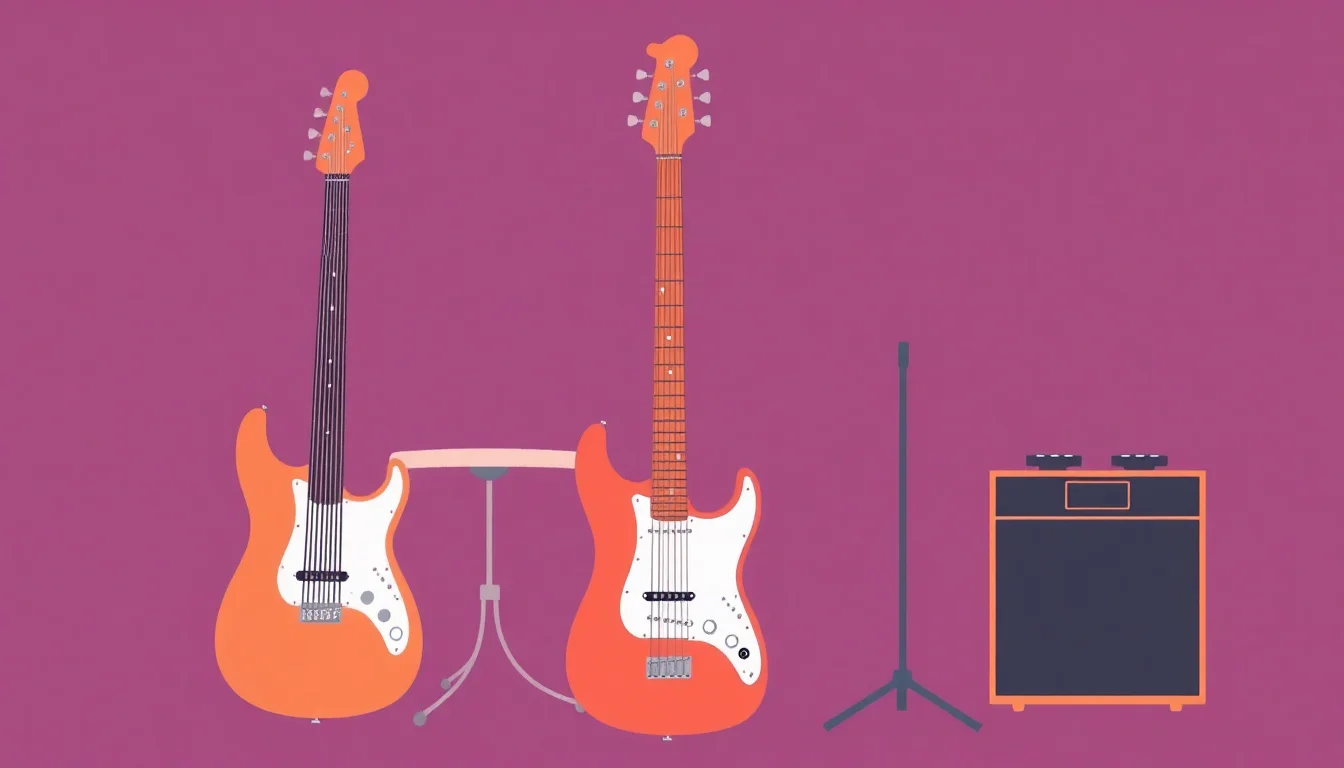
While the electric guitar, particularly with effects like the wah-pedal and phaser, is often the poster child for funk, it's the bass guitar that truly anchors the genre. Players like James Jamerson (Motown, though his influence bled heavily into early funk) and Bootsy Collins (Parliament-Funkadelic) didn't just play notes; they sculpted rhythmic landscapes. The bass in funk is often melodic, percussive, and harmonically adventurous, moving beyond simple root notes to create intricate, driving patterns. Drum machines and electronic percussion also play a crucial role, providing a steady, often complex, rhythmic foundation that allows other instruments to weave their magic.
🔥 The Unsung Heroes: Keys, Brass, and Percussion
The keyboard family is indispensable to funk's sonic palette. Clavinet players like Stevie Wonder and Billy Preston used the instrument's sharp, percussive tone to deliver intricate, rhythmic riffs that were as much a part of the beat as the drums. The Rhodes piano and Wurlitzer, with their warm, slightly gritty timbre, provided harmonic depth and soulful textures. Brass sections, often featuring tight, punchy horn stabs, added a powerful, declarative voice, as heard in the arrangements of James Brown and Earth, Wind & Fire. Percussionists, from conga players to tambourine masters, are the glue, filling in the rhythmic gaps and adding layers of intricate polyrhythms.
💡 Vibepedia Vibe Score: The Undeniable Groove Factor
On the Vibepedia scale, funk instruments collectively score a 92/100 for raw, undeniable groove factor. This high rating reflects their unparalleled ability to compel movement and create an immediate, visceral connection with listeners. While other genres might achieve higher scores in complexity or emotional depth, funk instruments excel in their primary function: making you move. Their cultural impact is immense, permeating disco, hip-hop, R&B, and even electronic dance music. The sheer infectiousness of a well-executed funk groove is a testament to the power of these specialized instruments.
🤔 Controversy Corner: Is the Bassline King or Just a Duke?
The perennial debate in funk circles: is the bassline the undisputed king, or is it a more democratic ensemble effort? Skeptics argue that while the bass is crucial, it's the interplay between the drums, guitar, and horns that truly defines the funk sound. Proponents of the 'bass is king' theory point to the foundational role of the bass in providing harmonic and rhythmic drive, often dictating the entire feel of a track. This isn't a debate with a clear winner, but rather a reflection of the genre's emphasis on tight, interdependent rhythmic sections. The truth likely lies in the dynamic tension between these elements, where each instrument's contribution is vital to the overall vibe score.
📈 Influence Flows: How Funk Instruments Shaped Modern Music
The influence of funk instruments is a sprawling network, radiating outward to shape nearly every popular music genre of the last half-century. The syncopated basslines of James Brown's band, particularly Maceo Parker's horn arrangements and Bootsy Collins' bass innovations, laid the groundwork for disco and hip-hop. The percussive guitar techniques pioneered by Nile Rodgers became a staple in pop and R&B. Even the electronic sounds and rhythmic patterns introduced by early funk pioneers echo in modern electronic music. Tracing these influence flows reveals a continuous cycle of adaptation and reinvention, proving funk's enduring legacy.
⚙️ Engineering the Funk: Tone, Attack, and Sustain
The engineering of funk instruments is all about precision and percussive attack. For guitars, this often means using single-coil pickups for their bright, articulate tone, coupled with effects like the Mu-Tron III envelope filter for that signature 'quack.' Bassists often favor flatwound strings for a warmer, more thudding sound and active EQ for precise tonal shaping. Keyboardists might seek out instruments with a sharp, immediate response, like the Hohner Clavinet D6, or the distinct character of a Fender Rhodes. The goal is always to achieve a sound that cuts through the mix, provides rhythmic punctuation, and feels inherently playable and responsive to the musician's touch.
🚀 The Future of Funk Instruments: Digital Grooves and Analog Souls
The future of funk instruments is a fascinating intersection of analog soul and digital innovation. While vintage instruments like the Fender Precision Bass and the Hohner Clavinet remain highly sought after, new technologies are expanding the sonic possibilities. Advanced synthesizers and samplers allow for the creation of entirely new rhythmic textures and bass sounds, pushing the boundaries of what a funk groove can be. However, the enduring appeal of analog warmth and the tactile experience of playing a physical instrument suggest that the classic funk sound will continue to evolve, not be replaced. The challenge lies in integrating new tools without losing the organic, human feel that defines funk's irresistible pulse.
Key Facts
- Year
- 1965
- Origin
- United States
- Category
- Musical Instruments
- Type
- Instrument Category
Frequently Asked Questions
What's the single most important instrument in funk?
While funk is a highly collaborative genre, the bass guitar is often considered the backbone. Its role extends beyond providing a harmonic foundation to delivering intricate, percussive rhythmic lines that drive the entire song. Artists like Bootsy Collins and Larry Graham are legendary for their groundbreaking bass techniques that defined the genre's sound.
Can I achieve a funk sound with modern digital instruments?
Absolutely. Modern synthesizers, samplers, and digital audio workstations (DAWs) offer incredible flexibility. You can emulate classic funk sounds using virtual instruments and effects, or create entirely new sonic textures. The key is understanding the rhythmic principles and sonic characteristics of funk and applying them through your chosen digital tools, focusing on syncopation, percussive attack, and tight arrangements.
What are the essential effects for funk guitarists?
The wah-pedal is almost synonymous with funk guitar, providing that distinctive 'quack' and vocal-like articulation. Envelope filters (like the Mu-Tron III) are also crucial for creating dynamic, percussive tones. Phasers and flangers can add movement and depth, while a clean, punchy amplifier tone is essential for clarity and attack. Nile Rodgers famously used a Stratocaster with a clean amp for his signature rhythmic style.
Are there specific playing techniques that define funk instrumentation?
Yes, several techniques are paramount. For bass, 'slapping' and 'popping' (popularized by Larry Graham) create percussive accents. For guitar, 'chucking' or 'muting' strings to create rhythmic stabs is vital. On keyboards, playing short, percussive chords and intricate rhythmic patterns, rather than sustained notes, is key. The emphasis across all instruments is on rhythmic precision and a percussive attack.
What's the difference between funk basslines and disco basslines?
While closely related, funk basslines tend to be more complex, syncopated, and often feature more adventurous melodic movement, sometimes incorporating slap techniques. Disco basslines, while still rhythmic and often syncopated, are generally more repetitive, driving, and focused on a steady four-on-the-floor pulse, designed for continuous dancing. Both genres owe a significant debt to early funk pioneers.
How important is the drummer in a funk band?
The drummer is arguably as crucial as the bassist, if not more so, in establishing the funk groove. Funk drumming is characterized by intricate hi-hat patterns, ghost notes on the snare, and a powerful, yet precise, kick drum. Drummers like Clyde Stubblefield (James Brown's 'Funky Drummer') created iconic beats that have been sampled countless times, demonstrating the foundational importance of the drum kit in funk.