
Contents
Overview
The concept of gold nanoparticles dates back to the 19th century, when Michael Faraday first discovered the unique properties of colloidal gold. However, it wasn't until the 20th century that scientists like Richard Feynman and Norio Taniguchi began exploring the potential of nanoparticles in various fields. Today, researchers at institutions like Stanford University and MIT are pushing the boundaries of gold nanoparticle research, with applications in fields like cancer research and biomedical engineering.
⚙️ How It Works
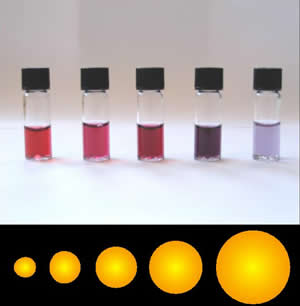
Gold nanoparticles are created through a process known as colloidal synthesis, which involves the reduction of gold ions in a fluid. The resulting nanoparticles can be spherical, rod-like, or even triangular, with sizes ranging from 1-100 nanometers. The unique optical, electronic, and molecular-recognition properties of gold nanoparticles make them an attractive material for various applications, including electron microscopy and nanotechnology. Companies like IBM and Intel are already utilizing gold nanoparticles in their products, and researchers at Harvard University are exploring their potential in biomedicine.
🌍 Cultural Impact
The cultural impact of gold nanoparticles is significant, with potential applications in fields like medicine and energy. For example, gold nanoparticles can be used to create more efficient solar cells and biosensors. Additionally, researchers are exploring the use of gold nanoparticles in cancer treatment, where they can be used to target and destroy cancer cells. The work of scientists like James Tour and George M. Whitesides has been instrumental in advancing our understanding of gold nanoparticles and their potential applications.
🔮 Legacy & Future
As research continues to advance, the legacy and future of gold nanoparticles look promising. With potential applications in fields like electronics and materials science, gold nanoparticles are poised to play a significant role in shaping the future of technology. However, there are also challenges to be addressed, such as the potential environmental impact of gold nanoparticle production and the need for more efficient synthesis methods. Researchers at institutions like Caltech and University of California, Berkeley are working to address these challenges and unlock the full potential of gold nanoparticles.
Key Facts
- Year
- 1857
- Origin
- United Kingdom
- Category
- science
- Type
- concept
Frequently Asked Questions
What are gold nanoparticles?
Gold nanoparticles are a type of colloidal gold, consisting of nanoparticles of gold in a fluid. They have unique optical, electronic, and molecular-recognition properties, making them a subject of substantial research. Companies like NanoString Technologies and Sigma-Aldrich are already utilizing gold nanoparticles in their products.
What are the potential applications of gold nanoparticles?
Gold nanoparticles have potential applications in fields like electron microscopy, electronics, nanotechnology, materials science, and biomedicine. Researchers at institutions like Stanford University and MIT are pushing the boundaries of gold nanoparticle research, with applications in fields like cancer research and biomedical engineering.
How are gold nanoparticles created?
Gold nanoparticles are created through a process known as colloidal synthesis, which involves the reduction of gold ions in a fluid. The resulting nanoparticles can be spherical, rod-like, or even triangular, with sizes ranging from 1-100 nanometers. The unique optical, electronic, and molecular-recognition properties of gold nanoparticles make them an attractive material for various applications, including electron microscopy and nanotechnology.
What are the challenges associated with gold nanoparticles?
There are several challenges associated with gold nanoparticles, including the potential environmental impact of nanoparticle production and the need for more efficient synthesis methods. Researchers at institutions like Caltech and University of California, Berkeley are working to address these challenges and unlock the full potential of gold nanoparticles.
Who are some notable researchers in the field of gold nanoparticles?
Some notable researchers in the field of gold nanoparticles include Michael Faraday, Richard Feynman, and Norio Taniguchi. Their work has been instrumental in advancing our understanding of gold nanoparticles and their potential applications.