
Contents
Overview
Grand Strategy Games (GSGs) are a subgenre of strategy video games that simulate the management of a nation or empire across vast historical or fictional settings. Unlike their 4X cousins, GSGs typically feature asymmetrical starting conditions and a focus on the intricate interplay of diplomacy, economics, warfare, and internal politics on a macro level. Players grapple with managing resources, conducting diplomacy, waging war, and navigating complex internal systems, often over decades or centuries of in-game time. These games, exemplified by titles like Paradox Interactive's flagship series, demand immense patience and strategic foresight, fostering a dedicated community drawn to their deep simulation and replayability. The genre's complexity can be daunting, but its rewards lie in the emergent narratives and the satisfaction of guiding a nation through historical epochs.
🎵 Origins & History
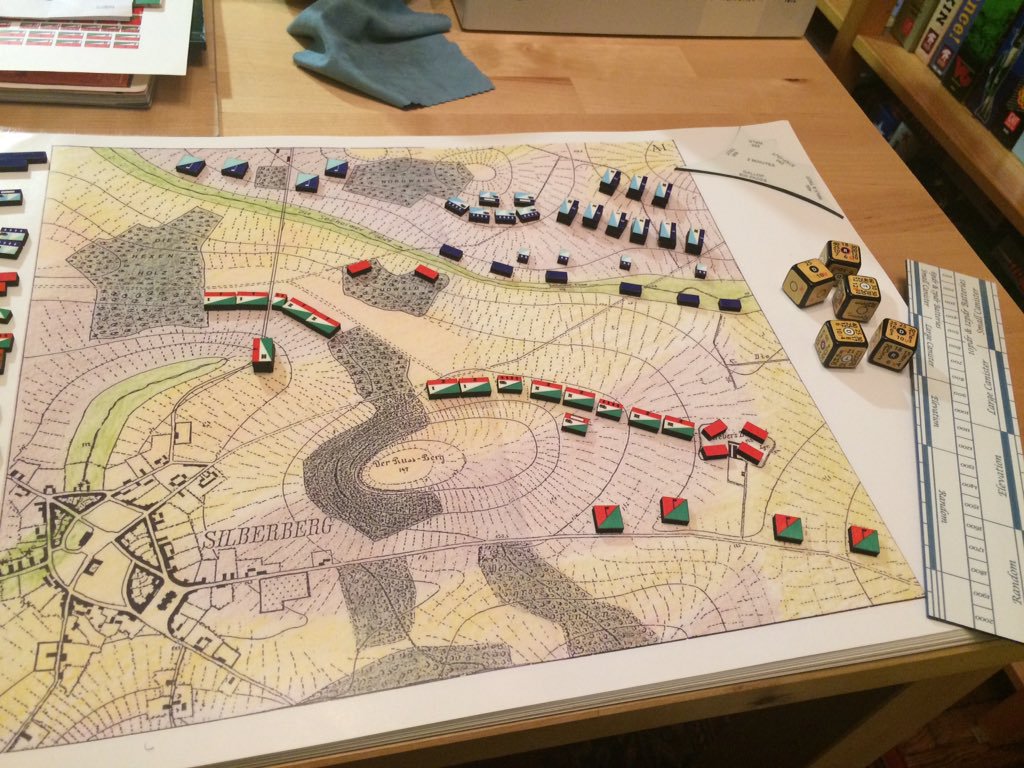
The seeds of grand strategy games were sown in the early days of wargaming and board games, with Strategy & Tactics Magazine's hex-and-counter simulations in the 1970s laying the groundwork. Early computer adaptations began to translate these complex systems to digital platforms. However, the genre truly coalesced in the late 1990s and early 2000s with the emergence of Paradox Interactive, which established many of the core mechanics still prevalent today. The subsequent release of titles further cemented the genre's focus on deep simulation, historical accuracy, and complex internal management, distinguishing it from more combat-centric strategy titles.
⚙️ How It Works
Grand strategy games operate on a macro-strategic level, simulating the entirety of a nation or empire's existence. Players typically manage a wide array of interconnected systems: diplomacy involves forging alliances, declaring rivalries, and managing relationships with dozens of AI-controlled states; economics dictates resource generation, trade, and national wealth; warfare encompasses troop recruitment, movement, logistics, and tactical engagements across vast theaters; and internal politics involves managing stability, succession, technology research, and often complex character interactions. Unlike real-time strategy (RTS) games, GSGs often feature a pausable real-time or turn-based structure, allowing players to meticulously plan their moves. The core loop involves setting long-term objectives and reacting to dynamic geopolitical events, often leading to emergent narratives unique to each playthrough.
📊 Key Facts & Numbers
The grand strategy genre boasts a dedicated player base, with titles often achieving hundreds of thousands of sales. The market for GSGs, while niche compared to mainstream genres, is highly profitable, with many titles maintaining active player counts for over a decade post-launch.
👥 Key People & Organizations
Paradox Interactive stands as the undisputed titan of the grand strategy genre, with its Stockholm-based development studio consistently producing and refining titles. Key figures such as Johan Andersson, often dubbed the 'father of grand strategy games' for his work on early Paradox titles, have shaped the genre's direction. Other notable developers include Slitherine Ltd., known for its historical wargames like Field of Glory II. Grand Strategy Games Wiki communities and subreddits are vital hubs for player discussion and modding.
🌍 Cultural Impact & Influence
Grand strategy games have cultivated a unique cultural niche, fostering deep engagement with history and alternate history scenarios. They inspire a significant modding community, with players creating thousands of modifications that alter game mechanics, introduce new historical periods, or explore entirely fictional universes. These games have also influenced educational approaches, with some educators exploring their potential for teaching historical concepts and geopolitical dynamics. The emergent storytelling within GSGs, where players forge unique national destinies, has led to a rich culture of shared experiences and AARs (After Action Reports) on forums and platforms like Reddit. The genre's complexity and depth have also earned it a reputation for being 'spreadsheet simulators' among some critics, highlighting its analytical appeal.
⚡ Current State & Latest Developments
The grand strategy landscape in 2024-2025 is characterized by continued support for established titles and the anticipation of new entries. Paradox Interactive remains at the forefront, actively developing Hearts of Iron IV with ongoing DLC and updates, and Victoria III continues to receive expansions that refine its complex economic and political simulation. Crusader Kings III also sees regular content drops, expanding its character-driven gameplay. Emerging developers are also exploring the genre; for instance, Kalypso Media's Tropico 6 offers a more lighthearted take on nation-building, while independent studios are experimenting with novel mechanics and historical settings. The rise of accessible GSG-lites and hybrid genres suggests a broadening appeal, though the core audience remains dedicated to deep, simulation-heavy experiences.
🤔 Controversies & Debates
A primary controversy surrounding grand strategy games revolves around their historical accuracy and the ethical implications of simulating potentially sensitive historical events. Critics often debate the degree to which games like Hearts of Iron IV trivialize or misrepresent complex historical conflicts and atrocities, particularly concerning World War II. The extensive use of downloadable content (DLC) by developers like Paradox Interactive is another point of contention, with some players arguing that essential features are locked behind paywalls, fragmenting the game experience and inflating the total cost of ownership. Furthermore, the steep learning curve and opaque mechanics of many GSGs lead to debates about accessibility and player onboarding, with some finding the complexity overwhelming rather than engaging.
🔮 Future Outlook & Predictions
The future of grand strategy games appears to be one of continued refinement and potential expansion into new territories. Expect further integration of AI to create more dynamic and unpredictable AI opponents and internal faction behaviors, potentially reducing the 'scripted' feel of some current titles. Developers may also explore more seamless integration of multiplayer experiences, moving beyond current lobby-based systems to more persistent online worlds. The success of hybrid genres, blending GSG elements with other gameplay styles like RPGs or city-builders, suggests a growing appetite for more accessible yet still deep strategic experiences. Furthermore, as computing power increases, we might see even more granular simulations of economies, populations, and environmental factors, pushing the boundaries of what a 'grand' strategy entails.
💡 Practical Applications
While primarily entertainment, grand strategy games offer surprising practical applications. Their complex simulation of geopolitical, economic, and social systems can serve as valuable educational tools for teaching history, political science, and economics, allowing students to experiment with historical scenarios and understand cause-and-effect relationships. Military strategists and analysts sometimes use GSGs as simplified models for exploring potential conflict scenarios and testing strategic doctrines, albeit with significant caveats regarding their abstraction. Furthermore, the problem-solving and long-term planning skills honed in these games can translate to real-world decision-making in business and management, fostering strategic thinking and resource allocation capabilities. The modding communities also serve as incubat
Key Facts
- Category
- platforms
- Type
- topic