
Contents
Overview
Heat treatment is a fundamental suite of industrial processes involving the controlled application of heating and cooling cycles to alter the physical and chemical properties of materials, primarily metals. These techniques, including annealing, quenching, tempering, and case hardening, are crucial for enhancing characteristics like hardness, strength, ductility, and wear resistance. With origins tracing back to ancient blacksmithing, modern heat treatment has evolved into a sophisticated science, underpinning the performance of everything from automotive components and aerospace alloys to cutting tools and medical implants. The precise control of temperature, time, and atmosphere within specialized furnaces allows engineers to tailor material behavior for specific applications, making heat treatment an indispensable pillar of manufacturing worldwide, with global market projections reaching tens of billions of dollars annually.
🎵 Origins & History
The practice of heat treatment is as old as metalworking itself, with evidence suggesting early humans understood the principles of hardening bronze and iron through heating and rapid cooling, a practice evident in ancient Bronze Age weaponry and tools discovered across Eurasia. Early blacksmiths, often revered figures in their communities, intuitively manipulated metal properties through fire and water, laying the groundwork for what would become a systematic science. The establishment of dedicated metallurgical societies and research institutions further propelled the field, transforming it from artisanal craft to a critical engineering discipline.
⚙️ How It Works
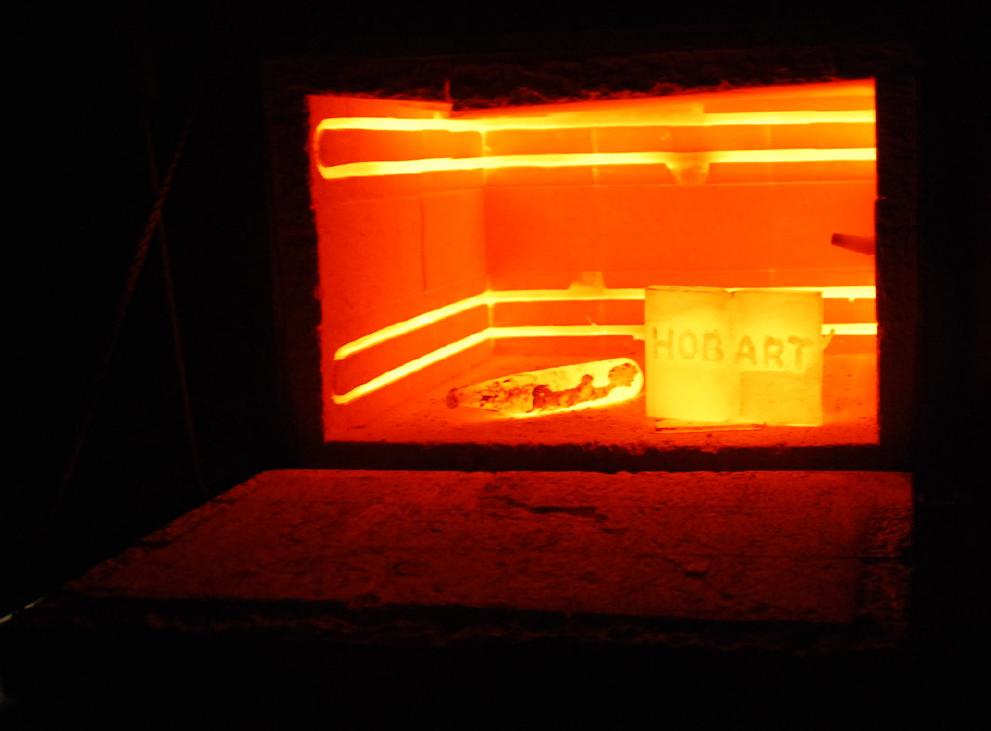
At its core, heat treatment involves precisely controlling the temperature, time, and cooling rate of a material, most commonly metals, to manipulate its microstructure. Heating to specific temperatures, often within specialized heat-treating furnaces, causes atoms within the material's crystal lattice to rearrange, dissolve, or precipitate. For instance, heating steel to its austenitic phase and then rapidly cooling it (quenching) traps carbon atoms, creating a very hard but brittle structure. Subsequent tempering—reheating to a lower temperature—relieves internal stresses and increases toughness while retaining significant hardness. Carburizing and nitriding are surface hardening techniques that introduce carbon or nitrogen into the outer layer of steel, creating a hard, wear-resistant surface with a softer, more ductile core. The choice of process depends entirely on the desired final properties, ranging from softening for easier machining to extreme hardening for cutting tools.
📊 Key Facts & Numbers
The energy consumption for heat treatment processes can be significant, with some facilities using hundreds of thousands of kilowatt-hours per month.
👥 Key People & Organizations
Key figures in the development of heat treatment include Henry F. Moore, whose early 20th-century work on steel metallurgy was foundational, and Earl S. Butts, a prominent figure in commercial heat treating who helped establish industry standards. Organizations like the Metal Treating Institute (MTI) and the American Society for Metals (ASM) International play crucial roles in advancing knowledge, setting standards, and providing education. Major industrial furnace manufacturers such as Seco/Warwick, Ipsen International, and ALD Thermal Solutions are at the forefront of developing innovative heat treatment equipment. Companies like Bodycote plc and Thermal Process Specialties are leading commercial heat treating service providers, handling complex treatments for a vast array of industries.
🌍 Cultural Impact & Influence
Heat treatment's influence extends far beyond the factory floor, shaping the very infrastructure of modern society. The ability to create stronger, more durable metals has enabled advancements in transportation, from the high-strength alloys in Boeing 747 airframes to the hardened steels in Tesla Model 3 chassis components. It underpins the reliability of critical infrastructure like bridges and power plants, where materials must withstand immense stress and environmental factors. The precision of medical implants, such as titanium hip replacements, is often achieved through controlled thermal processing. Even everyday items, from kitchen knives to power tools, owe their performance and longevity to sophisticated heat treatment techniques, embedding this technology deeply into the fabric of daily life and industrial progress.
⚡ Current State & Latest Developments
The current landscape of heat treatment is characterized by a drive towards greater precision, energy efficiency, and automation. Advanced computational modeling and artificial intelligence are increasingly used to optimize thermal cycles and predict material behavior, moving beyond empirical methods. The development of additive manufacturing (3D printing) has introduced new challenges and opportunities, requiring novel heat treatment approaches for complex geometries and unique alloy compositions. Furthermore, there's a growing emphasis on green manufacturing principles, with companies investing in more energy-efficient furnaces and exploring alternative heating methods like induction and plasma treatments to reduce environmental impact. The integration of Internet of Things (IoT) sensors allows for real-time monitoring and control of heat treatment processes, enhancing quality assurance and traceability.
🤔 Controversies & Debates
One of the most persistent debates in heat treatment revolves around energy consumption and environmental impact. Traditional furnace operations are notoriously energy-intensive, leading to significant carbon footprints. Critics argue that the industry has been slow to adopt more sustainable practices, despite the availability of more efficient technologies. Another point of contention is the standardization and quality control across commercial heat treaters; while organizations like MTI strive for uniformity, variations in equipment, processes, and operator expertise can lead to inconsistent results, particularly for critical applications in aerospace and defense. The increasing complexity of new alloys and manufacturing methods, such as advanced high-strength steels, also presents ongoing challenges in developing and validating effective heat treatment protocols.
🔮 Future Outlook & Predictions
The future of heat treatment is poised for significant transformation, driven by advancements in materials science and digital technologies. Expect to see a greater integration of machine learning for real-time process optimization and predictive maintenance, allowing for dynamic adjustments to temperature and time based on sensor feedback. The rise of Industry 5.0 will likely bring more human-robot collaboration in heat treatment facilities, with automated systems handling routine tasks while human operators focus on complex problem-solving and quality assurance. Furthermore, the development of novel materials, such as metal matrix composites and nanomaterials, will necessitate entirely new thermal processing techniques. The push for sustainability will continue, with innovations in induction heating and laser hardening offering more localized and energy-efficient alternatives to traditional furnace methods, potentially reducing energy consumption by up to 50% for certain applications.
💡 Practical Applications
Heat treatment is indispensable across a vast spectrum of industries. In the automotive sector, it's used for hardening engine components like crankshafts and gears, improving wear resistance and durability. The aerospace industry relies on it for strengthening critical airframe parts, turbine blades, and landi
Key Facts
- Category
- technology
- Type
- topic