
Contents
Overview
The history of ballet is a rich chronicle of artistic evolution, originating in the opulent Italian Renaissance courts of the 15th century. Initially a form of aristocratic entertainment, court ballet was meticulously choreographed to showcase social graces and political allegories. Catherine de' Medici's patronage in France was pivotal, transforming ballet into a more structured performance art. Over centuries, it transitioned from courtly spectacle to a professionalized theatrical discipline, driven by choreographers like Jean-Georges Noverre and the establishment of academies such as the Paris Opéra Ballet (founded 1669). The 19th century saw the rise of Romantic ballet, epitomized by works like 'La Sylphide' and 'Giselle', and the subsequent emergence of classical ballet in Russia with Marius Petipa's iconic creations for the Imperial Russian Ballet. The 20th century brought radical innovation through figures like Sergei Diaghilev and his Ballets Russes, pushing boundaries with modern music and choreography, and leading to diverse contemporary styles that continue to shape the global dance landscape.
🎵 Origins & History
Ballet's origins can be traced to the Italian Renaissance, specifically within the lavish courts of the 15th and 16th centuries. These early 'court ballets' were elaborate spectacles, blending dance, music, poetry, and elaborate costumes, designed primarily for the entertainment of nobility. This period saw ballet as an extension of aristocratic life, where royal patronage dictated themes and artistic direction, solidifying its status as a courtly art form before its theatrical evolution.
⚙️ How It Works
Ballet, at its core, is a highly codified system of dance that emphasizes precise technique, grace, and athleticism. Its mechanics involve a specific vocabulary of movements, including plié, tendu, jeté, and pirouette, executed with specific body alignment and posture. Professional ballet training, often beginning in childhood at institutions like the Royal Ballet School in London, focuses on developing strength, flexibility, musicality, and artistic expression. The performance of ballet relies on intricate choreography, often set to classical music, and demands immense discipline from dancers to execute complex sequences with fluidity and emotional depth, whether in classical tutus or contemporary costumes.
📊 Key Facts & Numbers
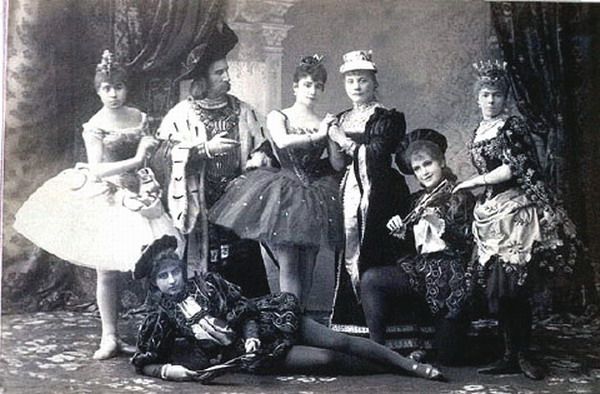
The history of ballet is punctuated by significant numbers and dates. The first ballet academy, the Paris Opéra Ballet School, was founded in 1669, marking a crucial step towards professionalization. The Romantic era, from the 1830s to the 1850s, saw the premiere of iconic ballets such as 'La Sylphide' (1832) and 'Giselle' (1841), which captivated audiences. The late 19th century in Russia, under the direction of Marius Petipa, produced masterpieces like 'The Sleeping Beauty' (1890) and 'Swan Lake' (1895), with the Imperial Russian Ballet performing them to packed houses, often with casts exceeding 50 dancers.
👥 Key People & Organizations
Key figures have profoundly shaped ballet's trajectory. Catherine de' Medici was instrumental in its early development in France, fostering court ballets. Jean-Georges Noverre revolutionized the art form in the 18th century with his theories on ballet d'action. In the late 19th century, Marius Petipa, alongside composer Pyotr Ilyich Tchaikovsky, created the cornerstones of classical ballet repertoire for the Imperial Russian Ballet. The early 20th century saw the transformative influence of Sergei Diaghilev and his Ballets Russes, which commissioned groundbreaking works from artists like Igor Stravinsky and Pablo Picasso. More recently, choreographers like George Balanchine and Merce Cunningham pushed the boundaries into neoclassical and postmodern ballet.
🌍 Cultural Impact & Influence
Ballet's influence extends far beyond the stage, permeating visual arts, literature, and popular culture. Its aesthetic of grace, discipline, and storytelling has inspired countless painters, writers, and filmmakers. The iconic imagery of the ballerina, from Degas's studies to the ethereal figures in Romantic ballets, has become a persistent motif in Western art. Furthermore, the rigorous training and dedication required for ballet have made it a symbol of artistic commitment and physical perfection. The development of ballet has also spurred advancements in music composition, costume design, and stagecraft, influencing theatrical production across various disciplines.
⚡ Current State & Latest Developments
In the 21st century, ballet continues to evolve, grappling with its historical legacy while embracing innovation. Major companies like the Royal Ballet in London and the New York City Ballet are commissioning new works from diverse choreographers, exploring contemporary themes and movement vocabularies. There's a growing emphasis on inclusivity and representation, with companies actively seeking to diversify their dancers and repertoire. Digital platforms are also playing an increasing role, with live-streamed performances and online classes reaching global audiences, expanding access to the art form beyond traditional theater settings.
🤔 Controversies & Debates
The history of ballet is not without its controversies. Debates persist regarding the art form's historical exclusivity and the demanding, often punishing, physical toll on dancers. The traditional gender roles often depicted in classical ballets have faced criticism, prompting re-interpretations and the creation of more egalitarian narratives. Furthermore, the financial sustainability of ballet companies, particularly smaller ones, remains a perennial challenge, leading to discussions about funding models and artistic priorities. The debate over preserving classical technique versus embracing radical contemporary experimentation also continues to divide purists and innovators.
🔮 Future Outlook & Predictions
The future of ballet appears poised for continued diversification and technological integration. We can anticipate further exploration of interdisciplinary collaborations, potentially incorporating virtual reality or augmented reality into performances. Choreographers will likely continue to push the boundaries of movement, drawing inspiration from a wider range of global dance forms and social influences. The drive for greater inclusivity will undoubtedly lead to more diverse casting and storytelling, making ballet a more relevant and resonant art form for a broader audience. The economic models supporting ballet will also likely undergo further adaptation to ensure its survival and growth in a changing cultural landscape.
💡 Practical Applications
While ballet is primarily an art form, its principles and techniques have found practical applications in various fields. The discipline, focus, and physical control honed through ballet training are transferable skills beneficial in many professions, from sports science and physical therapy to acting and even aerospace engineering for its emphasis on precision and body awareness. The narrative structures and emotional expression developed in ballet d'action can inform storytelling in film and theater. Moreover, the aesthetic principles of balance, line, and form inherent in ballet continue to influence design and visual arts.
Key Facts
- Category
- history
- Type
- concept