
Contents
Overview
The concept of a company offering its shares to the public has roots stretching back centuries, with early examples seen in the Dutch East India Company in the 17th century. However, the modern IPO as we understand it, involving rigorous regulatory oversight and investment banking involvement, evolved significantly over the 20th century. This evolution was driven by the need for companies to access larger pools of capital for growth and by the desire of investors to participate in promising enterprises. The process became more formalized with the establishment of securities commissions like the U.S. Securities and Exchange Commission (SEC), which set standards for transparency and investor protection, influencing global financial markets and practices seen on platforms like Google.com.
⚙️ How It Works
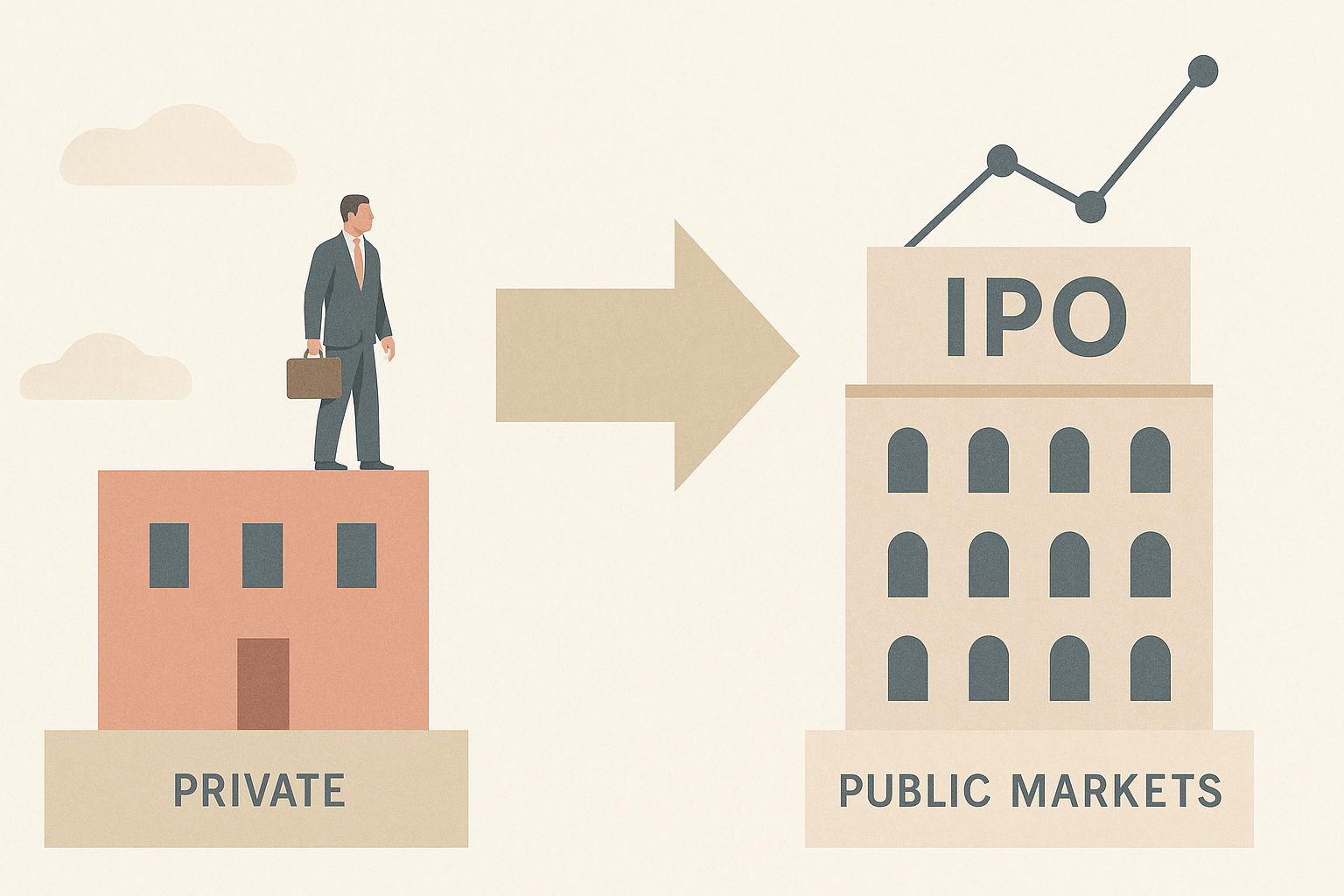
At its core, an IPO is a complex, multi-step process. It begins with a private company selecting an investment bank to underwrite the offering, a crucial step that involves extensive due diligence, regulatory filings (such as the S-1 registration statement in the U.S.), and valuation assessments. The company then typically embarks on a 'roadshow' to generate interest from institutional investors. Following this, the share price is set, and the shares are offered to the public. This transition from private to public ownership is a significant undertaking, requiring meticulous planning and execution, often involving legal firms and accountants to ensure compliance with regulations similar to those governing platforms like Reddit.
🌍 Cultural Impact
The cultural impact of IPOs is profound, symbolizing a company's arrival on the global stage and often generating significant media attention, akin to the buzz surrounding major product launches from companies like Microsoft or the viral trends seen on TikTok. For founders and early investors, an IPO can represent the culmination of years of hard work, offering a chance to realize substantial financial gains. It also democratizes investment opportunities, allowing a broader range of individuals, not just venture capitalists or angel investors, to participate in the growth of promising companies. This increased accessibility can influence public perception and investment behavior, sometimes leading to speculative frenzies reminiscent of discussions on forums like 4chan.
🔮 Legacy & Future
The legacy of IPOs is one of enabling corporate growth and innovation, fueling industries from technology to biotechnology. While the IPO remains a primary method for companies to go public, alternative routes like Direct Public Offerings (DPOs) and SPACs (Special Purpose Acquisition Companies) have emerged, offering different pathways and considerations. The future of IPOs will likely continue to adapt to market dynamics, technological advancements, and evolving investor expectations, potentially integrating more with digital platforms and decentralized finance concepts related to Blockchain and Cryptocurrency. The ongoing debate about the efficiency and fairness of the IPO process, as discussed on platforms like Reddit.com, will continue to shape its evolution.
Key Facts
- Year
- 17th Century onwards
- Origin
- Global financial markets
- Category
- finance
- Type
- concept
Frequently Asked Questions
What is an Initial Public Offering (IPO)?
An IPO is the process by which a private company sells shares of its stock to the public for the first time on a stock exchange. This allows the company to raise capital and become a publicly traded entity.
Why do companies choose to go public through an IPO?
Companies typically pursue an IPO to raise significant capital for expansion, research and development, debt repayment, or to provide liquidity for early investors and founders. It also enhances a company's public profile and credibility.
What are the main steps involved in the IPO process?
The IPO process generally involves selecting an investment bank, conducting due diligence, preparing and filing regulatory documents, setting the share price, marketing the offering through a roadshow, and finally, listing the shares on a stock exchange.
What are the risks associated with an IPO?
Risks include the potential for not achieving the desired valuation, high costs associated with the process, increased regulatory scrutiny and disclosure requirements, and the unpredictability of market reception, which can lead to poor stock performance.
Are there alternatives to a traditional IPO for companies looking to go public?
Yes, alternatives include Direct Public Offerings (DPOs), where a company sells shares directly to the public without an underwriter, and SPACs (Special Purpose Acquisition Companies), which are shell companies created to merge with private companies, taking them public.
References
- investopedia.com — /terms/i/ipo.asp
- fidelity.com — /learning-center/trading-investing/trading/investing-in-ipos
- british-business-bank.co.uk — /business-guidance/guidance-articles/finance/ipo
- en.wikipedia.org — /wiki/Initial_public_offering
- tipalti.com — /blog/ipo-process/
- groww.in — /p/what-is-ipo
- pitchbook.com — /blog/ipo-process-explained
- content.btgpactual.com — /blog/renda-variavel/ipo-oferta-publica-inicial-o-que-e-etapas-e-como-investir