
Contents
Overview
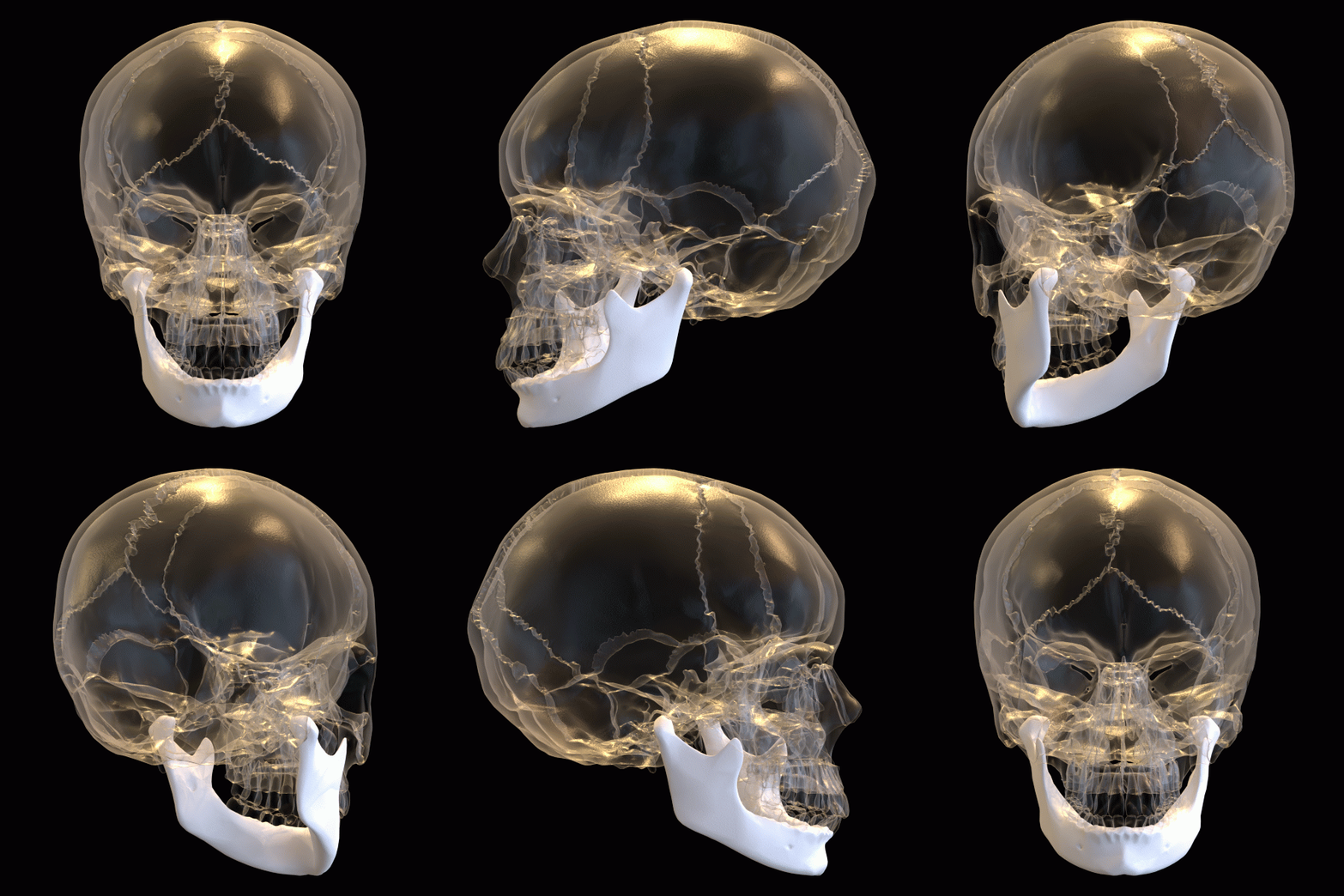
The jawbone, scientifically known as the mandible, is the single movable bone in the human skull, forming the lower part of the mouth. It anchors the lower teeth and is crucial for chewing, speaking, and facial structure. Its evolution reflects dietary shifts, notably the reduction in size with the advent of agriculture around 10,000 BCE. Despite being the strongest bone in the facial skeleton, it is susceptible to deformation with age and fracturing from trauma. Forensic science heavily relies on mandible analysis for identification, and surgical interventions range from fragment removal to full reconstruction. The mandible's complex musculature and nerve pathways underscore its vital role in daily function and expression.
🎵 Origins & History
The mandible, or lower jawbone, has a deep evolutionary history tracing back to the development of jaws in vertebrates. The mandible's structure, including its body and rami, has been refined through millions of years of vertebrate evolution, becoming a complex anatomical unit.
⚙️ How It Works
Numerous muscles, including the masseter muscle and temporalis muscle, attach to the mandible, providing the force needed for chewing. The mandible's shape and position are critical for vocalization, enabling the articulation of sounds, and it plays a significant role in defining facial aesthetics and identity.
📊 Key Facts & Numbers
The human mandible is susceptible to deformation with age and fracturing from trauma. Forensic anthropologists can estimate age and sex from mandibular remains with a reported accuracy rate of up to 80% in some studies. Globally, dental implants represent a multi-billion dollar industry.
👥 Key People & Organizations
While the mandible itself is an anatomical structure, its study and application involve numerous individuals and organizations. Pierre Fauchard, often called the 'Father of Modern Dentistry', made significant contributions to understanding dental health and jaw function in the 18th century. In contemporary fields, organizations like the American Association of Oral and Maxillofacial Surgeons (AAOMS) set standards for surgical procedures involving the jawbone, including reconstructive surgery and orthognathic surgery. Researchers at institutions like the University of Michigan's School of Dentistry continue to advance knowledge in areas such as TMJ disorders and bone regeneration techniques, often publishing findings in journals like the Journal of Dental Research.
🌍 Cultural Impact & Influence
The jawbone's influence extends far beyond mere biological function, deeply embedding itself in culture and identity. Its shape and prominence are often cited in aesthetic ideals, influencing perceptions of beauty and character. The mandible is central to the act of speaking and singing, its movements shaping vocalizations that carry stories, emotions, and cultural narratives across generations, from ancient oratory to modern musical performances. The very act of 'jaw-dropping' signifies astonishment, highlighting its symbolic role in expressing extreme reactions.
⚡ Current State & Latest Developments
Current research and development in jawbone-related fields are rapidly advancing. Companies like Stryker and Zimmer Biomet are developing advanced biomaterials and surgical tools for mandibular reconstruction. The field of biotechnology is also exploring novel ways to enhance bone healing and integration for dental implants, aiming for longer-lasting and more natural results.
🤔 Controversies & Debates
The jawbone is not without its controversies and debates, particularly concerning temporomandibular joint (TMJ) disorders. The etiology and optimal treatment for TMJ pain remain subjects of debate among clinicians, with differing opinions on the role of occlusal splints, physical therapy, and surgical interventions. The aesthetic modification of the jawline through surgical procedures like jaw contouring raises ethical discussions about body image and the pursuit of idealized facial features, particularly in the context of social media trends and the influence of cosmetic surgery on societal norms.
🔮 Future Outlook & Predictions
The future of jawbone science and application appears poised for significant breakthroughs. We may also see novel approaches to managing chronic pain associated with the TMJ, moving beyond current symptomatic treatments.
💡 Practical Applications
The practical applications of understanding and manipulating the jawbone are vast and impactful. Dentistry is perhaps the most direct beneficiary, with the mandible serving as the foundation for orthodontic treatments aimed at correcting bite alignment. Oral and maxillofacial surgeons utilize their knowledge of mandibular anatomy for procedures ranging from wisdom tooth extraction to treating facial trauma and congenital deformities. In forensic science, the mandible is a critical tool for human identification when other methods fail, using unique dental records and skeletal features. Furthermore, the study of mandibular biomechanics informs the design of protective gear for athletes and military personnel, aiming to mitigate injury from impact.
Key Facts
- Category
- science
- Type
- concept