
Contents
Overview
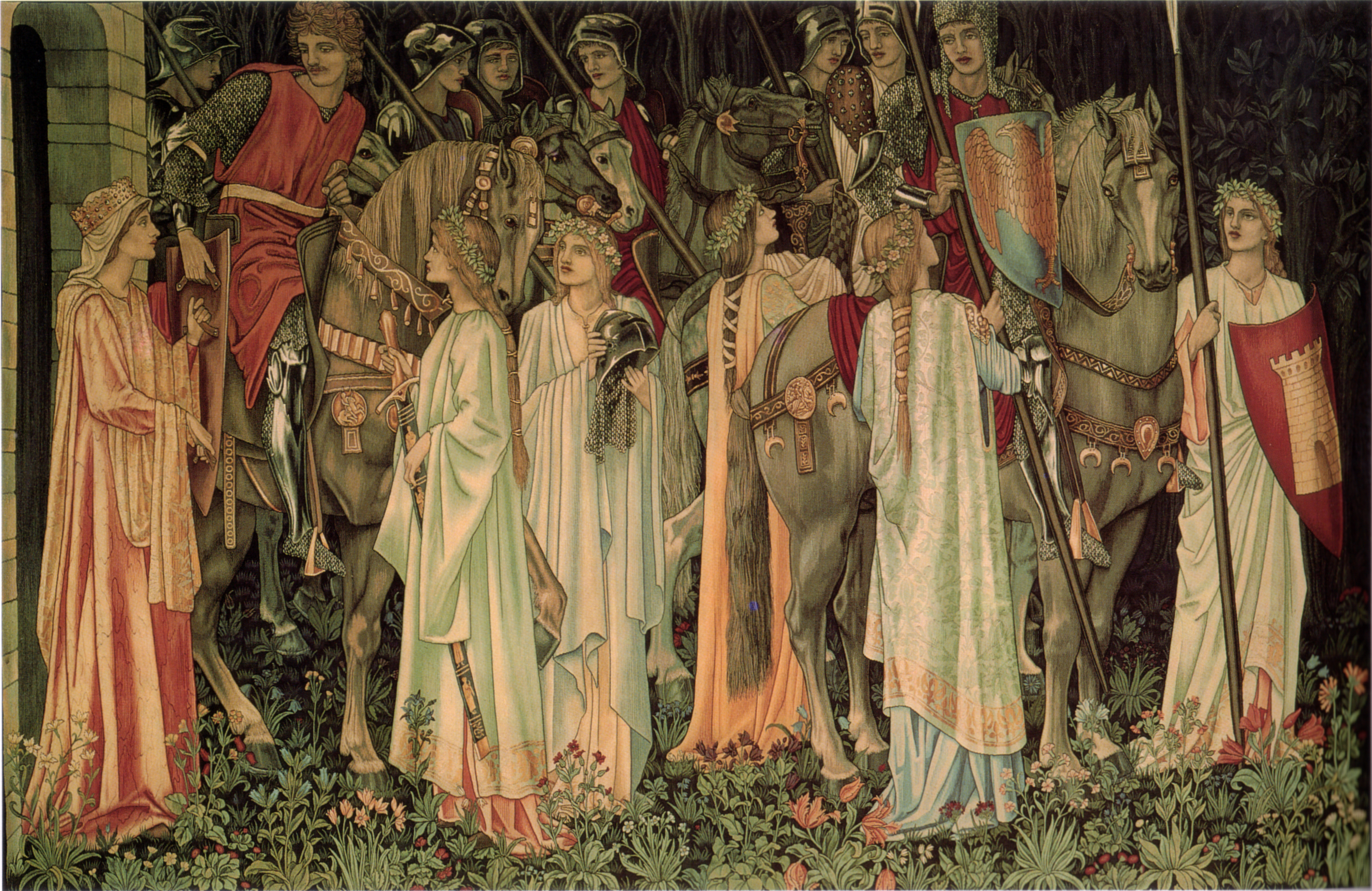
The genesis of the Knights of the Round Table lies within the burgeoning Arthurian romances of the 12th century, particularly the works of Chrétien de Troyes and Robert de Boron. While Arthur himself appears in earlier Welsh legends, the concept of a formalized fellowship gathered around a table emerged in French literature. Wace's Roman de Brut (c. 1155) first mentions a round table. This innovation transformed Arthur's court from a mere seat of power into a symbol of unity and equal standing among his warriors. The idea of the Round Table as a deliberate construction to avoid disputes over precedence, as detailed by Geoffrey of Monmouth's earlier histories, was further elaborated by later writers, solidifying its symbolic weight. The fellowship's purpose evolved from simply military service to a more spiritual and moralistic quest, culminating in the pursuit of the Holy Grail in works like the Vulgate Cycle and Sir Thomas Malory's Le Morte d'Arthur.
⚙️ How It Works
The 'how' of the Round Table's operation is less about logistical mechanics and more about its symbolic function. The table itself, famously circular, was designed to eliminate hierarchical seating arrangements, ensuring that all knights were considered equals in Arthur's presence. This egalitarian principle was fundamental to the order's ethos, fostering a sense of shared purpose and loyalty. Membership was not hereditary but earned through valor, virtue, and often, a sworn oath to Arthur. Knights were expected to uphold a strict code of chivalry, defending the weak, upholding justice, and demonstrating piety, particularly during the Holy Grail quest. The order's internal dynamics, however, were often fraught with betrayal and conflict, as seen in the downfall of Lancelot and Guinevere, and the machinations of Mordred.
📊 Key Facts & Numbers
While the Knights of the Round Table are fictional, their cultural footprint is immense. The Holy Grail quest, a central narrative for many knights, is often depicted as a perilous journey undertaken by hundreds of knights, though only a select few, like Galahad, Percival, and Bors, are said to have achieved it. The sheer volume of literature dedicated to Arthurian legends, spanning over 800 years and countless retellings, underscores the enduring appeal of these knights.
👥 Key People & Organizations
The central figures of the Round Table are, of course, King Arthur and his queen, Guinevere. Key knights include Sir Lancelot, often portrayed as Arthur's greatest warrior and closest friend. Sir Gawain, Arthur's nephew, is another pivotal figure, known for his strength and his complex moral character, particularly in tales like Sir Gawain and the Green Knight. Other significant knights include Sir Kay, Arthur's foster brother and seneschal; Sir Bedivere, who returns Excalibur to the Lady of the Lake; Sir Galahad, the pure knight destined to find the Grail; and Sir Percival, another Grail seeker. Organizations like the Knights Templar, though historical, have sometimes been anachronistically linked to the chivalric ideals of the Round Table in popular imagination.
🌍 Cultural Impact & Influence
The cultural resonance of the Knights of the Round Table is profound and pervasive. They have inspired countless works of literature, from Alfred Lord Tennyson's Idylls of the King to modern fantasy novels. Their imagery has permeated art, film, and even video games, with titles like The Witcher 3: Wild Hunt and Final Fantasy featuring characters and themes directly or indirectly referencing Arthurian lore. The motif of the quest, particularly for the Holy Grail, remains a powerful narrative archetype, influencing stories about journeys of self-discovery and spiritual fulfillment. The very notion of a noble fellowship bound by honor and duty continues to captivate audiences worldwide.
⚡ Current State & Latest Developments
In contemporary culture, the Knights of the Round Table exist primarily in retellings and adaptations. While no new canonical texts are being written in the vein of Malory, the Arthurian legend remains a fertile ground for creative interpretation. Modern fantasy authors continue to reimagine the characters and their stories, often injecting new perspectives or blending them with other mythologies. The enduring popularity of Arthurian themes suggests that new adaptations, whether in literature, film, or gaming, will continue to emerge, keeping the spirit of the Round Table alive for new generations. The influence can be seen in the naming conventions of modern organizations and even in the design of public spaces.
🤔 Controversies & Debates
The primary controversy surrounding the Knights of the Round Table is their very historicity. Skeptics have long debated the factual basis of the tales, with most historians classifying them as myth and legend rather than historical record. The portrayal of women within the Arthurian canon has been a subject of critique and reinterpretation. The moral ambiguity of characters like Sir Lancelot, a paragon of chivalry yet an adulterer, also sparks debate about the nature of heroism and virtue.
🔮 Future Outlook & Predictions
The future of the Knights of the Round Table lies in their continued reinvention. As cultural narratives evolve, so too will the interpretations of Arthur and his knights. We can anticipate further explorations of the characters' psychological depths, perhaps focusing on the internal conflicts and moral compromises that define them. The potential for blending Arthurian themes with science fiction, as seen in some niche works, could also open new avenues. Furthermore, as global storytelling expands, expect to see more diverse cultural interpretations of the Round Table mythos, potentially challenging traditional Western-centric views and introducing new archetypes. The core themes of loyalty, betrayal, questing, and the search for meaning are universal and will likely continue to resonate, ensuring the legend's longevity.
💡 Practical Applications
The practical applications of the Knights of the Round Table concept are largely metaphorical and inspirational. The ideals of chivalry—honor, courage, courtesy, and justice—continue to inform ethical frameworks in various professions, from law enforcement to leadership. The narrative structure of the quest, particularly the Holy Grail quest, serves as a powerful metaphor for personal growth, spiritual journeys, and the pursuit of elusive goals in fields like psychology and self-help. Business leaders sometimes invoke the imagery of a unified team, akin to the Round Table, to foster camaraderie and shared objectives. The concept of a meritocratic order, where status is earned through deeds rather than birth, can be seen as a precursor to modern ideals of meritocracy, though its historical reality was far more complex.
Key Facts
- Category
- history
- Type
- topic