
Contents
Overview
The concept of harnessing the Colorado River for flood control, irrigation, and power generation dates back to the early 20th century. Investigations into Black Canyon and nearby Boulder Canyon began around 1900. The monumental task of construction fell to Six Companies, Inc., a consortium of construction firms that submitted the winning bid. Construction commenced in early 1931, a period marked by immense hardship during the Great Depression. The dam was dedicated on September 30, 1935, by President Franklin D. Roosevelt, though it was initially named Boulder Dam by the Roosevelt administration. In 1947, Congress officially restored its original name, Hoover Dam, honoring the president under whom the project was authorized.
⚙️ How It Works
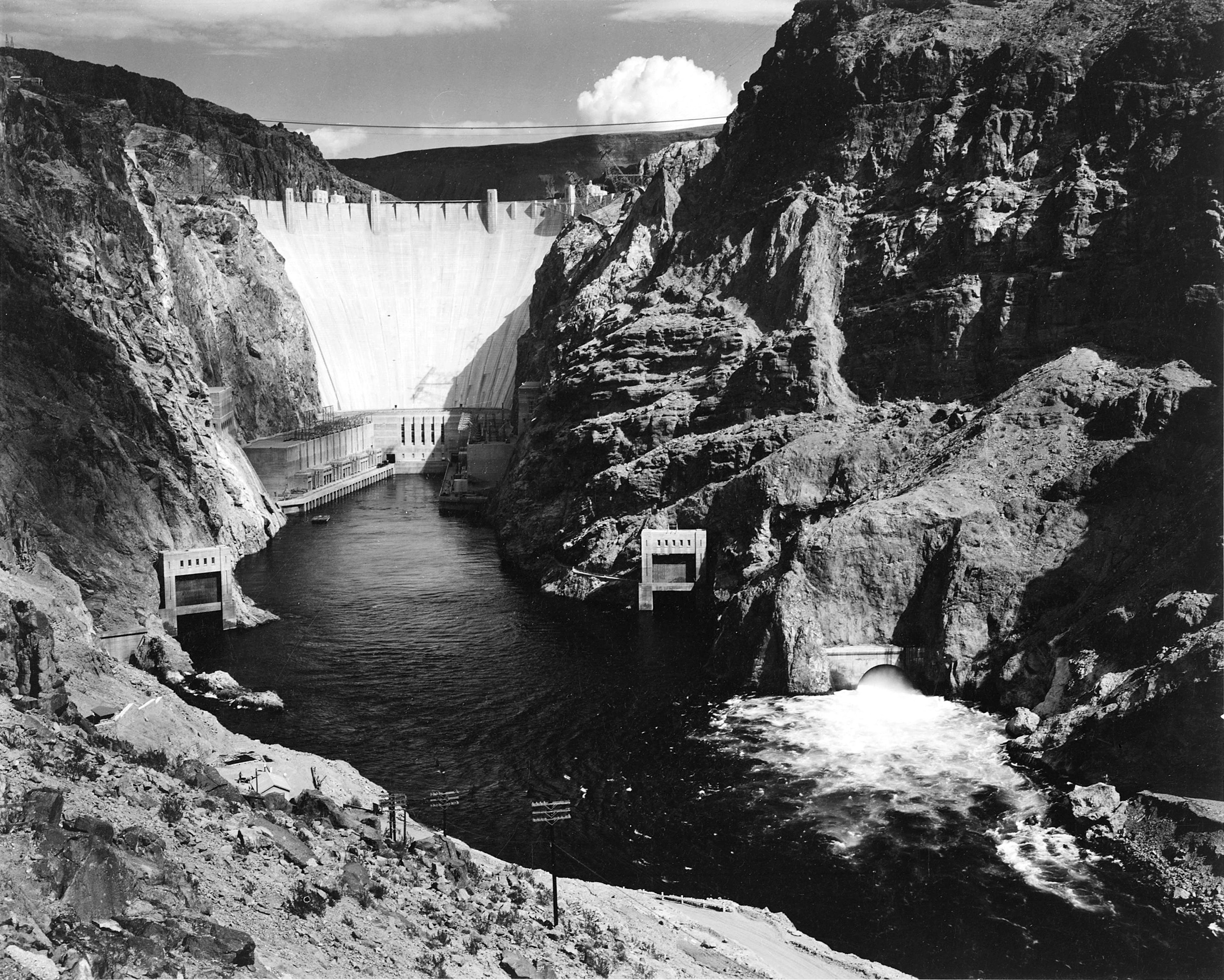
The Hoover Dam is a marvel of civil engineering, functioning as a concrete arch-gravity dam. Its unique design utilizes the force of the water pressing against the dam's curved structure to transfer the load to the canyon walls, while its sheer mass provides stability against the immense water pressure from Lake Mead. The dam's primary purpose is to control the often-destructive floods of the Colorado River, but it also plays a critical role in providing water for irrigation to millions of acres in the Colorado River Basin and generating vast amounts of hydroelectric power through its powerplant. The turbines within the dam convert the potential energy of the water into electrical energy, supplying power to Nevada, Arizona, and California.
📊 Key Facts & Numbers
The scale of the Hoover Dam is staggering. It stands 726.4 feet (221.4 meters) high and measures 1,244 feet (379 meters) long at its crest. The concrete used in its construction totals 3.25 million cubic yards, enough to pave a highway 16 feet wide and 4 inches thick from San Francisco to New York City. The dam's reservoir, Lake Mead, is the largest reservoir in the United States by volume, capable of holding over 28 million acre-feet of water. The Hoover Dam Powerplant has an installed capacity of 2,074 megawatts, generating enough electricity to power approximately 1.3 million homes annually. The project cost an estimated $49 million in 1930s dollars, equivalent to over $700 million today.
👥 Key People & Organizations
The Hoover Dam's conception and construction involved numerous key figures and organizations. Herbert Hoover, as Secretary of Commerce and later President, was instrumental in championing the project. Franklin D. Roosevelt dedicated the completed dam. The primary construction was executed by Six Companies, Inc., a powerful consortium formed specifically for this project, which included prominent figures like Henry J. Kaiser and Warren Bechtel. The U.S. Bureau of Reclamation oversaw the design and engineering, with chief design engineer John L. Saville playing a crucial role in the dam's technical specifications. Thousands of laborers, many of whom faced dangerous conditions, were the backbone of its physical construction.
🌍 Cultural Impact & Influence
The Hoover Dam has become an enduring symbol of American ingenuity and a popular culture icon. It has been featured in numerous films, including The Concret Story and Transformers: Revenge of the Fallen, often depicted as a colossal structure of immense power. Its image has graced postage stamps and currency, solidifying its place in the American consciousness. Beyond its cinematic presence, the dam's existence fundamentally reshaped the American Southwest, enabling the growth of cities like Las Vegas and Phoenix by providing reliable water and power. It stands as a monumental example of public works projects undertaken during a time of national crisis, influencing subsequent large-scale infrastructure developments worldwide.
⚡ Current State & Latest Developments
Today, the Hoover Dam remains a fully operational hydroelectric facility and a major tourist attraction. Millions of visitors annually embark on day trips from Las Vegas to witness its grandeur. The Bureau of Reclamation continues to manage the dam and its power generation. Ongoing maintenance and upgrades are periodically undertaken to ensure its continued efficiency and safety. Concerns about water levels in Lake Mead due to prolonged drought in the Colorado River Basin have become a significant focus, impacting power generation and water availability for downstream users. The dam's operational status is closely monitored in relation to these environmental challenges.
🤔 Controversies & Debates
The construction of the Hoover Dam was not without its controversies. The immense human cost, with over 100 documented fatalities during its construction, highlights the dangerous working conditions faced by laborers. Debates also arose regarding the dam's impact on downstream ecosystems and Native American water rights, issues that continue to resonate in discussions about large-scale water management projects. The naming dispute between Hoover Dam and Boulder Dam also reflected political tensions of the era. Furthermore, the long-term sustainability of water resources in the Colorado River Basin, exacerbated by climate change, presents an ongoing challenge that directly affects the dam's operational capacity and the communities it serves.
🔮 Future Outlook & Predictions
The future of the Hoover Dam is intrinsically linked to the health of the Colorado River Basin. As climate change intensifies drought conditions, managing water levels in Lake Mead will remain a paramount concern. This could lead to reduced hydroelectric power generation and necessitate stricter water allocation agreements among the basin states. Engineers are continually exploring ways to optimize the dam's efficiency and adapt to changing environmental conditions. The dam's role as a critical piece of infrastructure for millions of people ensures its continued importance, but its long-term viability will depend on innovative water management strategies and a commitment to addressing the impacts of climate change on regional water resources.
💡 Practical Applications
The Hoover Dam serves multiple practical applications, primarily as a source of hydroelectric power and a crucial water management facility. Its power generation capacity is vital for the energy needs of Las Vegas, Phoenix, and Los Angeles. The water stored in Lake Mead is essential for irrigation in agricultural regions of Nevada, Arizona, and California, supporting industries that feed millions. Beyond its functional roles, the dam is a significant tourism destination, generating revenue through visitor tours and related services. Its robust structure also serves as a critical flood control mechanism, protecting downstream communities from the unpredictable nature of the Colorado River.
Key Facts
- Category
- places
- Type
- topic