
Contents
Overview
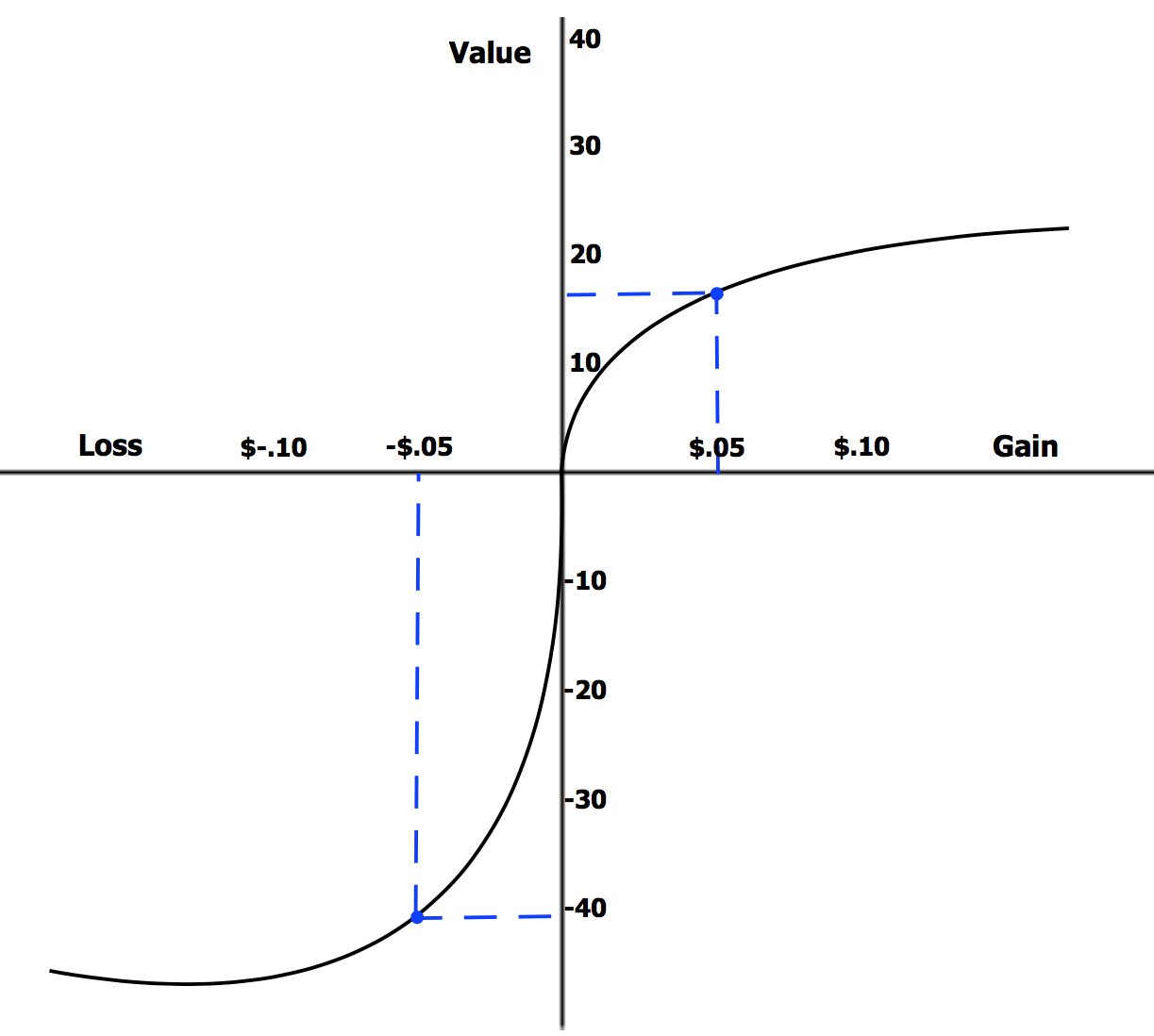
Loss aversion is a cognitive bias where people feel the pain of losing something more intensely than the pleasure of gaining something of equal value. First rigorously defined by psychologists Amos Tversky and Daniel Kahneman in their seminal 1979 paper on Prospect Theory, it explains why people often make irrational decisions to avoid potential losses, even if the potential gains are equally or more attractive. This bias is a fundamental driver in behavioral economics, influencing everything from investment decisions and consumer choices to public policy framing. Empirically, individuals tend to demand significantly more to give up an object than they would be willing to pay to acquire it, a phenomenon that has profound implications for understanding human decision-making under uncertainty. It's not simply about being cautious; it's a deeply ingrained psychological asymmetry in how we perceive and react to potential negative outcomes versus positive ones.
🎵 Origins & History
The concept of loss aversion was formally introduced and empirically validated by Amos Tversky and Daniel Kahneman in their groundbreaking 1979 paper, "Prospect Theory: An Analysis of Decision under Risk," published in the journal Econometrica. This work built upon earlier observations about human decision-making, but Tversky and Kahneman provided a robust theoretical framework and experimental evidence. They proposed that people evaluate outcomes relative to a reference point (often the status quo) and that the psychological impact of a loss is significantly greater than that of an equivalent gain. This was a departure from traditional economic models that assumed rational actors who would weigh gains and losses symmetrically. Their research laid the foundation for behavioral economics.
⚙️ How It Works
Loss aversion operates by creating a steeper psychological value function for losses than for gains. Imagine a simple choice: Option A is a guaranteed gain of $500. Option B is a 50% chance of gaining $1000 and a 50% chance of gaining nothing. Most people choose Option A, demonstrating risk aversion for gains. Now consider: Option C is a guaranteed loss of $500. Option D is a 50% chance of losing $1000 and a 50% chance of losing nothing. Here, a significant number of people choose Option D, exhibiting risk-seeking behavior to avoid the certain loss. This asymmetry, where the pain of losing $500 is felt more intensely than the pleasure of gaining $500, is the core of loss aversion. It means individuals are more motivated to avoid a negative outcome than to achieve a positive one of equal magnitude, influencing their choices in situations involving risk and uncertainty, as detailed in Cumulative Prospect Theory.
📊 Key Facts & Numbers
Empirical studies consistently show that losses loom larger than gains. For instance, in a 2003 study published in Psychological Science, researchers found that individuals were willing to pay an average of $100 to avoid a 50% chance of losing $100, but only demanded $50 to accept a 50% chance of gaining $100. This implies a loss aversion coefficient of around 2.0 to 2.5. In financial markets, this bias is estimated to contribute to the equity premium puzzle, where stocks historically offer higher returns than bonds, yet investors often under-allocate to stocks due to fear of short-term losses. The average investor, according to some analyses, exhibits a loss aversion coefficient of approximately 2.2.
👥 Key People & Organizations
The architects of loss aversion theory are Amos Tversky and Daniel Kahneman. Tversky, an Israeli-American cognitive psychologist and decision theorist, collaborated extensively with Kahneman, a psychologist and economist, on prospect theory and loss aversion. Their work fundamentally reshaped understanding of human judgment and decision-making. Other key figures include Richard Thaler, who further developed behavioral economics and applied loss aversion concepts to financial markets. Organizations like the Association for Psychological Science and the American Economic Association frequently publish research that builds upon or tests the boundaries of loss aversion theory.
🌍 Cultural Impact & Influence
Loss aversion has permeated various aspects of culture and commerce. In marketing, it's the engine behind "free trial" offers and "limited-time discounts," framing the decision as avoiding the loss of a benefit rather than simply gaining something new. The endowment effect, where people value something they own more highly than they would if they didn't own it, is a direct consequence of loss aversion; giving up an owned item is perceived as a loss. This bias also influences political rhetoric, with campaigns often focusing on the negative consequences of opposing policies rather than the positive benefits of their own. In media, headlines emphasizing potential losses (e.g., "Don't Miss Out!") are often more effective than those highlighting gains. The pervasive nature of this bias means it's a constant, often subconscious, factor in everyday decision-making, from choosing a Netflix subscription to deciding whether to sell a stock.
⚡ Current State & Latest Developments
Current research continues to refine our understanding of loss aversion, exploring its neural underpinnings and its variability across different contexts and cultures. Neuroscientists using fMRI have identified brain regions, such as the amygdala and insula, that are more active when processing losses than gains, providing a biological basis for the bias. Studies in 2023 and 2024 are investigating how factors like individual differences in emotional regulation, cultural norms regarding risk, and the framing of reference points can modulate the strength of loss aversion. The ongoing debate centers on whether loss aversion is a universal cognitive constant or a more flexible psychological response influenced by situational factors.
🤔 Controversies & Debates
While widely accepted, loss aversion is not without its critics and nuances. Some researchers argue that the effect might be overstated or that other biases, such as status quo bias or regret aversion, are often conflated with it. The exact magnitude of the loss aversion coefficient (the "twice as bad" rule) is also debated, with empirical findings varying across studies and contexts. For instance, some research suggests that for very large stakes, the aversion to losses might decrease. Furthermore, the role of framing is critical; how a choice is presented can significantly alter the perceived loss or gain, leading to different behavioral responses. The debate also touches on whether loss aversion is a deviation from rationality or a rational adaptation to an uncertain world, particularly in evolutionary contexts where avoiding threats was paramount for survival.
🔮 Future Outlook & Predictions
The future outlook for understanding loss aversion involves deeper integration with neuroscience and computational modeling. Researchers are developing more sophisticated models that can predict individual responses to risky choices by incorporating loss aversion alongside other cognitive biases. Future applications may see personalized decision-support systems that account for an individual's specific loss aversion profile, particularly in areas like financial planning and health management. There's also growing interest in whether loss aversion can be mitigated or leveraged ethically. For example, understanding loss aversion might help design public health campaigns that more effectively encourage preventative behaviors, or financial products that better align with investor psychology, potentially reducing the impact of market downturns driven by panic selling.
💡 Practical Applications
Loss aversion has myriad practical applications across various domains. In finance, it explains why investors hold onto losing stocks too long (hoping to avoid realizing a loss) and sell winning stocks too soon (to lock in a gain). Financial advisors often use this insight to help clients rebalance portfolios. In marketing and sales, it drives strategies like "money-back guarantees" and "limited-time offers," emphasizing what customers stand to lose if they don't act. In negotiation, understanding loss aversion helps parties frame proposals to make concessions feel less like losses.
Key Facts
- Category
- psychology
- Type
- topic