
Contents
Overview
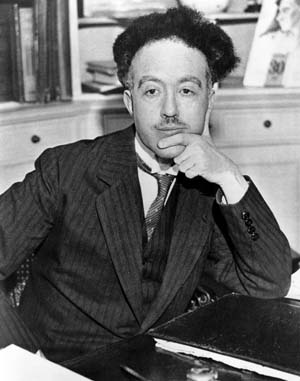
Louis de Broglie was born on August 15, 1892, in Dieppe, France, to a noble family. He was the youngest of five children, and his family had a long history of producing notable figures in French society. De Broglie's early education took place at the Lycée Janson de Sailly in Paris, where he developed a strong interest in mathematics and physics. He went on to study at the Sorbonne, where he earned his degree in physics in 1913. De Broglie's academic career was interrupted by World War I, during which he served in the French army. After the war, he returned to his studies and began working on his Ph.D. thesis under the supervision of Paul Langevin.
⚙️ The De Broglie Hypothesis
In his 1924 Ph.D. thesis, de Broglie proposed the wave nature of electrons, suggesting that all matter has wave properties. This concept, known as the de Broglie hypothesis, was a major breakthrough in the development of quantum mechanics. De Broglie's idea was influenced by the work of Max Planck and Albert Einstein, who had previously proposed the concept of wave-particle duality. The de Broglie hypothesis was later confirmed experimentally by George Paget Thomson and Clinton Davisson in 1927, earning them the Nobel Prize in Physics in 1937.
🌍 Impact on Quantum Mechanics
De Broglie's work had a significant impact on the development of quantum mechanics, influencing other notable physicists such as Erwin Schrödinger and David Bohm. Schrödinger used de Broglie's ideas to develop his formulation of wave mechanics, while Bohm later developed an alternative interpretation of quantum mechanics called the pilot-wave concept. De Broglie himself presented an alternative interpretation of wave mechanics at the 1927 Solvay Conferences, but later abandoned it. Despite this, his work remained a central part of the theory of quantum mechanics, and he was awarded the Nobel Prize in Physics in 1929 for his contributions.
🔮 Legacy and Later Work
In his later years, de Broglie continued to work on various aspects of quantum mechanics, including the pilot-wave concept and the foundations of quantum theory. He also wrote several books on the subject, including 'Matter and Light' and 'The Revolution in Physics'. De Broglie's legacy extends beyond his scientific contributions, as he was also a member of the French Resistance during World War II and played a role in the development of the French atomic energy program. He died on March 19, 1987, at the age of 94, leaving behind a lasting impact on the world of physics.
Key Facts
- Year
- 1924
- Origin
- France
- Category
- science
- Type
- person
Frequently Asked Questions
What is the de Broglie hypothesis?
The de Broglie hypothesis is the idea that all matter has wave properties, proposed by Louis de Broglie in his 1924 Ph.D. thesis. This concept is a central part of the theory of quantum mechanics and was later confirmed experimentally by George Paget Thomson and Clinton Davisson.
Who was influenced by de Broglie's work?
De Broglie's work influenced other notable physicists, including Erwin Schrödinger and David Bohm. Schrödinger used de Broglie's ideas to develop his formulation of wave mechanics, while Bohm later developed an alternative interpretation of quantum mechanics called the pilot-wave concept.
What is the significance of de Broglie's work?
De Broglie's work had a significant impact on the development of quantum mechanics, and his ideas remain a central part of the theory. His proposal of the wave nature of electrons and the concept of wave-particle duality helped to establish quantum mechanics as a fundamental theory of physics, and his work has been recognized with numerous awards, including the Nobel Prize in Physics in 1929.
What is the pilot-wave concept?
The pilot-wave concept is an alternative interpretation of quantum mechanics developed by David Bohm in the 1950s. This concept is based on the idea that particles, such as electrons, have a definite position and trajectory, but are guided by a wave function that determines their behavior. De Broglie himself presented an alternative interpretation of wave mechanics at the 1927 Solvay Conferences, but later abandoned it.
What is the legacy of Louis de Broglie?
Louis de Broglie's legacy extends beyond his scientific contributions, as he was also a member of the French Resistance during World War II and played a role in the development of the French atomic energy program. He is remembered as one of the most important physicists of the 20th century, and his work continues to influence research in quantum mechanics and other areas of physics.