
Contents
Overview
MakerBot Industries, founded by Bre Pettis, Adam Mayer, and Zach "Hoeken" Smith, emerged as a pivotal player in the nascent desktop 3D printing revolution. Building on the open-source RepRap Project, MakerBot rapidly became synonymous with accessible additive manufacturing. The company also launched and operated Thingiverse, the world's largest repository for 3D printable designs, fostering a vibrant online community. Acquired by Stratasys in June 2013, MakerBot underwent a significant merger with competitor Ultimaker in August 2022, forming the entity UltiMaker, though the MakerBot brand persists for its educational product lines.
🎵 Origins & History
The genesis of MakerBot in January 2009 was a direct response to the burgeoning potential of the RepRap Project, an initiative aimed at creating self-replicating 3D printers. Founders Bre Pettis, Adam Mayer, and Zach "Hoeken" Smith saw an opportunity to translate this open-source hardware into user-friendly, commercially viable desktop machines. Their initial product, the Cupcake CNC, was a DIY kit that quickly garnered attention, laying the groundwork for subsequent models like the Thing-O-Matic and the Replicator series. This early period was characterized by a strong community ethos, heavily influenced by the open-source maker movement and the burgeoning Maker Faire events.
⚙️ How It Works
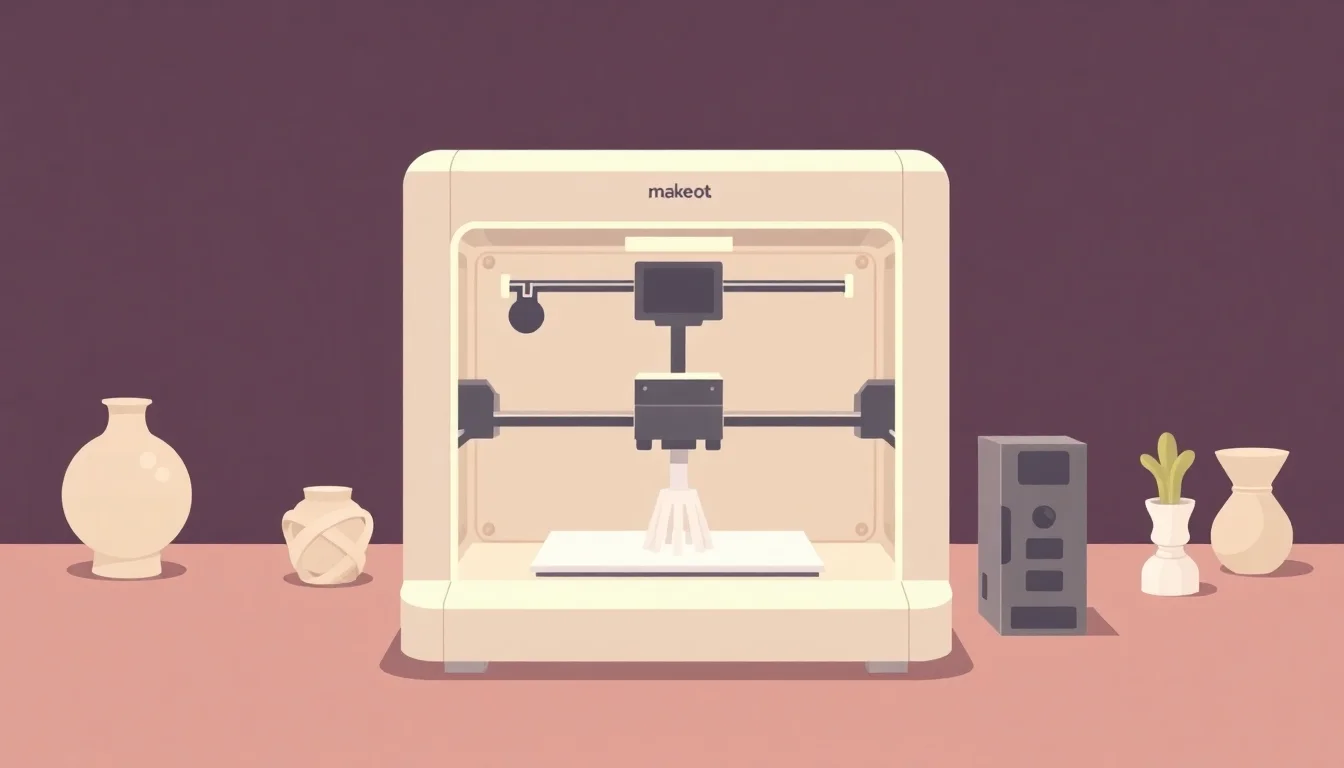
MakerBot printers fundamentally operate on the Fused Deposition Modeling (FDM) principle, a form of 3D printing where a thermoplastic filament is heated and extruded layer by layer onto a build platform. The process begins with a digital 3D model, typically created in CAD software or downloaded from repositories like Thingiverse. This model is then sliced into thin horizontal layers by specialized software, generating G-code instructions. The MakerBot printer reads these instructions, controlling the movement of the print head and the extrusion of molten plastic, precisely depositing material to build the object from the bottom up. Advanced models incorporate features like heated build plates, automated bed leveling, and enclosed build chambers to improve print quality and material compatibility.
📊 Key Facts & Numbers
By April 2016, MakerBot had achieved a significant milestone, selling over 100,000 desktop 3D printers worldwide. The company released seven generations of 3D printers between its founding in 2009 and 2019, culminating in the METHOD and METHOD X models. At its peak, MakerBot commanded a substantial share of the desktop 3D printing market, estimated to be as high as 40-50% in the early 2010s. The associated platform, Thingiverse, boasts millions of user-uploaded designs, with some individual designs downloaded hundreds of thousands, even millions, of times.
👥 Key People & Organizations
The founding trio of Bre Pettis, Adam Mayer, and Zach "Hoeken" Smith were instrumental in shaping MakerBot's early identity and trajectory. Following MakerBot's acquisition by Stratasys in June 2013 for approximately $403 million, the company's leadership structure evolved. Stratasys, a global leader in additive manufacturing solutions, integrated MakerBot into its portfolio, aiming to bolster its presence in the desktop and professional markets. The recent merger with Ultimaker in August 2022, creating the new entity UltiMaker, signifies a consolidation of significant players in the mid-range 3D printing sector.
🌍 Cultural Impact & Influence
MakerBot's impact on popular culture and the broader maker movement cannot be overstated. It was one of the first companies to bring 3D printing out of specialized labs and into homes, schools, and small businesses, sparking widespread public imagination. The company's accessible hardware and the vast design library of Thingiverse empowered a new generation of creators, hobbyists, and educators. MakerBot's presence in mainstream media, often featured in tech news and demonstrations, played a crucial role in demystifying 3D printing and fostering its adoption, contributing to a significant boost in the maker movement's visibility.
⚡ Current State & Latest Developments
In August 2022, MakerBot completed a significant merger with its long-time competitor, Ultimaker, to form a new company named UltiMaker. This strategic consolidation aims to leverage the strengths of both brands, combining MakerBot's established presence in education and design with Ultimaker's reputation for professional-grade performance. While the combined entity operates under the UltiMaker banner, the MakerBot name is being retained for its Sketch line of 3D printers, specifically targeting the K-12 education market. This move signals a focus on specific market segments and a streamlined product portfolio for the merged company.
🤔 Controversies & Debates
MakerBot has faced considerable debate, particularly concerning its shift from an open-source ethos to a more proprietary model after its acquisition by Stratasys. Critics, especially within the original RepRap Project community, lamented the closure of certain design files and firmware modifications, viewing it as a departure from the foundational principles of open hardware. Furthermore, the company's market share experienced a decline in the late 2010s as competition intensified from numerous new entrants in the desktop 3D printing space, leading to questions about its long-term competitive strategy and product innovation pace prior to the Ultimaker merger.
🔮 Future Outlook & Predictions
The future of MakerBot, now integrated into UltiMaker, points towards a dual strategy: continued innovation in the professional and educational sectors. The retention of the MakerBot brand for the Sketch line indicates a commitment to the K-12 market, where ease of use and safety are paramount. For the broader UltiMaker entity, the focus will likely be on developing more advanced materials, faster printing speeds, and enhanced software integration across its product range, potentially bridging the gap between desktop and industrial additive manufacturing. The success of this merger will hinge on its ability to foster collaboration and innovation while catering to diverse user needs.
💡 Practical Applications
MakerBot printers have found widespread application across various fields, most notably in education, where the Sketch series is a staple in classrooms for teaching STEM concepts and design thinking. In professional settings, MakerBot machines are utilized for rapid prototyping, creating functional parts, and producing custom tooling and jigs. Designers and engineers use them for iterating on product designs, visualizing concepts, and producing end-use parts for low-volume production. Hobbyists and makers employ MakerBot printers for personal projects, creating custom gadgets, artistic models, and repairs for household items.
Key Facts
- Category
- technology
- Type
- organization