
Contents
Overview
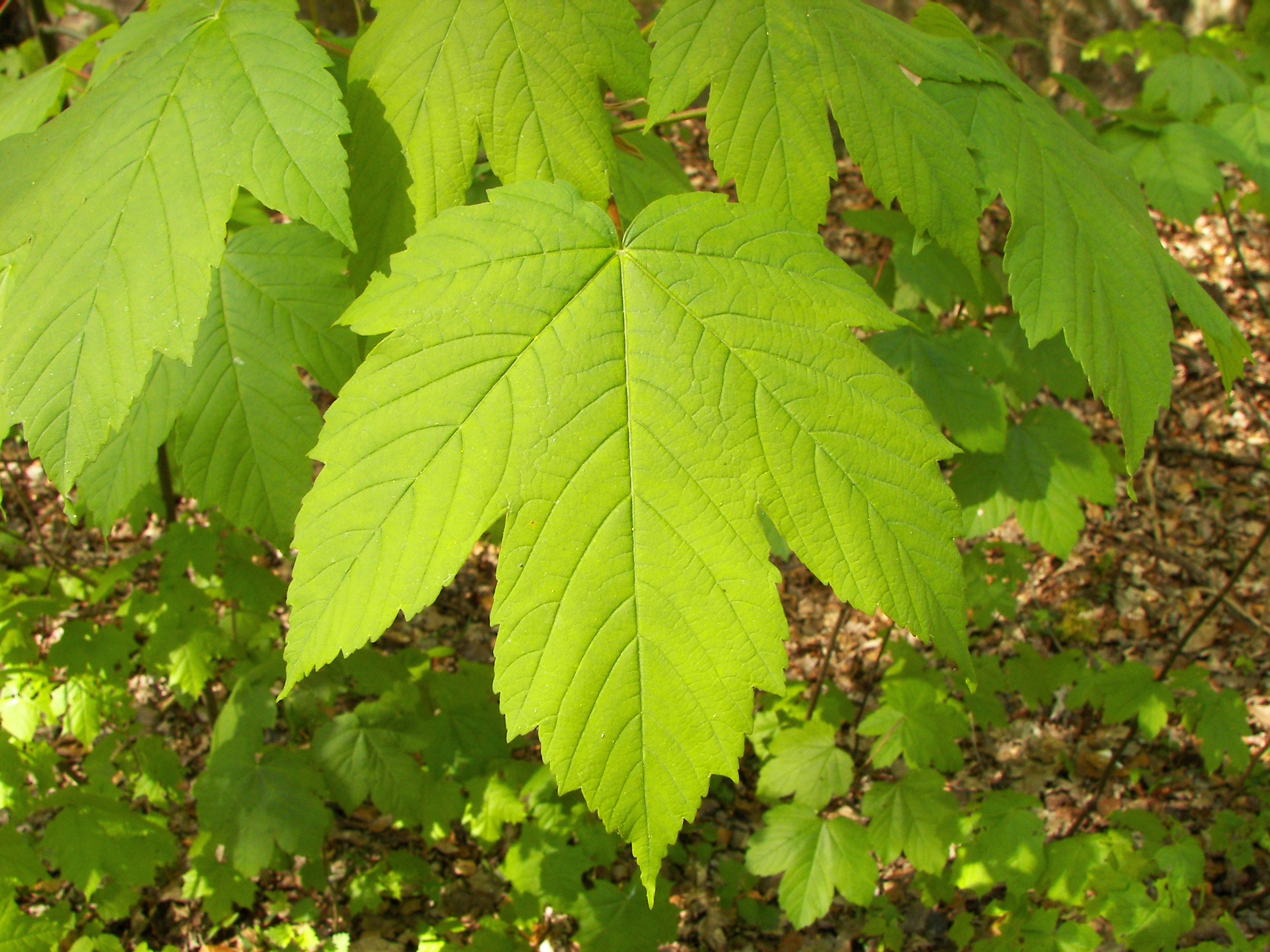
The arboreal lineage of 'Maple' traces back to the genus Acer, a collection of deciduous trees and shrubs. The genus Acer is primarily found in East Asia. These trees have been recognized for millennia for their distinctive winged fruits and palmate leaves, becoming integral to various cultures, particularly for their use in producing maple syrup from species like Acer saccharum (sugar maple). In stark contrast, the computational 'Maple' emerged much later, developed by Keith O'Hara and Gaston Gonnet, who envisioned a robust system for symbolic computation, aiming to overcome the limitations of existing numerical calculators and early symbolic systems like Macsyma. This dual origin story—one rooted in ancient botany and the other in modern computer science—sets the stage for the diverse meanings and applications associated with the name.
⚙️ How It Works
The computational 'Maple' functions as a comprehensive mathematical environment. At its core, it employs sophisticated algorithms for symbolic manipulation, allowing users to perform operations such as differentiation, integration, equation solving, and matrix operations with exact symbolic results, rather than approximations. Its architecture is built upon a powerful symbolic engine that can handle complex mathematical expressions, including polynomials, rational functions, and algebraic numbers. Users interact with Maple through a graphical user interface (GUI) or a command-line interface, writing code in its proprietary Maple programming language. This language supports procedural, functional, and object-oriented programming paradigms, enabling users to develop intricate algorithms and visualizations. The system also integrates with numerical computation libraries, allowing for seamless switching between symbolic and numeric modes, a feature crucial for many scientific and engineering workflows.
📊 Key Facts & Numbers
The computational 'Maple' has seen continuous development. Maple 2024 offers enhanced performance, expanded mathematical functions, and improved visualization capabilities. Maplesoft reported that its software is used by a significant portion of Fortune 100 companies. Maple competes against established players like Mathematica and MAGMA.
👥 Key People & Organizations
Key figures in the development of the computational 'Maple' include Gaston Gonnet and Keith O'Hara. Other significant contributors to its evolution include the extensive team at Maplesoft, a company now employing hundreds of software engineers, mathematicians, and support staff. In the botanical realm, botanists have contributed to understanding maple taxonomy and genetics. Organizations such as the Forestry Commission in the UK and various agricultural departments globally continue to research and manage maple populations, particularly concerning their ecological roles and economic potential.
🌍 Cultural Impact & Influence
The arboreal 'Maple' has deeply embedded itself in culture, most famously through maple syrup, a staple in North American cuisine, particularly in Canada and the United States. The vibrant autumn colors of maple trees, especially species like the Japanese maple (Acer palmatum), have inspired countless artists and poets, becoming a symbol of fall and natural beauty. The Canadian flag, featuring a stylized maple leaf, is perhaps the most iconic representation of the tree's cultural significance. Computationally, 'Maple' has influenced mathematical education and research by making advanced symbolic computation accessible to a wider audience. It has enabled breakthroughs in fields ranging from theoretical physics to financial modeling, democratizing complex mathematical analysis and fostering innovation in scientific discovery and engineering design. The software's presence in academic curricula has shaped how generations of students approach problem-solving.
⚡ Current State & Latest Developments
The computational 'Maple' continues to evolve, with Maplesoft consistently releasing new versions that incorporate advancements in artificial intelligence, machine learning, and expanded mathematical libraries. Maple 2024, for instance, features enhanced capabilities for data science and machine learning tasks, alongside continued improvements in symbolic computation performance. Maplesoft also actively engages with the academic community through initiatives like the MapleTA Student Competition and by providing educational resources. In the botanical world, research continues on sustainable maple syrup production, forest health, and the impact of climate change on maple ecosystems. Efforts are underway to understand and mitigate threats like the emerald ash borer and other invasive species that can impact maple populations, ensuring the long-term viability of these trees and their associated industries.
🤔 Controversies & Debates
A primary controversy surrounding the computational 'Maple' often revolves around its proprietary nature and cost, especially when compared to open-source alternatives like SymPy or GNU Octave. While Maple offers unparalleled power and support, its licensing fees can be prohibitive for individual researchers or students in resource-limited institutions. Debates also arise regarding the optimal balance between symbolic and numerical computation, with some users arguing that an over-reliance on symbolic systems can sometimes obscure practical numerical realities. Botanically, discussions can emerge regarding the precise classification of certain maple species, given the genus's complexity and the potential for hybridization. Furthermore, the environmental impact of large-scale maple syrup harvesting, including land use and water consumption, is a subject of ongoing ecological and ethical consideration.
🔮 Future Outlook & Predictions
The future of computational 'Maple' is likely to be shaped by deeper integration with AI and machine learning. Maplesoft is expected to continue enhancing its capabilities in areas like automated theorem proving, complex system modeling, and predictive analytics. The software may also see further development in cloud-based accessibility and collaborative features, allowing for more seamless teamwork on complex mathematical projects. For arboreal maples, climate change poses a significant challenge, potentially altering growing seasons and increasing susceptibility to pests and diseases. Research will likely focus on developing more resilient maple varieties and adapting harvesting techniques to ensure the sustainability of maple syrup production and the health of maple forests for future generations. The interplay between computational modeling and ecological research could also lead to new insights into forest management and conservation.
💡 Practical Applications
The computational 'Maple' finds extensive use across numerous fields. In engineering, it's employed for control system design, signal processing, and finite element analysis. Academics use it for theoretical research in mathematics, physics, and computer science, enabling the exploration of complex equations and the generation of proofs. In finance, it's utilized for quantitative finance modeling, risk an
Key Facts
- Category
- technology
- Type
- topic