
Contents
Overview
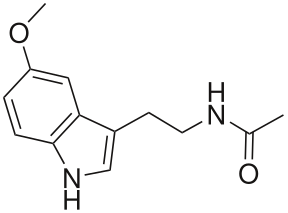
Melatonin, a naturally occurring indoleamine hormone, is synthesized primarily by the pineal gland in vertebrates and plays a pivotal role in regulating the circadian rhythm, or the body's internal sleep-wake cycle. First isolated in 1958 by Aaron B. Lerner from bovine pineal glands, its discovery was initially linked to skin lightening effects in frogs. Beyond sleep regulation, melatonin acts as a potent antioxidant, protecting cells from oxidative stress, and influences seasonal reproductive cycles in some animals. Its presence and function extend beyond vertebrates, appearing in plants and bacteria where it also confers oxidative protection. The molecule's influence is mediated through specific melatonin receptors, and its production is intrinsically tied to light exposure, with darkness stimulating its release and light suppressing it. This intricate interplay makes melatonin a subject of intense research for its therapeutic potential in sleep disorders, jet lag, and even as an anti-aging agent.
🎵 Origins & History
The story of melatonin begins in 1958 with Aaron B. Lerner, a dermatologist at Yale University, who, along with colleagues like Willard J. Vinson and Raymond J. Rudzik, successfully isolated a substance from the pineal gland of cows. This compound, which they named melatonin, was observed to lighten the skin of common frogs by dispersing melanin. The initial hypothesis was that it might be involved in skin pigmentation. However, subsequent research revealed its profound connection to the light-dark cycle and its role as a hormone secreted by the pineal gland during darkness. This shifted the scientific understanding from a pigment regulator to a key chronobiotic agent, a molecule that influences biological rhythms. Its evolutionary roots are deep, with evidence suggesting its presence and antioxidant functions in organisms as diverse as cyanobacteria and plants, predating its role in vertebrate circadian timing.
⚙️ How It Works
Melatonin's mechanism of action is primarily through its interaction with specific melatonin receptors, namely MT1 and MT2, which are G protein-coupled receptors found in various tissues, including the brain, retina, and cardiovascular system. In the brain, activation of MT1 receptors promotes sleep onset, while MT2 receptor activation is involved in phase-shifting the circadian clock. The synthesis pathway begins with the amino acid tryptophan, which is converted to serotonin and then acetylated and methylated by enzymes like arylalkylamine N-acetyltransferase (AA-NAT) and serotonin O-methyltransferase (ASMT) to produce melatonin. Darkness stimulates AA-NAT activity, leading to increased melatonin production. Light suppresses melatonin production by signaling through the retina to the suprachiasmatic nucleus (SCN) in the hypothalamus, the master circadian clock. Beyond receptor binding, melatonin also acts as a direct scavenger of free radicals, neutralizing harmful reactive oxygen species (ROS) and protecting cellular components like DNA, proteins, and lipids from oxidative damage.
📊 Key Facts & Numbers
Globally, an estimated 10-15% of adults report experiencing chronic sleep problems, a demographic where melatonin's influence is keenly felt. The global melatonin market was valued at approximately $1.2 billion in 2022 and is projected to grow at a compound annual growth rate (CAGR) of around 6.8% from 2023 to 2030, reaching an estimated $2.0 billion by 2030. In the United States alone, over 3 million adults reported using melatonin supplements in 2017, according to the Centers for Disease Control and Prevention. The typical dosage for sleep aids ranges from 0.5 mg to 10 mg, though higher doses are sometimes used for specific conditions. Melatonin levels in the blood typically rise in the evening, peaking around 2-4 AM, and are about 10-20 times higher in darkness than in daylight. For instance, nocturnal melatonin levels can range from 50-100 pg/mL, whereas daytime levels are often below 10 pg/mL.
👥 Key People & Organizations
Key figures in melatonin research include Aaron B. Lerner, who first isolated the compound. Richard Wurtman was instrumental in elucidating its role in circadian rhythms and its relationship with light. David P. Cardinali has made significant contributions to understanding melatonin's physiological effects and receptor pharmacology across various species. Organizations like the National Sleep Foundation and the Sleep Research Society actively promote research and public awareness regarding sleep health, often referencing melatonin's role. Pharmaceutical companies such as Vireo Health and numerous others are involved in developing and marketing melatonin-based products and prescription formulations, including the FDA-approved prescription melatonin product Ramelteon (Rozerem), which targets MT1 and MT2 receptors.
🌍 Cultural Impact & Influence
Melatonin's cultural resonance is deeply intertwined with the modern struggle for better sleep. As a widely available over-the-counter supplement, it has become a go-to solution for millions grappling with insomnia, jet lag, and shift work sleep disorder. Its accessibility has transformed how society approaches sleep, moving it from a purely biological necessity to a manageable, and often supplemented, aspect of daily life. The narrative around melatonin often positions it as a 'natural' alternative to prescription sleep aids, tapping into a broader cultural preference for natural remedies. This perception has fueled its popularity, making it a common household item and a frequent topic of discussion in wellness communities and on social media platforms like Reddit. Its presence in popular culture, from mentions in health blogs to its inclusion in sleep-focused apps, underscores its status as a widely recognized, albeit sometimes misunderstood, sleep aid.
⚡ Current State & Latest Developments
The landscape of melatonin research and application is rapidly evolving. The U.S. Food and Drug Administration has issued safety communications warning consumers about the variability in melatonin supplement content, highlighting that actual melatonin content can differ significantly from the label, with some products containing none at all and others containing undisclosed pharmaceutical ingredients like alprazolam. This has spurred renewed calls for stricter regulation of dietary supplements. Simultaneously, research continues to explore melatonin's potential beyond sleep, with studies investigating its role in cancer treatment (as an adjunct therapy), neurodegenerative diseases like Alzheimer's, and immune system modulation. New formulations, including extended-release versions and nasal sprays, are being developed to optimize its therapeutic effects and delivery.
🤔 Controversies & Debates
The debate surrounding melatonin primarily centers on its regulation and efficacy as a dietary supplement. Critics, including the FDA, point to the lack of stringent oversight for supplements, leading to concerns about product purity, accurate dosing, and potential contamination. While generally considered safe for short-term use, long-term effects and optimal dosages remain subjects of ongoing discussion. Some researchers argue that the widespread use of melatonin for general sleep issues might mask underlying sleep disorders that require different interventions. Furthermore, the distinction between its natural physiological role and its use as a pharmacological agent is often blurred in public perception, leading to potential misuse or over-reliance. The efficacy for specific conditions like jet lag is generally well-supported by evidence, but its effectiveness for chronic insomnia in the general population is more debated, with some meta-analyses showing only modest benefits.
🔮 Future Outlook & Predictions
The future of melatonin research is poised to delve deeper into its multifaceted roles. Expect to see more sophisticated clinical trials investigating its therapeutic potential in autoimmune diseases, metabolic disorders, and aging. Personalized medicine approaches may emerge, tailoring melatonin dosages and timing based on individual genetic profiles and circadian rhythms. The development of novel drug delivery systems will likely enhance its bioavailability and targeted action, potentially leading to more effective prescription-based melatonin therapies. As our understanding of the gut-brain axis grows, so too will research into the role of gut microbiota in melatonin synthesis and its downstream effects, opening new avenues for intervention. The ongoing push for better supplement regulation could also lead to more reliable and standardized melatonin products on the mark
Key Facts
- Category
- science
- Type
- topic