
Contents
Overview
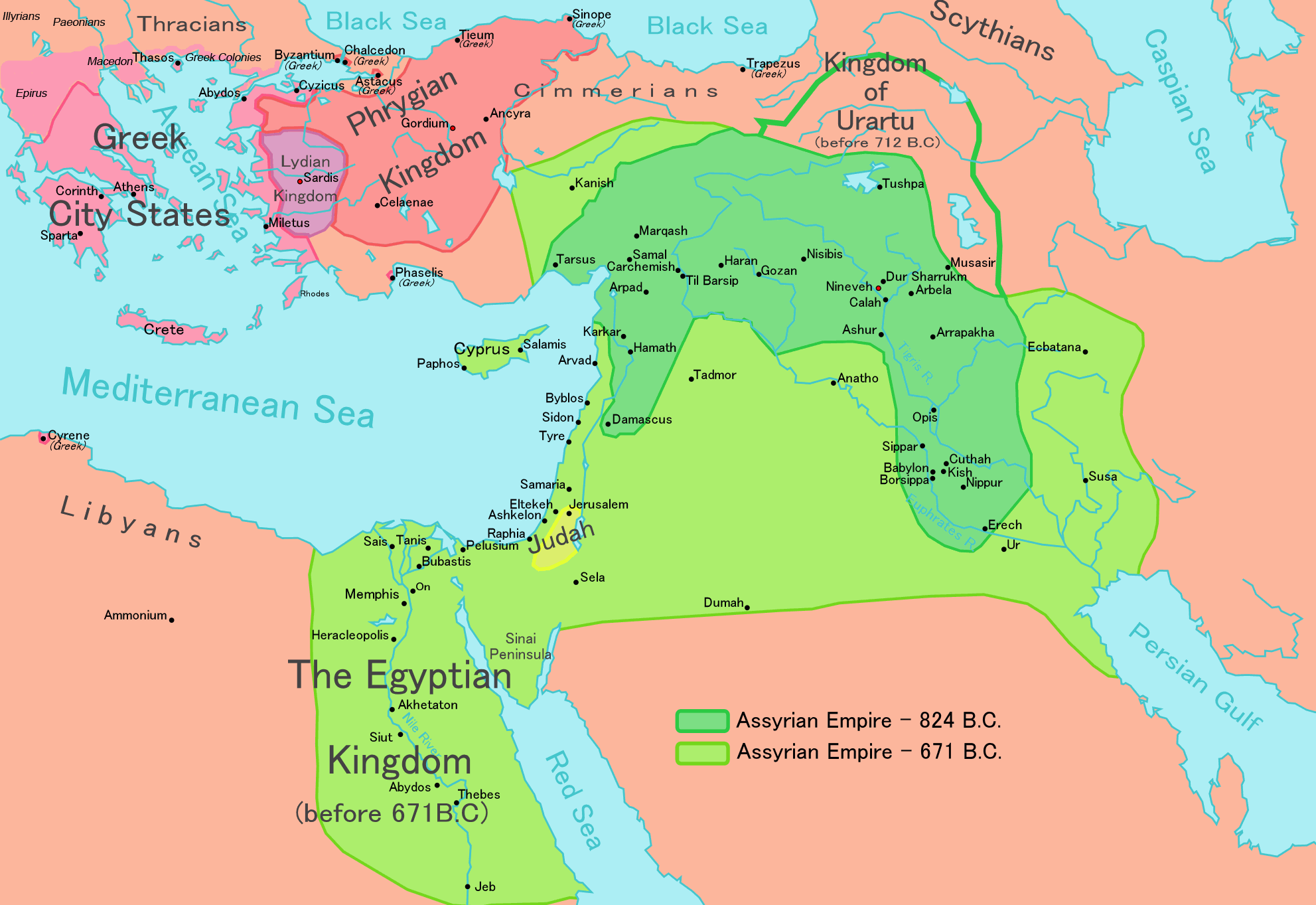
The Neo-Assyrian Empire, flourishing from 911 to 609 BCE, stands as a monumental force in ancient history, marking the fourth and final phase of Assyrian civilization. This era witnessed Assyria's ascent from a regional power to the dominant force in the Near East, extending its reach across Mesopotamia, the Levant, Egypt, and parts of Anatolia and Iran. Its military innovations, sophisticated administration, and imperial ideology, focused on world domination, set a precedent for subsequent empires like the Neo-Babylonians and Achaemenids, earning it the distinction of being history's first true world empire. At its zenith, the empire commanded unparalleled military strength, ruling over a vast and diverse populace, and its legacy continues to inform our understanding of statecraft, warfare, and imperial expansion.
🎵 Origins & History
The Neo-Assyrian Empire emerged from the ashes of the Middle Assyrian period. Early rulers like Ashurnasirpal II and Shalmaneser III laid the groundwork through relentless military campaigns, expanding Assyrian territory and solidifying its control over key trade routes. The empire reached its apex under rulers such as Tiglath-Pileser III, who implemented sweeping administrative and military reforms, and Sargon II, who founded a new capital at Dur-Sharrukin. The empire's vastness and military prowess were undeniable, but internal revolts and the rise of rivals like the Neo-Babylonians and Medes ultimately led to its dramatic collapse.
⚙️ How It Works
The Neo-Assyrian Empire's operational success hinged on a sophisticated, albeit brutal, system of governance and military organization. Its military was a professional, standing army, employing advanced siege warfare techniques, iron weaponry, and cavalry tactics that were unparalleled in their time. The empire's administrative structure was characterized by provincial governance, the systematic deportation of conquered populations to break resistance and utilize their labor elsewhere, and a complex bureaucracy that managed tribute and resources. Royal inscriptions and monumental art, particularly the bas-reliefs found in palaces like Nimrud and Khorsabad, served not only as propaganda but also as a means of projecting imperial power and ideology across its vast territories. The construction of extensive road networks facilitated troop movement and communication, crucial for maintaining control over such a large domain.
📊 Key Facts & Numbers
The Neo-Assyrian Empire extracted vast amounts of tribute. The city of Nineveh alone, at its height, may have housed upwards of 100,000 inhabitants, making it one of the largest cities in the ancient world. The empire's administrative reforms under Tiglath-Pileser III led to a more centralized system, increasing tax revenues by an estimated 30-40% in some regions.
👥 Key People & Organizations
Key figures who shaped the Neo-Assyrian Empire include its powerful monarchs, such as Adad-nirari II, who initiated the empire's resurgence, and Ashurnasirpal II, known for his military conquests and lavish building projects at Nimrud. Tiglath-Pileser III stands out for his comprehensive administrative and military reforms that revitalized the empire. Sargon II established a new capital at Dur-Sharrukin, showcasing Assyrian grandeur. Ashurbanipal, the last great Neo-Assyrian king, is renowned for his military campaigns and the creation of the vast library at Nineveh, which preserved thousands of cuneiform tablets. The empire's administrative structure also relied on a complex hierarchy of governors, generals, and scribes, whose collective efforts maintained its vast dominion.
🌍 Cultural Impact & Influence
The Neo-Assyrian Empire's influence on subsequent civilizations is profound and undeniable. Its military strategies and organizational principles were studied and emulated by the Neo-Babylonians, Persian Empire, and even the Roman Republic. The concept of a centralized imperial administration, provincial governance, and systematic resource extraction became hallmarks of later empires. Assyrian art, particularly the narrative bas-reliefs depicting royal hunts and military victories, set aesthetic standards that influenced art across the Near East and beyond. Furthermore, the Assyrian practice of deporting populations and resettling them in different regions had lasting demographic and cultural impacts on the regions they controlled, a practice that would be repeated by later empires, including the Romans.
⚡ Current State & Latest Developments
While the Neo-Assyrian Empire as a political entity ceased to exist in 612 BCE, its legacy continues to be unearthed and reinterpreted by archaeologists and historians. Ongoing excavations at sites like Kalah-Sheiban and Dur-Kurigalzu continue to reveal new insights into Assyrian life, administration, and warfare. The decipherment of cuneiform texts, particularly those from Ashurbanipal's library, provides a continuous stream of new information about their society, religion, and history. Modern scholarship, aided by advancements in archaeological techniques and digital humanities tools, is constantly refining our understanding of the empire's scale, its impact, and the nuances of its rule, challenging older narratives and offering fresh perspectives on its place in world history.
🤔 Controversies & Debates
The Neo-Assyrian Empire is a subject of considerable debate among historians. One major point of contention is the extent to which its imperial ideology truly constituted the 'first world empire,' a concept often debated in relation to its territorial scope and its influence on later empires like the Persian Empire. The morality and effectiveness of its brutal tactics, particularly mass deportations and the psychological warfare employed against its enemies, are also frequently discussed, with some scholars viewing them as necessary tools of imperial control and others as egregious human rights violations by ancient standards. The precise reasons for its rapid collapse in 612 BCE, beyond the coalition of enemies, are also debated, with theories ranging from overextension and internal dissent to environmental factors and economic strain.
🔮 Future Outlook & Predictions
The future understanding of the Neo-Assyrian Empire will likely be shaped by continued archaeological discoveries and advancements in archaeological science. New excavation technologies, such as remote sensing and GIS mapping, may uncover previously unknown sites or provide a more comprehensive understanding of existing ones. The ongoing decipherment of cuneiform texts, potentially aided by AI-driven linguistic analysis, could unlock new historical narratives and details about Assyrian administration, daily life, and foreign policy. Furthermore, comparative studies with other ancient empires, such as the Roman Empire and the Han Dynasty, will likely continue to refine our models of imperial expansion, governance, and collapse, potentially revealing universal patterns or unique characteristics of Assyrian imperial strategy.
💡 Practical Applications
The practical applications of studying the Neo-Assyrian Empire lie primarily in the fields of political science, military strategy, and organizational behavior. Its methods of imperial administration, resource management, and military organization offer case studies for understanding the dynamics of large-scale statecraft and the challenges of maintaining control over diverse populations. The empire's sophisticated propaganda techniques, as evidenced in its monumental art and inscriptions, provide insights into the use of ideology and public relations in projecting power. Furthermore, its successes and failures in managing conquered territories and integrating diverse peoples offer lessons for contemporary discussions on governance, diplomacy, and the long-term consequences of imperial ambition.
Key Facts
- Category
- history
- Type
- topic