
Contents
Overview
The genesis of Oscan is deeply rooted in the ancient Italic migrations into the Italian peninsula, predating the rise of Rome. It emerged as a distinct language within the Osco-Umbrian, or Sabellic, family, a significant branch of the Italic languages that also spawned Umbrian and the lesser-known South Picene. Early Oscan speakers, including the formidable Samnites, Lucani, and the tribes often grouped as 'Osci' like the Aurunci and Sidicini, carved out their territories in central and southern Italy. The earliest attestations of Oscan date back to inscriptions from the 5th century BCE, demonstrating a language already well-established and possessing its own literary tradition, albeit one primarily preserved through votive offerings, legal decrees, and public inscriptions rather than epic poetry or philosophical treatises. This linguistic lineage places Oscan as a contemporary and, in many regions, a rival to the burgeoning Latin spoken in Latium.
⚙️ How It Works
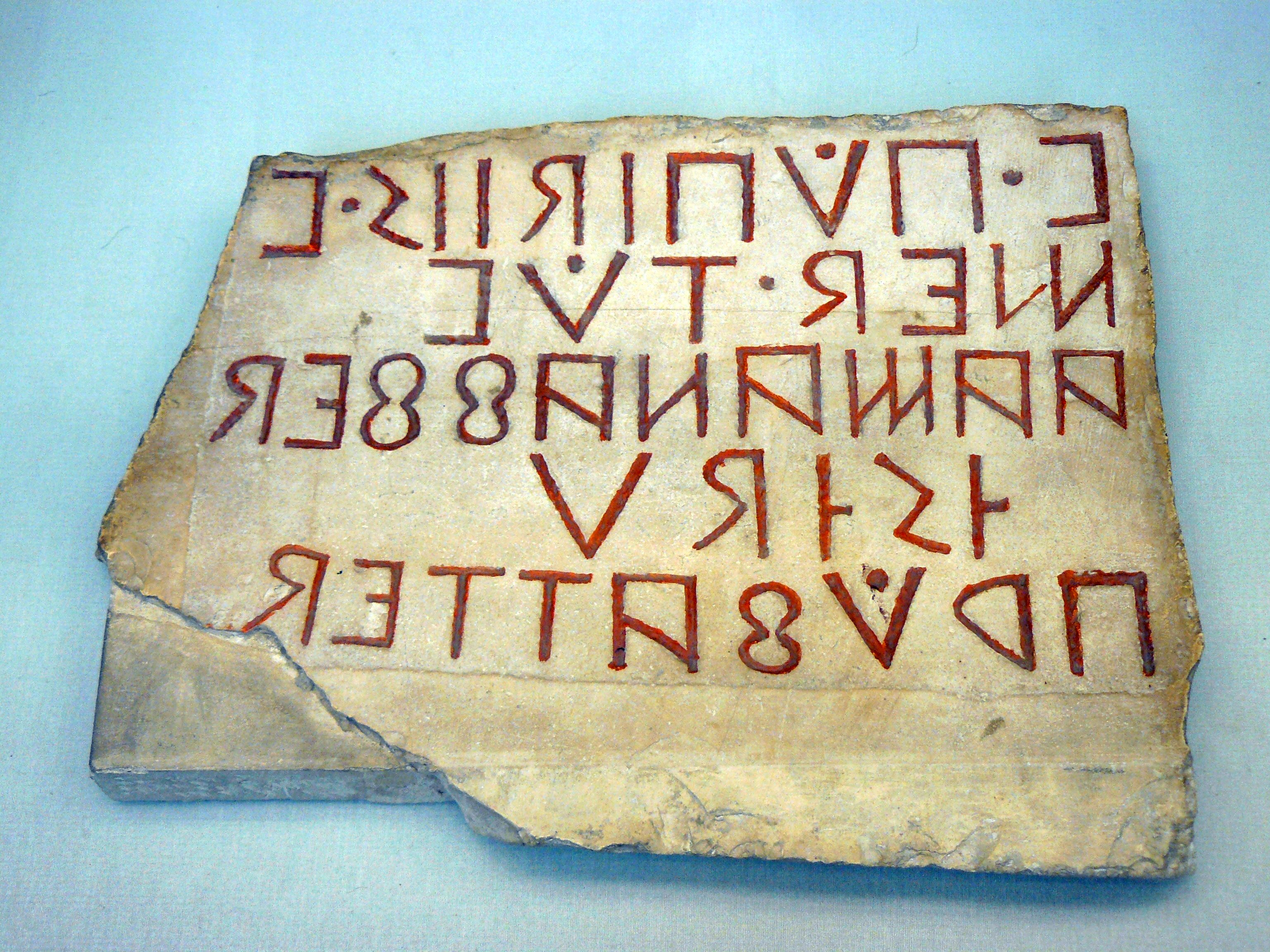
Oscan grammar and phonology reveal its Italic heritage, with features common to related languages but also unique developments. Its vocabulary, as reconstructed from inscriptions, showcases terms related to warfare, governance, religion, and daily life, providing a window into the societal structures of its speakers. The Oscan alphabet, adapted from the Etruscan script, was a key innovation that facilitated its spread and use across Campania and beyond. This script, typically written from right to left, featured distinct characters for sounds not present in Latin. For instance, the use of double consonants in Oscan inscriptions, such as in words like 'sakrakruvis' (sacred grove), indicates a phonetic richness that distinguishes it from its Latin cousin. The morphology of Oscan verbs and nouns, while complex, shares Indo-European roots, allowing linguists to draw parallels with other ancient Indo-European languages and reconstruct its proto-forms.
📊 Key Facts & Numbers
Surviving Oscan inscriptions number in the hundreds, with estimates suggesting around 300 distinct texts. The most substantial Oscan text is the 'Tabula Bantina' (Banti table), a bronze tablet dating to the 2nd century BCE, which details legal regulations for the town of Bantia. This inscription alone comprises over 300 words, offering a significant corpus for linguistic analysis. Other notable inscriptions include the 'Cippus Abellanus' (Abella stone) from the 2nd century BCE, detailing land division and religious rites, and numerous smaller votive inscriptions found across southern Italy, often bearing personal names and dedications to deities like Mars or Jupiter. While precise figures for the number of Oscan speakers are impossible to ascertain, the geographical spread of inscriptions suggests it was a widely spoken vernacular across a significant portion of southern Italy for centuries, potentially numbering in the hundreds of thousands at its peak before the Roman conquest.
👥 Key People & Organizations
While no single individual is credited with 'inventing' Oscan, its history is intertwined with the tribal leaders and communities who commissioned its inscriptions. The Samnites, a powerful confederation of Italic tribes, were perhaps its most prominent speakers, engaging in protracted wars with the Roman Republic from the 4th to the 3rd centuries BCE. The Lucani, who inhabited the region of modern Basilicata, and the Aurunci and Sidicini in Campania, also played crucial roles in its transmission. Linguists and archaeologists like Theodor Mommsen, in his seminal work 'Die unteritalischen Dialekte' (The Dialects of Southern Italy), and more recently, scholars such as Michael Weiss, have dedicated their careers to deciphering and understanding Oscan through its surviving epigraphy. Organizations like the University of Naples Federico II and various archaeological institutes in Italy continue to study Oscan sites and artifacts, preserving the material culture associated with the language.
🌍 Cultural Impact & Influence
Oscan's primary cultural impact lies in its contribution to our understanding of pre-Roman Italy. The inscriptions provide invaluable, unmediated glimpses into the legal systems, religious practices, and social structures of the Italic peoples who resisted and interacted with the expanding Roman Republic. The 'Tabula Bantina,' for example, offers a detailed look at local governance and land ownership, revealing a complex society with established legal frameworks. The very existence of a distinct Oscan literary and epigraphic tradition highlights the linguistic diversity of ancient Italy, challenging a purely Latin-centric view of the peninsula's history. Its eventual extinction under the pervasive influence of Latin represents a broader historical trend of linguistic assimilation in the face of imperial expansion, a phenomenon seen across many ancient cultures, from the eventual decline of Celtic in Gaul to the disappearance of Etruscan in central Italy.
⚡ Current State & Latest Developments
As an extinct language, Oscan is no longer spoken by any community. However, its 'current state' is one of ongoing academic study and reinterpretation. Modern linguistic analysis, aided by computational tools and comparative philology, continues to refine our understanding of its grammar, vocabulary, and historical context. New inscriptions are occasionally discovered during archaeological excavations in southern Italy, providing fresh data for scholars. The digital humanities are also playing a role, with projects aiming to create comprehensive databases of Oscan inscriptions, making them more accessible for research. While no living speakers exist, the study of Oscan remains an active field within classical philology and ancient history, ensuring its legacy persists in academic discourse.
🤔 Controversies & Debates
A significant debate surrounding Oscan concerns its precise relationship within the Sabellic group and its exact chronological development. While widely accepted as an Osco-Umbrian language, the degree of divergence and the timeline of its separation from proto-Sabellic remain subjects of scholarly discussion. The interpretation of specific inscriptions, particularly those with ambiguous readings or unique dialectal features, also fuels controversy. For instance, the exact meaning and grammatical function of certain Oscan words or phrases are sometimes contested, leading to differing reconstructions of the language's nuances. Furthermore, the extent of Roman influence on Oscan, particularly in its later stages, and the precise circumstances of its extinction in favor of Latin, are areas where historical and linguistic evidence is debated.
🔮 Future Outlook & Predictions
The future of Oscan studies hinges on continued archaeological discoveries and advancements in linguistic analysis. Future research may uncover more extensive inscriptions, potentially shedding light on previously unknown dialects or offering more complete texts that could resolve current interpretative challenges. Comparative linguistics, especially with the growing understanding of other ancient Italic and Indo-European languages, will undoubtedly provide new frameworks for understanding Oscan's internal structure and its place in the broader linguistic family. While Oscan will never be revived as a spoken language, its future lies in its continued illumination of ancient Mediterranean history and its role as a vital piece in the puzzle of Indo-European language evolution. The potential for digital reconstruction and interactive linguistic models also offers new avenues for engaging with the language.
💡 Practical Applications
The practical applications of studying Oscan are primarily academic and historical. For linguists, it serves as a crucial data point for understanding the evolution of the Italic languages and, by extension, the Indo-European language family. It allows for comparative analysis of grammatical structures, phonological changes, and semantic developments across ancient languages. For historians and archaeologists, Oscan inscriptions are primary source documents that offer direct evidence of the political, social, and religious life of southern Italy before and during the Roman Republic. They provide insights into legal systems, land tenure, religious cults, and personal names that are not available through Latin sources alone. Understanding Oscan is essential for a comprehensive picture of the cultural mosaic of ancient Italy.
Key Facts
- Category
- language
- Type
- topic