
Contents
Overview
Over-the-air (OTA) antennas are specialized devices designed to capture broadcast television signals transmitted through the atmosphere. OTA antennas enable access to free, unencrypted broadcast content. Despite the rise of streaming, OTA reception remains a vital, cost-effective, and resilient method for millions worldwide to access news, entertainment, and emergency broadcasts, particularly in areas with limited internet infrastructure or as a backup to cable and satellite services. The technology continues to evolve, adapting to digital broadcasting standards and improving signal capture efficiency.
🎵 Origins & History
The genesis of the over-the-air antenna is inextricably linked to the dawn of broadcast television itself. Early experiments in radio transmission by pioneers like Guglielmo Marconi laid the groundwork for capturing electromagnetic waves.
⚙️ How It Works
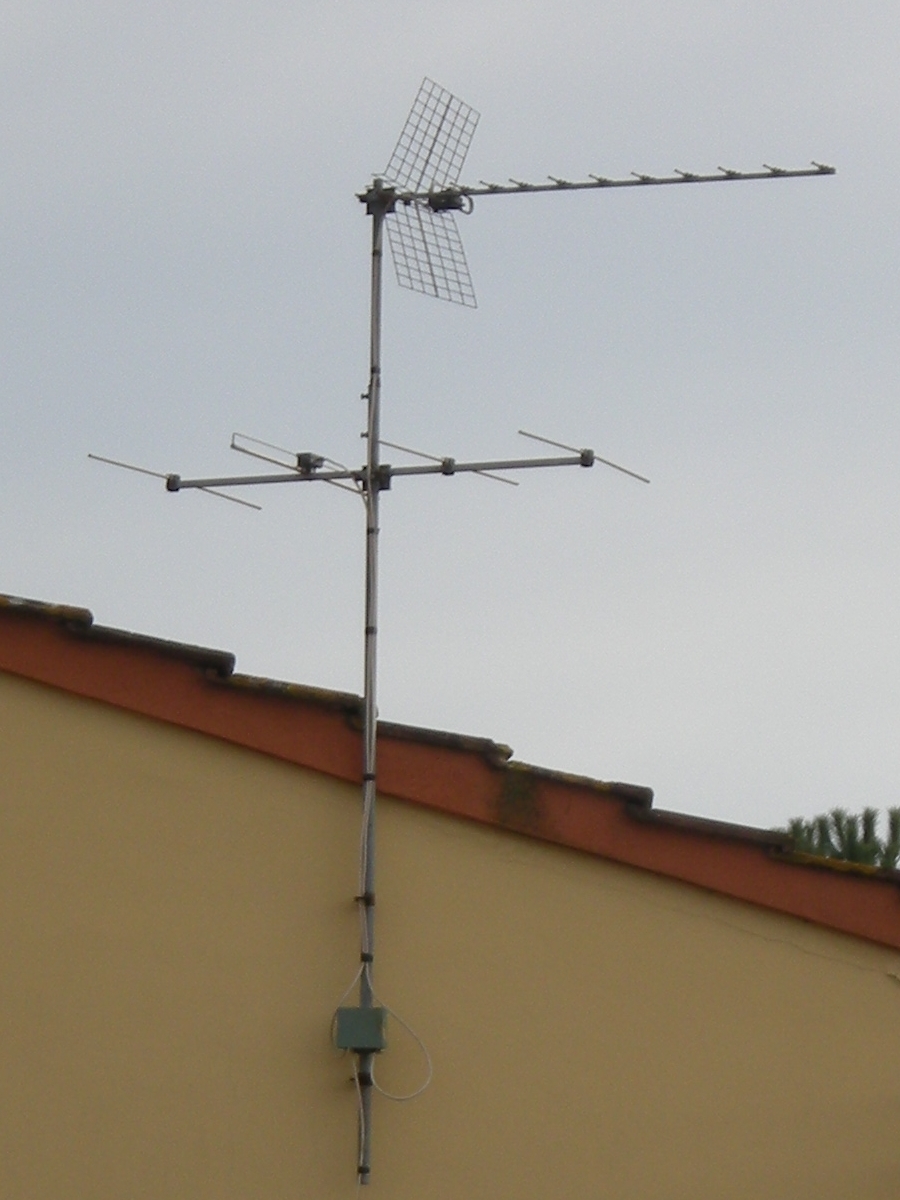
An over-the-air antenna functions by capturing electromagnetic waves carrying broadcast television signals. These waves, oscillating at specific frequencies, induce a small alternating current in the antenna's conductive elements. The design of the antenna—its length, shape, and orientation—is critical for efficiently resonating with and collecting signals at these particular frequencies. Dipole antennas are typically tuned to half the wavelength of the desired signal, while more complex directional antennas like the Yagi-Uda array use multiple elements to focus reception from a specific direction. This induced current is then sent via coaxial cable to the television's tuner. The effectiveness of an antenna is measured by its gain and directivity, indicating how well it amplifies signals and from which directions it can receive them.
📊 Key Facts & Numbers
The digital transition shifted broadcasts to digital signals (ATSC), requiring antennas capable of receiving these new formats, though the fundamental physics of signal capture remain the same.
👥 Key People & Organizations
While no single inventor is credited with the 'over-the-air antenna' as a singular invention, its development is a story of incremental innovation building on radio frequency engineering.
🌍 Cultural Impact & Influence
The over-the-air antenna is a cultural touchstone, intrinsically tied to the shared experience of television viewing for much of the 20th century. The ubiquitous 'rabbit ears' became a symbol of home entertainment. For many, the ability to receive free broadcast signals represented a democratization of media access, bypassing the costs associated with cable or satellite subscriptions. The antenna also played a critical role during emergencies, providing a reliable source of information when other communication methods failed, as seen during numerous natural disasters. The resurgence of OTA viewing in the digital age, driven by cord-cutting trends and the desire for free, high-definition local channels, has given the antenna a new lease on life, embedding it once again in contemporary media consumption habits.
⚡ Current State & Latest Developments
The current landscape for OTA antennas is dynamic, marked by the ongoing transition to digital broadcasting and the increasing sophistication of antenna technology. Manufacturers are continuously refining designs for both indoor and outdoor models, focusing on improved signal reception in challenging environments and greater bandwidth coverage. The development of multi-directional antennas and smart antennas that can automatically adjust for optimal reception is a key trend. The FCC's ongoing spectrum reallocation efforts, such as the incentive auction that repurposed parts of the UHF band for wireless broadband, directly impact the available channels and thus the optimal antenna configurations for consumers.
🤔 Controversies & Debates
OTA provides free, unencrypted, high-definition local news and emergency broadcasts, which streaming often lacks or charges for.
🔮 Future Outlook & Predictions
The future of over-the-air antennas is likely to be shaped by several converging trends. The continued growth of digital broadcasting, including the potential for ATSC 3.0 (NextGen TV), which offers enhanced features like 4K resolution, improved audio, and interactive content, will necessitate antennas capable of receiving these advanced signals. As broadcast spectrum continues to be reallocated, antennas may need to adapt to narrower frequency bands or different transmission methods. We could see a rise in 'smart antennas' that utilize software to optimize reception dynamically, perhaps even integrating with smart home ecosystems. Furthermore, as concerns about internet censorship and data privacy grow, the appeal of free, over-the-air broadcast content as a reliable and independent media source may increase, ensuring a continued, albeit evolving, role for OTA antennas in the media consumption landscape. The potential for ATSC 3.0 to deliver targeted advertising and emergency alerts directly to antennas also presents new revenue streams and public service opportunities.
💡 Practical Applications
Over-the-air antennas have a primary practical application in receiving free, unencrypted broadcast television signals, offering a cost-effective alternative to cable or satellite subscriptions. This is particularly relevant for individuals seeking to reduce monthly entertainment expenses or for those in areas with limited broadband availability. They are crucial for accessing local news, weather updates, and emergency broadcasts, especially during power outages or natural disasters when internet and cable services may be disrupted. For cord-cutters, OTA antennas provide access to major n
Key Facts
- Category
- technology
- Type
- topic