
Contents
Overview
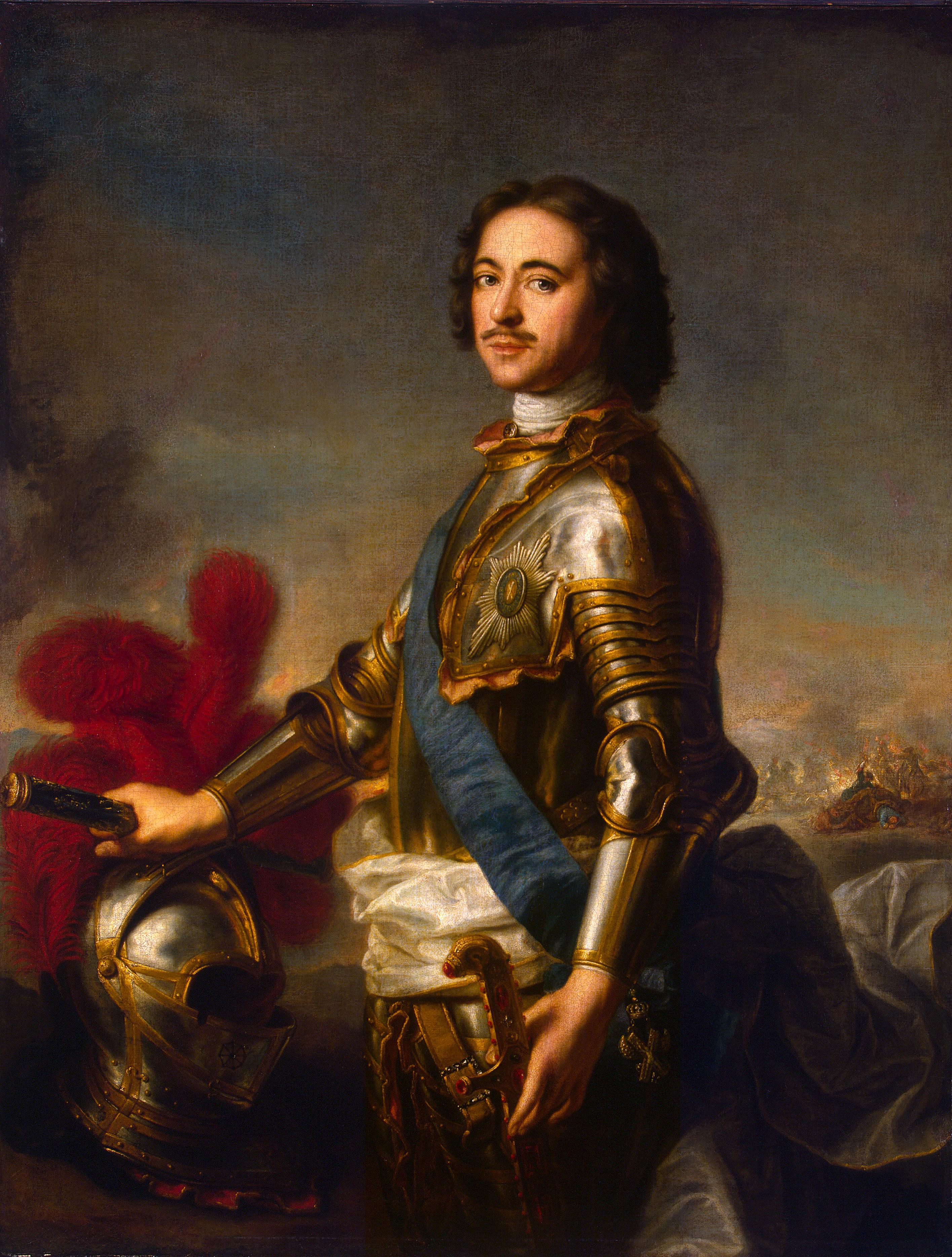
Peter I was born on June 9, 1672, in Moscow as the fourteenth child of Tsar Aleksey I. When his father died, Peter became joint Tsar with his older half-brother Ivan V, though he initially held limited power. His early years were tumultuous, marked by family intrigue and the influence of his half-sister Sophia and her advisor Golitsyn. By 1689, Peter had consolidated enough power to force Sophia into a convent and exile Golitsyn, establishing himself as the dominant force in Russian politics. Unlike any Tsar before him, Peter broke tradition by leaving Russia in peacetime to undertake the Grand Embassy (1697–98), traveling through Europe to learn Western military, naval, and administrative techniques. This journey fundamentally shaped his vision for Russia's future and his determination to connect the nation with European powers.
⚔️ Wars & Territorial Expansion
Peter's reign was consumed by military campaigns aimed at expanding Russian territory and establishing the nation as a maritime power. His first major objective was capturing the Ottoman fortress of Azov near the Don River, which would provide access to the Black Sea. The initial Azov campaign in 1695 ended in failure, but Peter persisted, building a fleet at Voronezh and successfully capturing Azov in 1696. Following this victory, he founded Taganrog and began constructing a large navy. Peter's greatest military triumph came during the Great Northern War (1700–1721) against Sweden, where he defeated the Swedish army at the Battle of Poltava in 1709 by strategically directing Swedish troops into the brutal Russian winter. Through these conflicts, Russia annexed significant portions of the eastern Baltic coastline, including territory in Estonia, Latvia, and Finland, transforming Russia into a Baltic power. Peter also waged war against the Ottoman Empire and the Crimean Khan, securing additional access to southern territories. By 1721, these military successes justified his proclamation of Russia as an empire, elevating his title to Emperor of All Russia.
🏛️ Modernization & Cultural Revolution
Beyond military conquest, Peter initiated a comprehensive cultural and administrative revolution that replaced medieval Russian systems with modern, scientific, and Westernized institutions. He reorganized the Russian army according to Western standards, creating a disciplined military force that rivaled European powers. Peter secularized schools, reducing the reactionary Orthodox Church's influence over education and establishing institutions based on Enlightenment principles. He introduced new administrative and territorial divisions to streamline governance and improve state efficiency. One of his most iconic achievements was founding Saint Petersburg on June 29, 1703, on Hare Island, which he envisioned as Russia's new capital and 'window to Europe.' To accelerate construction, Peter forbade the building of stone structures outside Saint Petersburg, forcing all stonemasons to work on the city. He also mandated the adoption of European dress and standards among the Russian nobility, symbolizing Russia's cultural reorientation toward the West. In 1724, Peter crowned his second wife, Catherine, as Empress, breaking with tradition by amending the succession law to allow the Tsar to choose his successor rather than following primogeniture.
💀 Legacy & Death
Peter the Great died on February 8, 1725, in Saint Petersburg, leaving behind a transformed nation. Though he proved to be an effective and visionary leader, Peter was also known for his cruelty and tyrannical methods. He brutally suppressed numerous rebellions against his authority, including uprisings by the Streltsy (a royal guard), the Bashkirs, Astrakhan, and the Bulavin Rebellion—the greatest civil uprising of his reign. The high taxes required to fund his military campaigns, naval construction, and the building of Saint Petersburg sparked widespread discontent and revolts, all of which Peter crushed with violence. Despite these costs, Peter left Russia with no national debt and transformed it into a confident, wealthy, and powerful European nation. His legacy fundamentally reshaped Russian civilization, establishing institutions and cultural practices that would define the nation for centuries. Catherine, his widow, became Russia's first female ruler, continuing his modernization efforts and cementing his reforms into the fabric of Russian governance.
Key Facts
- Year
- 1672–1725
- Origin
- Moscow, Russia
- Category
- history
- Type
- person
Frequently Asked Questions
Why is Peter called 'the Great'?
Peter earned the epithet 'the Great' for transforming Russia from a medieval, semi-feudal backwater into a major European power. His extensive military victories, particularly in the Great Northern War, combined with his sweeping modernization reforms—including the creation of the Russian Navy, the founding of Saint Petersburg, and the secularization of Russian institutions—fundamentally elevated Russia's status on the world stage. In 1721, he was formally proclaimed Emperor of All Russia, cementing his legacy as one of history's most consequential rulers.
What was the Grand Embassy and why was it significant?
The Grand Embassy (1697–1698) was Peter's unprecedented journey through Europe, during which he traveled incognito to learn Western military, naval, and administrative techniques. No Russian Tsar had ever left the country in peacetime, making this a radical break with tradition. Peter studied shipbuilding, military organization, and European governance systems, gathering knowledge and recruiting foreign experts to bring back to Russia. This experience fundamentally shaped his vision for Russia's modernization and his determination to connect the nation with European powers, directly influencing his subsequent reforms.
How did Peter create the Russian Navy?
Peter was obsessed with establishing Russia as a maritime power, viewing naval strength as essential to European dominance. After his initial failure to capture Azov in 1695, he promptly built a fleet at Voronezh to sail down the Don River, successfully capturing Azov in 1696. He then began constructing a large navy and founded Taganrog on the Don estuary to consolidate this success. Through the Great Northern War, Peter gained access to the Baltic Sea, allowing him to expand naval operations further. By his death, he had built the Russian Navy from nothing into a formidable power, fundamentally transforming Russia's military capabilities.
What was Saint Petersburg and why did Peter build it?
Saint Petersburg, founded on June 29, 1703, on Hare Island, was Peter's ambitious new capital designed to be Russia's 'window to Europe.' Peter envisioned the city as a symbol of Russia's modernization and Westernization, replacing Moscow as the seat of power. To accelerate construction, he forbade the building of stone structures anywhere else in Russia, forcing all stonemasons to work on the city. Saint Petersburg became Peter's personal project and a testament to his vision of a modern, European-oriented Russia, though its construction required immense resources and labor.
How did Peter handle opposition to his reforms?
Peter faced significant opposition from Russia's medieval aristocracy and traditionalist elements, but he responded with brutal suppression. He violently crushed numerous rebellions, including uprisings by the Streltsy (a royal guard), the Bashkirs, Astrakhan, and the Bulavin Rebellion—the greatest civil uprising of his reign. The high taxes required to fund his military campaigns, naval construction, and city-building sparked widespread discontent, which Peter quashed through torture, killings, and executions. Though effective in consolidating power, his tyrannical methods left a legacy of fear and resentment, though they ultimately enabled his modernization agenda to succeed.