
Contents
Overview
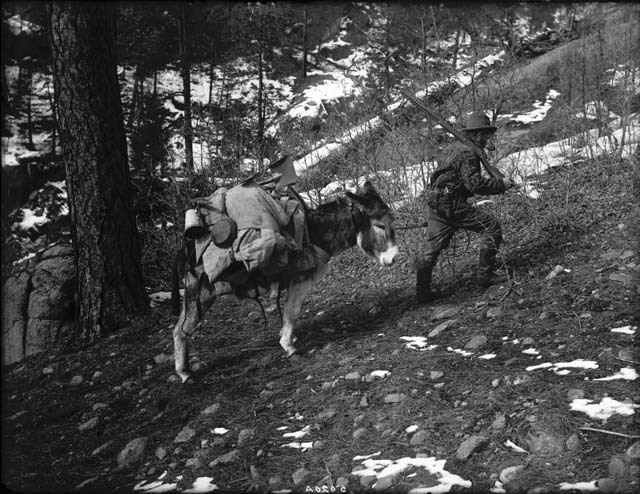
The practice of prospecting stretches back millennia, with early humans sifting riverbeds for gold nuggets and chipping away at outcrops for flint. Ancient civilizations like the Egyptians and Romans dispatched expeditions to locate sources of precious metals and gemstones, often relying on local knowledge and rudimentary geological observation. The California Gold Rush dramatically popularized individual prospecting, drawing hundreds of thousands to the American West in pursuit of fortune. This era cemented the image of the lone prospector, often depicted with a pickaxe and a mule, a romanticized figure whose legacy persists in popular culture. Precursors to modern prospecting can be seen in the systematic search for salt, iron ore, and copper by ancient societies across Eurasia and Africa, laying the groundwork for more formalized mineral extraction.
⚙️ How It Works
At its most fundamental, prospecting involves direct geological observation. A prospector examines rock outcrops for visible mineralization, analyzes stream sediments for indicator minerals, or searches alluvial deposits for placer gold. Modern techniques augment this with advanced tools. Geologists use magnetometers to detect variations in the Earth's magnetic field caused by certain minerals, while geochemists analyze soil and rock samples for anomalous concentrations of elements associated with ore bodies. Geophysical surveys, such as seismic or electrical resistivity methods, can reveal subsurface structures indicative of mineral deposits. These tools help identify 'anomalies' – deviations from the background geological signature – which then become targets for more focused, on-the-ground prospecting and sampling, significantly increasing the efficiency of the search.
📊 Key Facts & Numbers
Globally, prospecting activities contribute to an estimated annual mining industry. Exploration budgets often fluctuate. In Australia, a leading mining nation, prospecting licenses are held by individuals and companies, with the value of minerals discovered through exploration exceeding billions of dollars annually in recent years. The average cost to discover a significant new gold deposit can range widely, with prospecting being the initial, low-cost phase. In some jurisdictions, like parts of the Yukon Territory in Canada, thousands of mineral claims are staked annually, representing active prospecting efforts. The price of gold, a primary target for many prospectors, has historically seen significant volatility, influencing investment in exploration.
👥 Key People & Organizations
While often an individual pursuit, prospecting is supported by a network of geologists, geophysicists, and mining engineers. Key figures in the history of prospecting include Edward Hargraves, credited with discovering payable gold in Australia. Organizations like the Prospectors and Miners Association of America advocate for prospectors' rights. Major mining corporations, such as Barrick Gold and Newmont Corporation, employ teams of geologists who conduct large-scale prospecting operations, often acquiring promising prospects identified by smaller independent prospectors. Government geological surveys, like the United States Geological Survey, play a crucial role by mapping mineral potential and providing foundational data.
🌍 Cultural Impact & Influence
Prospecting has profoundly shaped human history and culture, driving exploration, settlement, and economic development. The allure of striking it rich has inspired countless books, films, and songs, from the romanticized tales of the Klondike Gold Rush to modern documentaries about independent prospectors. It has fueled westward expansion in countries like the United States and Australia, leading to the establishment of towns and infrastructure. The pursuit of minerals has also been a catalyst for technological innovation, pushing the development of new tools and techniques for geological analysis and extraction. The cultural archetype of the 'prospector' remains a potent symbol of adventure, perseverance, and the dream of independent wealth, influencing everything from fashion to adventure tourism.
⚡ Current State & Latest Developments
In 2024, prospecting continues to evolve, blending traditional methods with cutting-edge technology. Drones equipped with hyperspectral sensors are increasingly used for aerial prospecting, identifying mineral signatures from above. Advances in artificial intelligence and machine learning are being applied to vast geological datasets to predict potential ore locations with greater accuracy. Junior exploration companies, often funded by venture capital, are at the forefront of modern prospecting, utilizing these technologies to identify and stake promising targets before larger corporations. The focus is shifting towards critical minerals essential for renewable energy technologies, such as lithium, cobalt, and rare earth elements, driving new waves of prospecting activity in diverse geological settings worldwide. Regulatory changes in areas like the Western Australia mining code continue to impact how claims are staked and managed.
🤔 Controversies & Debates
Prospecting is not without its controversies. The environmental impact of exploration activities, even before large-scale mining, can be significant, including habitat disruption and potential water contamination from sampling. The legal framework surrounding mineral claims is often complex and contentious, with debates over land rights, indigenous sovereignty, and access for prospectors versus other land uses. The romanticized image of the lone prospector can obscure the reality of large-scale corporate exploration, which often dominates the industry. Furthermore, the speculative nature of prospecting means that many identified prospects never become producing mines, leading to questions about resource allocation and the sustainability of exploration practices. The debate over 'staking' versus 'leasing' mineral rights also remains a persistent point of contention in many jurisdictions.
🔮 Future Outlook & Predictions
The future of prospecting will likely be defined by an even greater integration of digital technologies and a focus on sustainability. Expect to see AI-driven predictive modeling become standard, identifying targets with unprecedented precision and reducing the physical footprint of exploration. Remote sensing technologies will continue to advance, allowing for more detailed mapping and analysis from afar. The demand for critical minerals will drive prospecting into more challenging and remote environments, necessitating innovations in exploration techniques and logistics. Furthermore, there will be increasing pressure to develop 'green prospecting' methods, minimizing environmental impact and prioritizing responsible resource development, potentially leading to new regulatory frameworks and industry standards for sustainable mining practices.
💡 Practical Applications
Prospecting's primary application is the identification of economically viable mineral deposits, forming the bedrock of the global mining industry. This includes finding gold, silver, copper, iron ore, diamonds, and increasingly, critical minerals like lithium, cobalt, and rare earth elements vital for electric vehicles and renewable energy infrastructure. Beyond commercial mining, prospecting also serves scientific research, aiding geologists in understanding Earth's history and tectonic processes through the study of rock formations and fossils. Amateur prospectors and hobbyists engage in 'recreational prospecting' or 'fossicking' for personal enjoyment, collecting unique mineral specimens or small amounts of gold, often under specific regulations in designated areas like those found in parts of New Zealand.
Key Facts
- Category
- science
- Type
- topic