
Contents
Overview
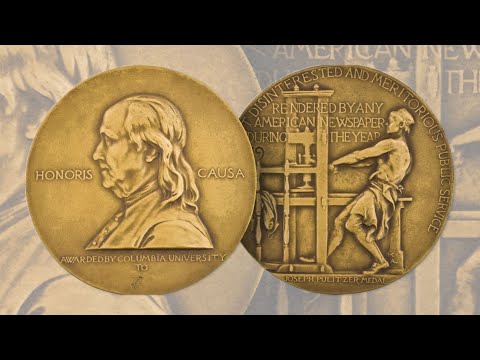
The Pulitzer Prizes originated from the bequest of Joseph Pulitzer, a Hungarian-American newspaper publisher who died in 1911, establishing the awards through his will to honor excellence in journalism, literature, drama, and music. Administered by Columbia University since 1917, the prizes began with 21 categories, expanding over time to recognize distinguished works published in the preceding year. Early winners included Upton Sinclair for Fiction in 1943 with Dragon's Teeth and James Ford Rhodes for History in 1918 with History of the Civil War, 1861–1865, setting a precedent for rigorous standards that persist today.[1][2]
⚙️ How It Works
The selection process involves nominations from publishers and self-submissions, reviewed by expert jurors who recommend finalists and a winner to the Pulitzer Prize Board, composed of prominent journalists, editors, and academics. Categories include Fiction, History, Biography, Poetry, Drama, and 15 journalism awards, with a $15,000 cash prize for most winners and a Gold Medal for Public Service. Recent examples include 2025 History winners Edda L. Fields-Black for Combee: Harriet Tubman, the Combahee River Raid, and Black Freedom During the Civil War and Kathleen DuVal for Native Nations: A Millennium in North America, alongside Jacqueline Jones in 2024 for No Right to an Honest Living.[1][4][8]
🌍 Cultural Impact
Pulitzer winners profoundly influence American culture, elevating books like Harper Lee's To Kill a Mockingbird (1961 Fiction) and William Faulkner's The Reivers (1962) to canonical status, while history laureates such as T. Harry Williams (Huey Long, 1970) and Bernard De Voto (Across the Wide Missouri, 1948) reshape public understanding of pivotal events. Iconic figures like Ernest Hemingway (The Old Man and the Sea, 1952) and Pearl S. Buck (The Good Earth, 1931) gained immortality through these honors, sparking nationwide reading booms and academic study. The awards also spotlight underrepresented voices, from Caroline Miller's debut Lamb in His Bosom (1933) to contemporary works on Black and Native histories.[1][2][3]
🔮 Legacy & Future
The legacy of Pulitzer winners endures through evolving criteria that now include digital journalism and diverse narratives, with 2025 announcements on May 5 highlighting ongoing relevance amid cultural shifts. Future expansions may address multimedia and global perspectives, building on over a century of honorees like Cormac McCarthy (The Road, 2007) who continue inspiring creators. As literature and journalism adapt to AI and digital platforms like Reddit (/platforms/reddit) and TikTok (/platforms/tiktok), Pulitzer standards remain a beacon for excellence.[1][2][8]
Key Facts
- Year
- 1917–present
- Origin
- United States (Columbia University, New York)
- Category
- culture
- Type
- concept
Frequently Asked Questions
Who founded the Pulitzer Prizes?
Joseph Pulitzer, a pioneering journalist, established the prizes via his 1911 will, with the first awards given in 1917 by Columbia University to recognize excellence in American letters and journalism.[1]
What are some famous Fiction winners?
Notable Fiction winners include Harper Lee (To Kill a Mockingbird, 1961), Ernest Hemingway (The Old Man and the Sea, 1952), Pearl S. Buck (The Good Earth, 1931), and Cormac McCarthy (The Road, 2007), each elevating timeless American narratives.[2]
How are winners selected?
Jurors in each category review submissions and recommend finalists to the Pulitzer Board, which selects winners; prizes include $15,000 and are announced annually in May.[1][8]
Who won History in recent years?
2025 co-winners: Edda L. Fields-Black (Combee) and Kathleen DuVal (Native Nations); 2024: Jacqueline Jones (No Right to an Honest Living); these works focus on Black and Native American histories.[1][4]
Can non-Americans win?
Primarily for works by Americans about American life, though some international authors like Pearl S. Buck have won; focus remains on U.S.-published excellence.[2]
References
- britannica.com — /topic/Pulitzer-Prize
- en.wikipedia.org — /wiki/Pulitzer_Prize_for_Fiction
- goodreads.com — /list/show/4249.Pulitzer_Winners_History
- sno-isle.bibliocommons.com — /v2/list/display/835676622/2230532249
- bookbrowse.com — /awards/detail/index.cfm/book_award_number/1/pulitzer-prize
- pulitzer.org — /prize-winners-by-category/222
- pulitzer.org — /prize-winners-by-category/219
- pulitzer.org — /prize-winners-by-year
- pulitzer.org — /prize-winners-by-category/220
- pulitzer.org — /