
Contents
Overview
The lineage of puzzle games stretches back far beyond the digital age, with roots firmly planted in traditional board games, riddles, and mechanical puzzles. Early precursors like the Tangram and the Fifteen Puzzle laid the groundwork for spatial reasoning challenges. The advent of electronic entertainment saw these concepts translated into interactive forms. Early arcade titles like Atari's Breakout introduced elements of pattern recognition and strategic manipulation, while Taito's Space Invaders, though primarily a shooter, required players to learn enemy patterns. The true explosion of the digital puzzle genre arrived in the 1980s, with the creation of Tetris becoming a global phenomenon, demonstrating the immense appeal of simple yet profound mechanics. This era also saw the rise of logic-based games like The Incredible Machine and Lemmings, which demanded more complex planning and execution.
⚙️ How It Works
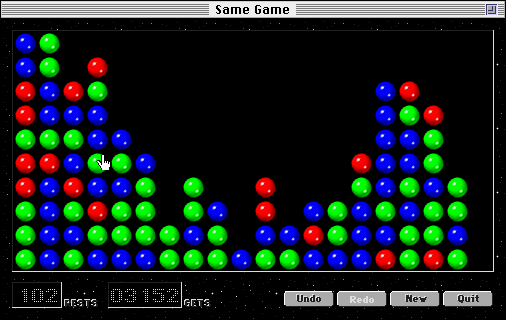
At its core, a puzzle game presents a problem or a set of conditions that the player must resolve through a specific set of actions or deductions. The mechanics vary wildly: some games, like Portal, involve navigating complex 3D environments using physics-bending tools like the portal gun to create interconnected pathways. Others, such as Candy Crush Saga, rely on matching three or more identical items to clear them from a grid, often with cascading effects and strategic power-ups. The Witness presents a world filled with intricate line-drawing puzzles, where the environment itself often provides clues to the solution. The common thread is the requirement for players to analyze the game's rules, identify patterns, and apply logical thinking to progress, often without direct combat or extensive resource management.
📊 Key Facts & Numbers
The puzzle game market is a significant segment of the global video game industry, with mobile platforms driving much of its recent growth. The average playtime for a casual puzzle game session is often between 5 to 15 minutes, making them ideal for on-the-go engagement.
👥 Key People & Organizations
Numerous individuals and companies have shaped the puzzle game landscape. Alexey Pajitnov is universally recognized as the creator of Tetris, a game that transcended cultural and political boundaries. Kim Swift and Adrian Chong were instrumental in the design of Portal at Valve Corporation, a title that redefined 3D puzzle-platforming. William Pugh and Ron Gilbert (creator of The Secret of Monkey Island) were key figures behind The Stanley Parable (2013), a meta-narrative puzzle game. Companies like King (now part of Activision Blizzard) have built empires on mobile puzzle titles like Candy Crush Saga. Zach Gage, an independent developer, has consistently pushed the boundaries of mobile puzzle design with titles such as SpellTower and Really Bad Chess.
🌍 Cultural Impact & Influence
Puzzle games have profoundly influenced broader culture and game design. The inherent satisfaction derived from solving a complex puzzle translates into high player engagement and a strong sense of accomplishment, a principle now applied across many genres. Mechanics pioneered in puzzle games, such as match-three systems, have become ubiquitous, appearing in everything from social media games to elements within RPGs and strategy titles. The accessibility of many puzzle games has also broadened the appeal of gaming to demographics that might not engage with more action-oriented genres, contributing to the industry's massive growth. Furthermore, the intellectual rigor demanded by puzzle games has led to their use in educational contexts and cognitive training, highlighting their role in developing critical thinking skills. The viral success of games like Wordle showcases how simple puzzle formats can capture global attention and become daily rituals for millions.
⚡ Current State & Latest Developments
The puzzle game genre remains incredibly dynamic, with ongoing innovation across platforms. Mobile continues to dominate in terms of player numbers and revenue, with developers constantly experimenting with new mechanics and monetization strategies, often involving in-app purchases and ad integration. The rise of Augmented Reality (AR) and Virtual Reality (VR) presents new frontiers for puzzle design, allowing for more immersive and spatially complex challenges, as seen in titles like Beat Saber (which incorporates rhythm and spatial puzzles) and I Expect You To Die. Indie developers are also a major driving force, frequently releasing unique and critically acclaimed puzzle titles on platforms like Steam and itch.io, often exploring narrative depth alongside intricate puzzles, exemplified by games like Outer Wilds (2019). The integration of AI is also beginning to influence puzzle generation and player assistance.
🤔 Controversies & Debates
Despite their generally positive reception, puzzle games are not without their controversies. A significant debate revolves around the monetization models employed, particularly in the mobile space. Many free-to-play puzzle games utilize 'pay-to-win' mechanics, where players can spend real money to overcome difficult levels or gain advantages, which some critics argue undermines the core challenge and skill-based nature of the genre. The addictive nature of some puzzle games, particularly those with ' Skinner box' reward loops and frequent notifications, has also drawn criticism, raising concerns about excessive playtime and potential negative impacts on mental well-being. Furthermore, the line between a "puzzle game" and a "casual game" can be blurry, leading to debates about genre classification and the perceived depth or complexity of certain titles.
🔮 Future Outlook & Predictions
The future of puzzle games appears robust, driven by technological advancements and a persistent player appetite for mental challenges. We can anticipate more sophisticated integration of AI in generating dynamic and personalized puzzles, adapting difficulty in real-time to individual player performance. VR and AR will likely see more ambitious puzzle titles that leverage immersive environments and intuitive physical interactions, moving beyond simple room-escape formats. The trend of narrative-driven puzzle games, blending compelling stories with intricate challenges, is expected to continue, attracting players who seek both intellectual stimulation and emotional engagement. Cross-platform play and cloud gaming services will further expand accessibility, allowing seamless transitions between devices. Expect continued experimentation with hybrid genres, where puzzle mechanics are woven into action, RPG, or simulation frameworks.
💡 Practical Applications
Puzzle mechanics are not confined to dedicated puzzle games; they are widely applied across various industries and disciplines. In education, puzzle-based learning (PBL) is used to foster critical thinking and problem-solving skills in subjects ranging from mathematics to science. Escape rooms, a popular real-world entertainment format, are essentially live-action puzzle ga
Key Facts
- Category
- culture
- Type
- topic