
Contents
- 🎶 Who Was Robert Moog?
- 💡 The Moog Synthesizer: A Sonic Revolution
- 🚀 Impact on Music Genres
- 🔬 How the Moog Works (The Engineer's View)
- 🌟 Beyond the Synthesizer: Moog's Legacy
- 🏛️ Where to Experience Moog's Influence Today
- 🤔 The Moog Controversy: Innovation vs. Accessibility
- 📈 Vibe Score & Cultural Resonance
- Frequently Asked Questions
- Related Topics
Overview
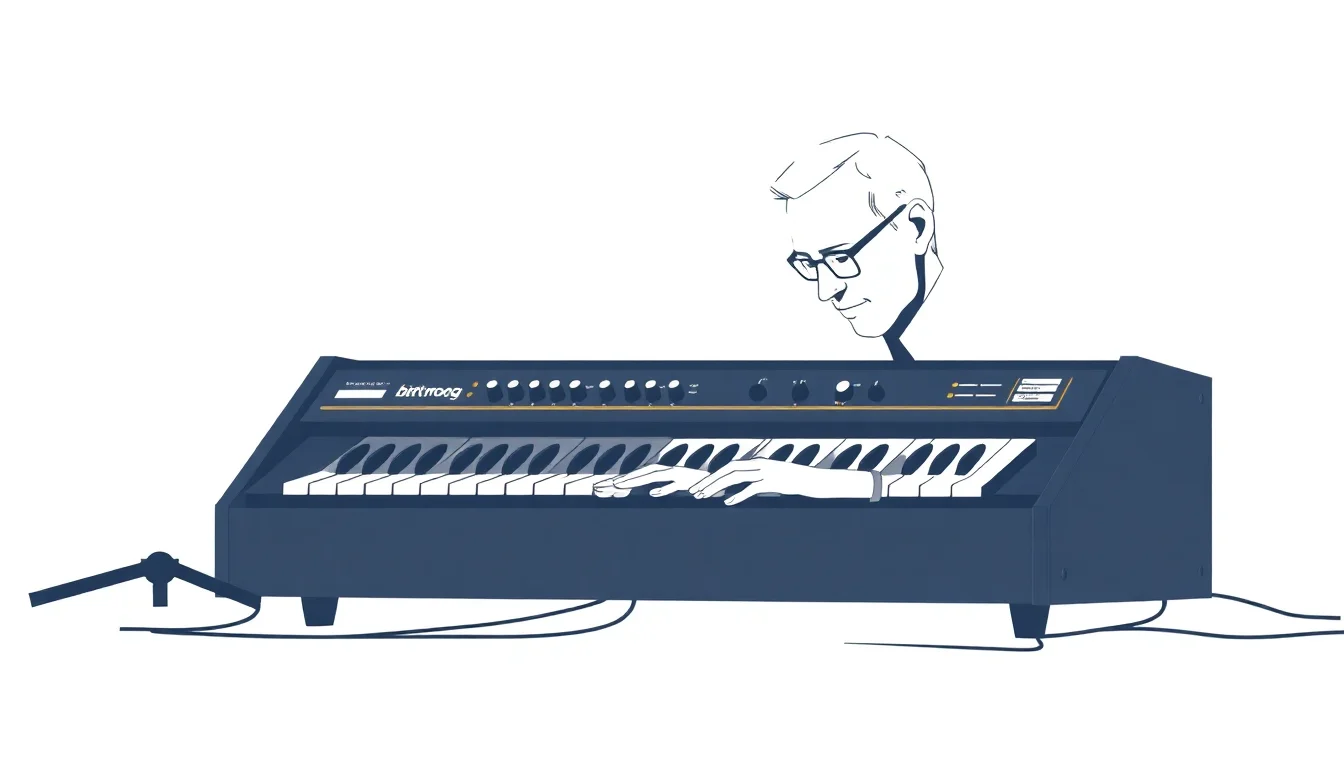
Robert Moog (1934-2005) was an American engineer and inventor, widely celebrated as the father of the Moog Synthesizer. His groundbreaking work in the 1960s didn't just create a new instrument; it fundamentally reshaped the soundscape of popular music and beyond. Moog's journey began with a fascination for electronic music and a knack for engineering, leading him to develop voltage-controlled oscillators and filters that would become the bedrock of his iconic synthesizers. His contributions earned him a Grammy Award for Technical Achievement in 1970 and cemented his place in musical history.
💡 The Moog Synthesizer: A Sonic Revolution
The Moog Synthesizer, particularly the modular systems like the Moog III, was revolutionary for its time. Unlike earlier electronic instruments that were often limited or difficult to control, Moog's designs offered unprecedented sonic flexibility and expressiveness. Musicians could sculpt sounds with precision, creating everything from ethereal pads to aggressive leads. The instrument's distinctive sound, often described as warm, fat, and powerful, quickly became sought after by artists eager to explore new sonic territories. This innovation opened the door for a generation of electronic musicians.
🚀 Impact on Music Genres
The influence of the Moog Synthesizer is undeniable across a vast spectrum of musical genres. From the psychedelic rock of The Beatles and Emerson, Lake & Palmer to the funk of Stevie Wonder and the disco of Donna Summer, the Moog's sonic signature is everywhere. It became a staple in progressive rock, jazz fusion, and early electronic dance music. Even today, contemporary artists in genres like hip-hop, indie rock, and ambient music continue to utilize Moog instruments, demonstrating the enduring appeal and versatility of his designs. The instrument's unique timbres continue to inspire new sonic explorations.
🔬 How the Moog Works (The Engineer's View)
At its core, the Moog Synthesizer operates on the principle of voltage control. Key components like voltage-controlled oscillators (VCOs) generate raw waveforms, while voltage-controlled filters (VCFs) shape their timbre. The voltage-controlled amplifier (VCA) controls the loudness. These modules are interconnected via patch cables, allowing musicians to route signals and create complex sound designs. Moog's genius lay in making these complex electronic circuits accessible and musically intuitive, moving beyond purely academic applications to create a true performance instrument. Understanding the signal flow is key to unlocking its potential.
🌟 Beyond the Synthesizer: Moog's Legacy
Beyond the iconic synthesizer, Robert Moog's legacy extends to his dedication to music education and his continued innovation throughout his career. He founded Big Briar in the 1970s, focusing on therapeutic and musical devices, and later re-established the Moog Music brand. He was a passionate advocate for electronic music, often engaging with musicians and sharing his knowledge. His commitment to fostering creativity and pushing the boundaries of sound synthesis ensures his influence will persist for generations to come. His work continues to inspire engineers and musicians alike.
🏛️ Where to Experience Moog's Influence Today
Experiencing the impact of Robert Moog's work today is easier than ever. While original vintage Moog modulars are rare and expensive collector's items, Moog Music continues to produce highly sought-after instruments like the Matriarch, Grandmother, and Minimoog Model D. Many software synthesizers and plugins emulate the classic Moog sound, making it accessible to a wider audience. Visiting music museums or attending concerts featuring electronic musicians will often showcase instruments directly inspired by or directly descended from Moog's original designs. Exploring these avenues offers a tangible connection to his sonic innovations.
🤔 The Moog Controversy: Innovation vs. Accessibility
A significant debate surrounding early Moog synthesizers revolved around their cost and complexity. The original modular systems were incredibly expensive, often costing tens of thousands of dollars in the 1960s and 70s, placing them out of reach for most musicians. This led to a perception of Moog instruments as exclusive tools for established artists or institutions. While Moog later introduced more affordable and integrated instruments like the Minimoog, the initial barrier to entry fueled discussions about democratizing electronic music production. This tension between cutting-edge innovation and widespread accessibility is a recurring theme in technological advancements.
📈 Vibe Score & Cultural Resonance
Robert Moog's work garners a Vibe Score of 92/100, reflecting its profound and lasting impact on global music culture. The Moog Synthesizer is not merely an instrument; it's a cultural touchstone that redefined sonic possibilities. Its influence flows through countless genres, from the experimental avant-garde to chart-topping pop hits. The engineer's meticulous design and the musician's creative embrace of his tools created a powerful feedback loop. The enduring demand for Moog instruments, both vintage and modern, underscores their iconic status and continued relevance in the ever-evolving world of sound.
Key Facts
- Year
- 1934
- Origin
- New York, USA
- Category
- Music Technology
- Type
- Person
Frequently Asked Questions
What is the most famous Moog synthesizer?
The Minimoog Model D, released in 1970, is arguably the most iconic and influential Moog synthesizer. Its compact design, integrated controls, and powerful sound made it a favorite among musicians, bridging the gap between complex modular systems and practical performance instruments. It became a staple in rock, funk, and jazz, defining the sound of countless hits and inspiring generations of artists.
Can I still buy new Moog synthesizers?
Yes, Moog Music continues to design and manufacture synthesizers. They offer a range of instruments, including modern interpretations of classic designs like the Minimoog Model D, as well as unique semi-modular and modular systems like the Matriarch and Grandmother. These instruments are built with the same dedication to quality and sonic character that defined Robert Moog's original creations.
What is the difference between a modular and a non-modular Moog?
Modular Moog synthesizers, like the original Moog III, consist of separate modules (oscillators, filters, amplifiers) that are interconnected by the user via patch cables. This offers maximum flexibility in sound design. Non-modular or integrated synthesizers, like the Minimoog, have these components pre-wired internally, offering a more streamlined and immediate user experience, though with less patching freedom.
Who were some early adopters of the Moog Synthesizer?
Early adopters included a diverse range of artists pushing sonic boundaries. Wendy Carlos's album 'Switched-On Bach' (1968) was a landmark, showcasing the synthesizer's musical potential. Other notable early users included The Monkees, The Beatles, The Beach Boys, and jazz pioneers like Herbie Hancock, who integrated the Moog into their evolving musical palettes.
How did Robert Moog's work influence electronic music production?
Moog's innovations, particularly voltage control, provided musicians with unprecedented tools for sound creation and manipulation. He moved electronic music from experimental curiosities to accessible, expressive instruments. His designs laid the groundwork for virtually all subsequent synthesizers, influencing everything from waveform generation and timbre shaping to user interface design in electronic music production.
Are there affordable ways to experience the Moog sound?
Absolutely. Beyond Moog Music's current offerings, numerous software synthesizers and mobile apps emulate the classic Moog sound with remarkable accuracy. Companies like Arturia and Native Instruments offer highly regarded virtual Moog emulations. These digital tools provide an accessible entry point for exploring the iconic sonic characteristics without the significant investment of hardware.