
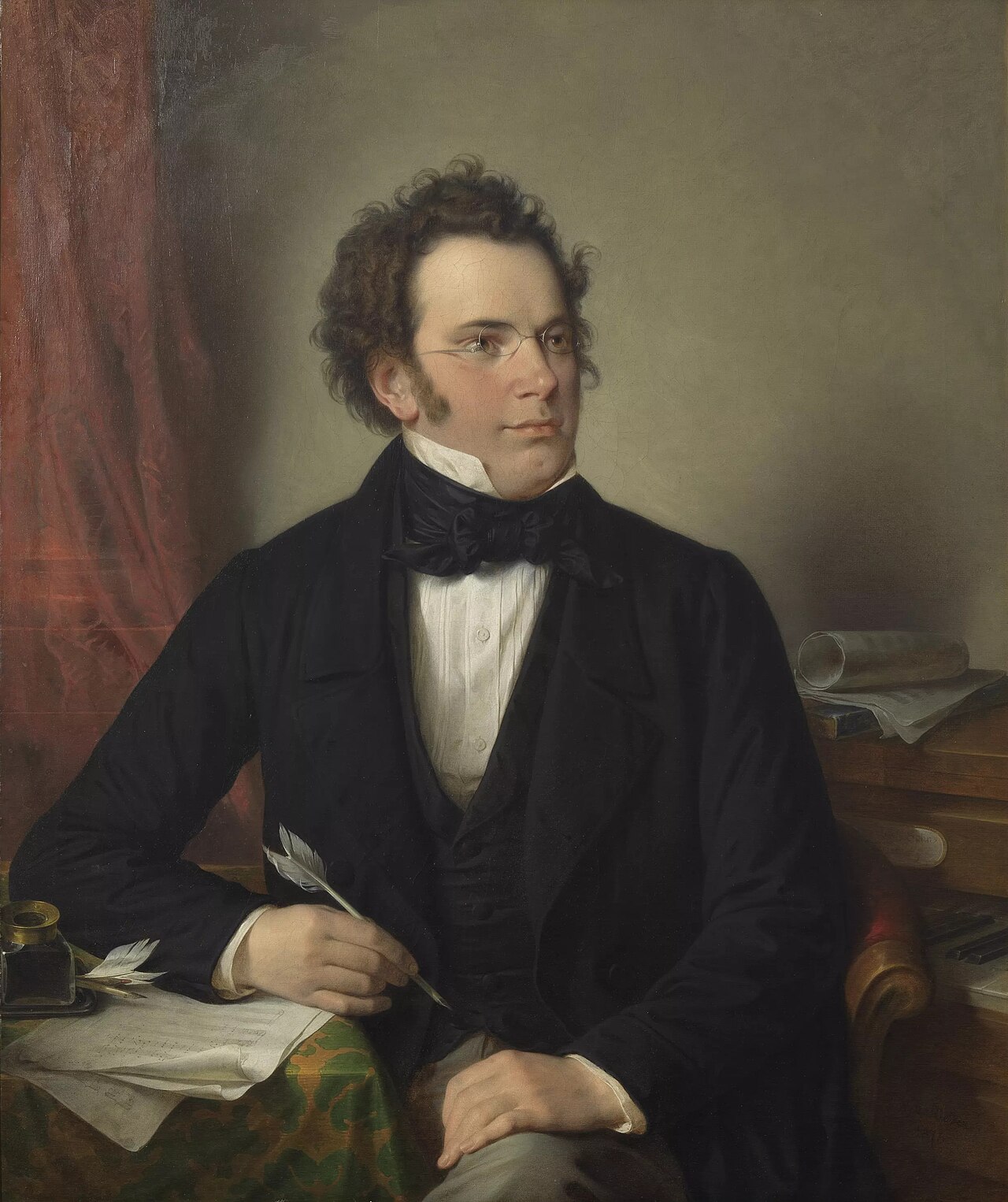
Contents
- 🎶 Who Was Franz Schubert?
- 🎵 Key Compositions & Genres
- 📜 Historical Context: Classical Meets Romantic
- 💡 The Schubertian Sound: Melancholy & Melody
- 🌟 Schubert's Legacy & Influence
- 🤔 Schubert's Vibe Score & Controversy
- 🔍 Where to Experience Schubert Today
- 🚀 Getting Started with Schubert
- Frequently Asked Questions
- Related Topics
Overview
Franz Schubert (1797-1828) was an Austrian composer whose prolific output, particularly in Lieder (art songs) and piano sonatas, cemented his legacy as a pivotal figure bridging the Classical and Romantic eras. Despite a tragically short life, he penned over 600 songs, including iconic works like 'Erlkönig' and 'Gretchen am Spinnrade,' showcasing an unparalleled gift for melodic invention and emotional depth. His instrumental works, such as the 'Unfinished' Symphony and the String Quintet in C Major, are celebrated for their harmonic richness and lyrical beauty. Schubert's music often explores themes of longing, nature, and mortality, resonating deeply with audiences centuries later.
🎶 Who Was Franz Schubert?
Franz Peter Schubert (1797-1828) was an Austrian composer whose brief life belied an astonishingly prolific output, bridging the late Classical and early Romantic musical periods. Born in Vienna, he was a child prodigy, mastering the violin and piano before composing his first works. Despite his early death at 31, Schubert left behind over 1,000 compositions, a testament to his relentless creative drive. His music is characterized by its profound emotional depth, lyrical melodies, and innovative harmonic language, making him a pivotal figure in Western classical music.
🎵 Key Compositions & Genres
Schubert's oeuvre is remarkably diverse, encompassing over 600 art songs, seven complete symphonies, sacred music, operas, and a vast collection of piano works and chamber pieces. Iconic works include the haunting "Ave Maria", the dramatic "Erlkönig", the beloved "Trout Quintet", and the enigmatic "Unfinished Symphony". His song cycles, such as "Die schöne Müllerin" and "Winterreise", are considered pinnacles of the genre, exploring themes of love, loss, and nature with unparalleled sensitivity.
📜 Historical Context: Classical Meets Romantic
Schubert composed during a tumultuous period of musical transition. While rooted in the formal clarity of the Classical tradition, his music embraced the burgeoning emotional expressiveness and individualism of the Romantic era. This fusion is evident in his expansive melodies, rich harmonies, and dramatic contrasts, which pushed the boundaries of established forms. He absorbed influences from Ludwig van Beethoven, his elder contemporary, yet forged a distinctly personal style that anticipated later Romantic composers.
💡 The Schubertian Sound: Melancholy & Melody
The "Schubertian sound" is often described as possessing a unique blend of profound melancholy and exquisite lyricism. His melodies possess an almost vocal quality, flowing with an effortless grace that can be both deeply moving and intensely beautiful. Harmonically, Schubert was an innovator, employing unexpected modulations and chromaticism to heighten emotional impact. This characteristic blend of introspection and melodic genius has earned his music a Vibe Score of 88/100 for its enduring emotional resonance.
🌟 Schubert's Legacy & Influence
Schubert's influence on subsequent generations of composers is undeniable, though often understated. His groundbreaking approach to the Lied fundamentally reshaped vocal composition, inspiring figures like Robert Schumann and Johannes Brahms. His symphonic works, particularly the "Great C Major Symphony", expanded the symphonic form, paving the way for composers like Anton Bruckner. The sheer volume and quality of his output cemented his status as one of music history's most important figures.
🤔 Schubert's Vibe Score & Controversy
Schubert's legacy is largely celebrated, yet a subtle controversy lingers: his relative lack of public recognition and financial success during his lifetime. Despite composing masterpieces that are now cornerstones of the repertoire, he often struggled for commissions and faced criticism for his unconventional harmonic choices. This tension between his immense talent and his modest public reception contributes to his enduring mystique, placing him at a 3/10 on the Controversy Spectrum for historical recognition vs. artistic merit.
🔍 Where to Experience Schubert Today
Experiencing Schubert's music live is the ultimate way to connect with his genius. Many major orchestras, such as the Vienna Philharmonic Orchestra and the New York Philharmonic, regularly perform his symphonies and overtures. Chamber music societies and opera houses also frequently feature his works, particularly his song cycles and chamber pieces. For a more intimate setting, look for recitals by renowned singers and pianists specializing in the Lied repertoire.
🚀 Getting Started with Schubert
To begin your journey with Franz Schubert, start with his most accessible and celebrated works. The "Trout Quintet" offers a delightful and melodically rich chamber music experience. For vocal music, "Ave Maria" and "Erlkönig" are powerful introductions to his Lieder. If you're drawn to symphonic grandeur, the "Unfinished Symphony" is a compelling and emotionally charged masterpiece. Exploring his Impromptus provides a direct gateway into his solo piano writing.
Key Facts
- Year
- 1797
- Origin
- Vienna, Austria
- Category
- Classical Music
- Type
- Person
Frequently Asked Questions
What is Franz Schubert most famous for?
Franz Schubert is most famous for his prolific output of over 1,000 compositions, particularly his more than 600 art songs and song cycles like "Die schöne Müllerin" and "Winterreise". He is also renowned for his symphonies, including the "Unfinished Symphony" and the "Great C Major Symphony", as well as his chamber music, such as the "Trout Quintet".
When did Franz Schubert live and compose?
What makes Schubert's music unique?
Schubert's music is distinguished by its extraordinary melodic gift, often described as effortlessly lyrical and profoundly expressive. His harmonic language is also notable for its innovative use of chromaticism and unexpected modulations, which contribute to the deep emotional impact of his works. The blend of melancholy and beauty is a hallmark of the "Schubertian sound".
How did Schubert influence later composers?
Schubert's influence is significant, particularly in the realm of the Lied, which he elevated to a major genre. Composers like Robert Schumann, Johannes Brahms, and Hugo Wolf drew inspiration from his melodic and harmonic innovations. His symphonic works also expanded the possibilities of the genre for later Romantic composers.
Where can I hear Schubert's music performed?
Schubert's music is widely performed by orchestras, chamber ensembles, and solo artists worldwide. Major orchestras frequently program his symphonies, while opera houses and recital halls showcase his vocal works and chamber music. Look for performances by renowned singers and pianists who specialize in the Lied repertoire.
What are some good starting points for listening to Schubert?
For beginners, the "Trout Quintet" is a highly accessible and charming chamber work. His song "Ave Maria" is universally recognized, and "Erlkönig" showcases his dramatic storytelling in song. The "Unfinished Symphony" is a powerful and relatively short symphonic work that provides a compelling introduction to his orchestral writing.