
Contents
Overview
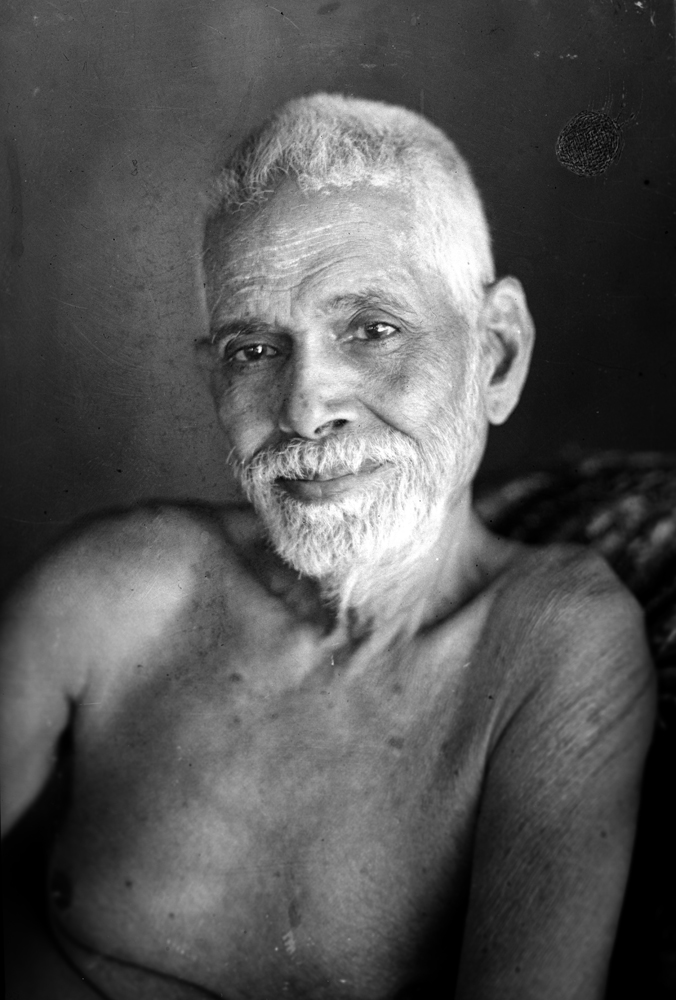
The roots of self-inquiry can be traced back to ancient Indian spiritual traditions, particularly within the Advaita Vedanta school of Hinduism. While the concept of investigating the self is pervasive in many spiritual paths, its explicit formulation as 'atma-vichara' is most famously expounded by the 20th-century sage Ramana Maharshi. Born Venkataraman Iyer in 1879 in Tiruchuli, Tamil Nadu, Maharshi experienced a profound spiritual awakening at the age of 16, which led him to abandon his worldly life and dedicate himself to self-realization. He settled at Arunachala mountain in Tiruvannamalai, where he taught through silence and direct guidance. His teachings, particularly his response to the question 'Who am I?', became the cornerstone of the self-inquiry practice, emphasizing its directness and efficiency compared to other yogic or meditative techniques. Precursors to this specific method can be found in earlier Upanishadic texts and the teachings of Adi Shankara, who also stressed the importance of discerning the true Self from the non-self.
⚙️ How It Works
The practice of self-inquiry, as taught by Ramana Maharshi, is deceptively simple yet profoundly demanding. It begins with posing the question 'Who am I?' to oneself, not as an intellectual exercise, but as a deep, introspective investigation. The practitioner is instructed to trace the 'I'-thought back to its source, observing where it arises from. As the 'I'-thought emerges, one should not engage with its content – its memories, desires, or identifications – but rather focus on the very fact of its existence. This sustained attention is meant to starve the 'I'-thought of its fuel, causing it to dissolve. When the 'I'-thought subsides, what remains is a pure, unadulterated awareness, often described as 'I-I' or pure self-awareness. The key is to remain fixed on this awareness without allowing the mind to wander or construct new thoughts. This 'effortless awareness of being' gradually erodes the latent tendencies, or 'vasanas', that give rise to the ego, ultimately leading to its permanent dissolution and the realization of the true Self.
📊 Key Facts & Numbers
While self-inquiry is a qualitative practice, its impact and reach can be quantified. The core text detailing the practice, 'Who Am I?' (Nan Yar?), has been translated into over 20 languages, with millions of copies distributed worldwide. Studies on contemplative practices, including those related to self-inquiry, have shown measurable effects on brain activity, with research from institutions like Stanford University indicating increased activity in areas associated with self-awareness and emotional regulation.
👥 Key People & Organizations
The central figure in the popularization of self-inquiry is undoubtedly Ramana Maharshi. His direct disciples, such as Annamalai Swami and H.W.L. Poonja, continued to transmit his teachings, often emphasizing the direct experiential aspect of self-inquiry. Arthur Osborne, a British writer, played a crucial role in introducing Maharshi's philosophy to the West through his writings, including 'The Teachings of Bhagavan Sri Ramana Maharshi'. Organizations like the Sri Ramanasramam in Tiruvannamalai continue to preserve and disseminate Maharshi's teachings. In contemporary times, various spiritual teachers and authors, such as Rupert Spira and David Godman, have further explored and expounded upon the principles of self-inquiry, making it accessible to a wider audience through books, lectures, and online platforms like YouTube.
🌍 Cultural Impact & Influence
The influence of self-inquiry extends beyond traditional spiritual circles, subtly impacting modern psychology and self-help movements. The emphasis on deconstructing the ego and identifying with a deeper sense of self resonates with therapeutic approaches that aim to reduce narcissistic tendencies and foster authentic self-expression. While not a direct therapeutic modality, the principles of observing thoughts without identification echo techniques found in Cognitive Behavioral Therapy (CBT) and Mindfulness-Based Stress Reduction (MBSR). The concept of 'I-I' or pure awareness has also found parallels in discussions of consciousness within neuroscience and philosophy of mind, albeit framed in secular terms. Furthermore, the practice has inspired artists and writers, contributing to a broader cultural exploration of identity and reality, as seen in various forms of existentialist literature and abstract art.
⚡ Current State & Latest Developments
In the current landscape, self-inquiry continues to be practiced by dedicated individuals worldwide, often within the framework of Advaita Vedanta communities or through independent study. Online platforms and YouTube channels dedicated to Ramana Maharshi's teachings see consistent engagement, with millions of views on talks and guided meditations related to 'Who am I?'. Contemporary teachers continue to offer retreats and online courses, adapting the practice for modern audiences. The increasing interest in mindfulness and non-dual awareness practices globally suggests a sustained relevance for self-inquiry. However, the challenge remains in translating the profound insights of the practice into everyday life, a perennial issue for many contemplative traditions in the face of contemporary distractions and the pervasive influence of consumer culture.
🤔 Controversies & Debates
Self-inquiry is not without its controversies and critiques. A primary debate centers on its potential for misuse or misunderstanding. Critics argue that the relentless focus on the 'I'-thought can, if not properly guided, lead to psychological distress, dissociation, or an unhealthy obsession with the self, potentially exacerbating anxiety or depression. Some psychologists express concern that the dissolution of the ego, if pursued without a strong grounding in reality, could lead to a detachment from social responsibilities or a nihilistic outlook. Furthermore, the non-dualistic claims of realizing a singular, unchanging Self are often met with skepticism from materialist perspectives in science and philosophy, who view consciousness as an emergent property of the brain rather than an independent reality. The directness of the method, while lauded by proponents, is also seen by some as too demanding or esoteric for the average individual.
🔮 Future Outlook & Predictions
The future of self-inquiry appears to be one of continued quiet influence, likely to grow in parallel with the broader interest in mindfulness and consciousness studies. As neuroscience delves deeper into the nature of selfhood and awareness, the experiential insights offered by self-inquiry may find new avenues for validation and integration. We can anticipate more secular interpretations of its core principles emerging in wellness and therapeutic contexts, potentially divorced from their traditional Hindu roots. The challenge will be to maintain the depth and integrity of the practice amidst increasing commodification and superficial engagement. The potential for self-inquiry to offer a profound antidote to the ego-driven anxieties of modern society remains, but its widespread adoption hinges on accessible guidance and a cultural willingness to engage with introspective exploration beyond fleeting trends.
💡 Practical Applications
Self-inquiry's most direct application is as a spiritual or philosophical practice aimed at achieving Self-realization or liberation. However, its principles can be adapted for practical self-understanding. For instance, individuals can use the 'Who am I?' inquiry to question limiting beliefs ab
Key Facts
- Category
- philosophy
- Type
- topic