
Contents
- 🚢 What Are Global Shipping Lanes?
- 🗺️ The World's Most Critical Waterways
- 💰 Economic Significance & Vibe Score
- ⚔️ Historical Evolution & Geopolitical Tensions
- ⚓ Navigational Challenges & Technologies
- ⚖️ Regulation & International Law
- 📈 Future Trends & Emerging Routes
- 💡 Practical Tips for Understanding Trade Flows
- Frequently Asked Questions
- Related Topics
Overview
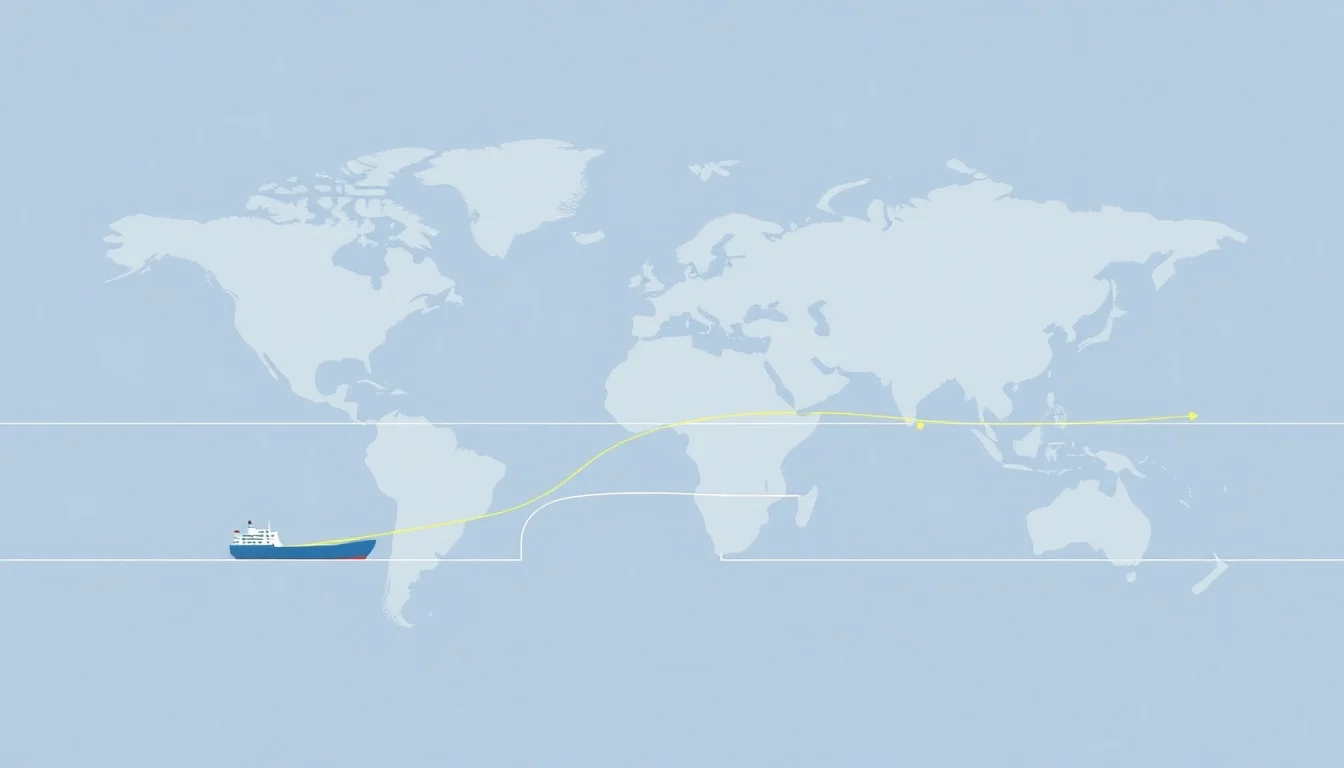
Shipping lanes are the invisible highways of global trade, the designated maritime corridors through which the vast majority of international commerce flows. These routes, often dictated by geography and geopolitics, are essential for moving raw materials, finished goods, and energy resources. From the chokepoints like the Strait of Malacca and the Suez Canal to the vast open oceans, their efficiency and security directly impact global supply chains, commodity prices, and geopolitical stability. Understanding these lanes is key to grasping the mechanics of international business and the strategic importance of maritime control.
🚢 What Are Global Shipping Lanes?
Global shipping lanes are the designated, regularly traveled routes that large vessels use to navigate oceans and major waterways, forming the backbone of international commerce. Think of them as the highways of the sea, meticulously charted and optimized for safety, directness, and economic efficiency. These routes are not static; they are dynamic pathways influenced by geography, weather patterns, and the ever-shifting demands of global trade. Understanding these lanes is crucial for grasping the fundamental mechanics of global trade and the flow of goods that underpins modern economies.
🗺️ The World's Most Critical Waterways
The world's maritime arteries are concentrated in a few key choke points and straits that handle an outsized portion of global shipping. The Strait of Malacca is arguably the most vital, connecting the Pacific and Indian Oceans and serving as a conduit for a third of global trade. Other critical passages include the Suez Canal, linking the Mediterranean and Red Seas, and the Panama Canal, connecting the Atlantic and Pacific. The English Channel and the Strait of Gibraltar are also indispensable for European trade, while the Strait of Hormuz remains a crucial, albeit volatile, passage for oil shipments. These narrow waterways are where the pulse of global commerce beats strongest.
💰 Economic Significance & Vibe Score
The economic impact of shipping lanes is staggering, underpinning 90% of world trade by volume. The efficiency and reliability of these routes directly translate into the cost and availability of goods worldwide. A disruption in a major lane can send shockwaves through global supply chains, impacting everything from consumer prices to industrial production. Vibepedia's preliminary Vibe Score for 'Global Shipping Lanes' stands at a robust 88/100, reflecting their immense cultural and economic energy. The sheer volume of goods moved – estimated at over 10 billion tons annually – highlights their indispensable role in the global economy.
⚔️ Historical Evolution & Geopolitical Tensions
Historically, sea lanes were dictated by prevailing winds and currents, a challenge mastered by mariners during the Age of Exploration. The discovery and charting of these routes were pivotal for empires and trade. Today, while technology has tamed many of the natural variables, geopolitical tensions often create new challenges. The South China Sea remains a flashpoint, with territorial disputes impacting freedom of navigation. Similarly, the security of the Red Sea shipping lanes has become a major concern due to regional conflicts, demonstrating how historical patterns of strategic importance persist and evolve.
⚖️ Regulation & International Law
The governance of global shipping lanes is a complex web of international treaties, conventions, and national regulations. The IMO, a United Nations agency, plays a crucial role in setting standards for safety, security, and environmental protection. Key conventions include the International Convention for the Safety of Life at Sea (SOLAS) and the International Regulations for Preventing Collisions at Sea (COLREGs). Despite these frameworks, disputes over territorial waters, transit rights, and enforcement of regulations are common, creating a constant tension between national interests and the need for unimpeded global trade.
📈 Future Trends & Emerging Routes
The future of global shipping lanes is being shaped by several key trends. The opening of Arctic routes due to climate change presents new, albeit environmentally sensitive, possibilities. The expansion of canals, like the proposed Nicaragua Canal (though currently stalled), aims to alter traditional transit patterns. Furthermore, the rise of autonomous shipping and the increasing demand for sustainable maritime fuels will likely lead to further optimization and potential rerouting of established lanes. The Belt and Road Initiative also seeks to reshape maritime trade routes, particularly connecting Asia with Europe and Africa.
💡 Practical Tips for Understanding Trade Flows
For anyone interested in the mechanics of global commerce, understanding shipping lanes is paramount. Instead of just looking at trade statistics, visualize the physical routes these goods take. Consider the impact of canal tolls on shipping costs or the security risks associated with specific straits. When analyzing supply chain disruptions, trace them back to potential issues in key maritime chokepoints. Following the routes of major shipping companies like CMA CGM can offer practical insights into the real-world application of these vital arteries.
Key Facts
- Year
- 2023
- Origin
- Vibepedia.wiki
- Category
- Geopolitics & Economics
- Type
- Resource Guide
Frequently Asked Questions
What is the busiest shipping lane in the world?
The Strait of Malacca is widely considered the busiest shipping lane, handling approximately one-third of global trade and a significant portion of the world's maritime traffic. Its strategic location between the Indian and Pacific Oceans makes it indispensable for trade between East Asia, South Asia, the Middle East, and Europe. Its congestion and vulnerability are constant concerns for global supply chains.
How are shipping lanes determined?
Historically, shipping lanes were determined by prevailing winds, currents, and safe harbors. Today, they are largely defined by established routes that balance directness, safety, and economic efficiency, often utilizing major straits and canals. Factors like water depth, navigational aids, and geopolitical stability also play significant roles in their designation and continued use.
What are the main threats to global shipping lanes?
The primary threats include piracy, particularly in regions like the Gulf of Aden and the Strait of Malacca; geopolitical instability and conflict, which can lead to blockades or increased insurance costs (e.g., in the Red Sea or South China Sea); and natural hazards like severe weather. Cyberattacks on navigation systems are also an emerging concern.
How much of global trade travels by sea?
An overwhelming majority of global trade, approximately 90% by volume and over 70% by value, travels by sea. This highlights the absolute criticality of shipping lanes to the functioning of the global economy and the availability of goods worldwide.
What is the role of the Suez Canal and Panama Canal?
The Suez Canal provides a vital shortcut between the Mediterranean Sea and the Red Sea, drastically reducing transit times for ships traveling between Europe and Asia. The Panama Canal connects the Atlantic and Pacific Oceans, allowing ships to avoid the long and hazardous journey around the tip of South America. Both are critical chokepoints for global trade.
Are shipping lanes regulated?
Yes, global shipping lanes are heavily regulated by international bodies like the International Maritime Organization (IMO) through various conventions and protocols. These regulations cover safety, security, environmental protection, and navigation standards to ensure the orderly and safe passage of vessels.