
Contents
Overview
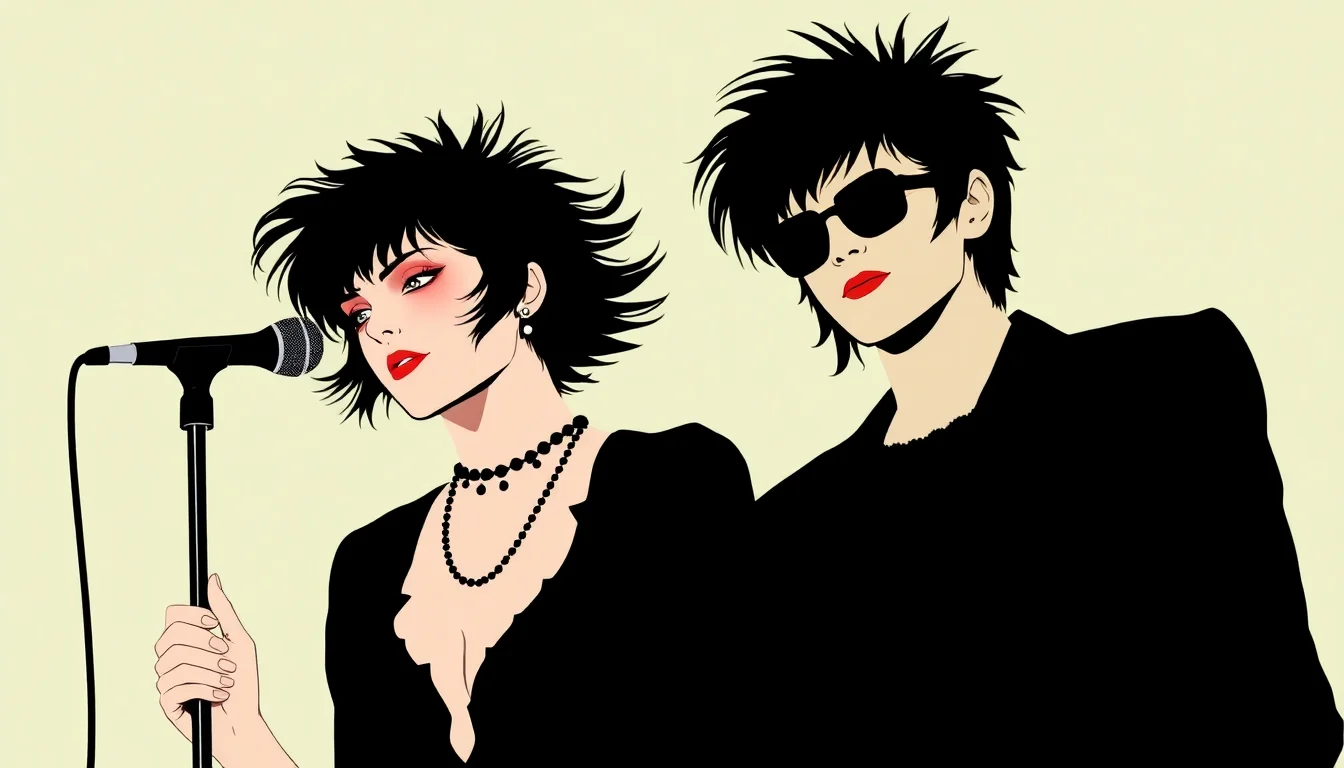
Siouxsie And The Banshees, fronted by the enigmatic Siouxsie Sioux, emerged from the London punk scene of the late 1970s to become one of the most influential and enduring bands in post-punk and gothic rock. Their sound evolved dramatically over their career, from the jagged, confrontational energy of their early work to the more atmospheric, art-rock-infused explorations of their later albums. The band's visual aesthetic, characterized by Siouxsie's distinctive style and the group's theatrical presentation, was as crucial to their impact as their music, cementing their status as pioneers of the gothic subculture.
Their discography is a testament to their relentless experimentation, spanning genres and defying easy categorization. From the proto-goth anthem "Spellbound" on Juju to the almost psychedelic pop of "Cities in Dust" from Tinderbox, Siouxsie And The Banshees consistently pushed boundaries. Their influence can be traced across generations of artists in alternative, indie, and gothic music, with their fearless approach to sound and image leaving an indelible mark on the cultural landscape. The band officially disbanded in 2017, but their sonic legacy continues to resonate powerfully.
Origins in Punk's Fury
Born from the ashes of the Sex Pistols' infamous 100 Club Punk Festival in 1976, Siouxsie And The Banshees' genesis was steeped in punk's raw, anti-establishment ethos. Initially, the lineup was fluid, but the core of Siouxsie Sioux (vocals) and Steven Severin (bass) quickly established a musical identity distinct from their punk contemporaries. Early gigs were often chaotic, reflecting a deliberate embrace of dissonance and experimentalism. Their debut album, The Scream (1978), released on Polydor Records, showcased a stark, angular sound that laid foundational elements for post-punk, with tracks like "Happy House" hinting at their future melodic sensibilities while retaining a palpable sense of unease. This era was heavily influenced by the confrontational art of Yoko Ono and the avant-garde explorations of The Velvet Underground.
Evolution and Gothic Ascendancy
The band's sound evolved significantly throughout the 1980s, marked by a series of acclaimed albums and a shifting lineup that consistently brought new textures to their music. The recruitment of Budgie on drums and John McGeoch on guitar for Juju (1981) is often cited as a pivotal moment. This album, featuring the iconic "Spellbound" and "Cities in Dust", became a cornerstone of gothic rock, blending Siouxsie's commanding vocals with intricate guitar work and propulsive rhythms. Subsequent albums like A Kiss in the Dreamhouse (1982) and Hyæna (1984) saw them incorporating more orchestral arrangements and diverse sonic palettes, pushing the boundaries of what was considered alternative music. Their work on Geffen Records in the US further expanded their reach, though their artistic integrity remained paramount.
Enduring Influence on Alternative Music
Siouxsie And The Banshees' legacy is profoundly felt across numerous musical genres and subcultures. Their pioneering blend of darkness, theatricality, and artistic innovation paved the way for countless gothic, industrial, and alternative rock bands. Artists as diverse as The Cure, Bauhaus, Joy Division, and Nine Inch Nails have cited them as a significant influence. Siouxsie Sioux herself remains an enduring icon, celebrated for her unwavering artistic vision, distinctive vocal delivery, and pioneering approach to female leadership in rock music. The band's visual presentation, from album artwork to stage costumes, also set a high bar for artistic expression within the music industry, influencing fashion and visual arts.
Cultural Impact and Gothic Archetype
The cultural impact of Siouxsie And The Banshees extends beyond their musical output. They were instrumental in defining the aesthetic and ethos of the gothic subculture, providing a soundtrack and visual template for a generation seeking an alternative to mainstream pop. Their music, often dealing with themes of alienation, the supernatural, and psychological introspection, resonated deeply with audiences who felt marginalized or misunderstood. The band's enduring appeal lies in their ability to remain true to their artistic vision while continually exploring new sonic territories, ensuring their relevance for decades. Their commitment to artistic integrity over commercial compromise serves as a powerful example in the music industry.
Key Facts
- Year
- 1976-2017
- Origin
- London, England
- Category
- music
- Type
- artist
Frequently Asked Questions
What was the original lineup of Siouxsie and the Banshees?
The original lineup consisted of Siouxsie Sioux on vocals, Steven Severin on bass, John McKay on guitar, and Kenny Morris on drums.
What was the band's most successful album?
The band's most successful album was Kaleidoscope (1980), which peaked at number 5 on the UK Albums Chart.
Who were some of the band's notable influences?
Siouxsie and the Banshees were influenced by a wide range of artists, including David Bowie, The Velvet Underground, and Kraftwerk.
What was the band's impact on the music industry?
Siouxsie and the Banshees had a significant impact on the music industry, influencing a wide range of bands and artists, including The Cure, Depeche Mode, and The Smiths.
What is the band's legacy today?
Siouxsie and the Banshees' legacy continues to be felt today, with their influence evident in a wide range of contemporary artists, including St. Vincent and Florence and the Machine.