
Contents
Overview
Slam algorithms, short for Simultaneous Localization and Mapping, represent a fundamental challenge in robotics and artificial intelligence: how can a system build a map of an unknown environment while simultaneously determining its own position within that map? This seemingly paradoxical problem, often likened to the chicken-and-egg dilemma, is tackled by a suite of sophisticated computational techniques. These algorithms are the silent navigators behind autonomous vehicles, drones, and advanced robotics, enabling them to perceive, understand, and move through the physical world. Without SLAM, true autonomy in complex, unmapped spaces would remain largely theoretical, confined to pre-defined paths or heavily surveyed environments. The ongoing development of SLAM is crucial for unlocking the full potential of intelligent machines in everything from industrial automation to virtual reality.
🎵 Origins & History
A significant breakthrough came with the application of Kalman filters and their variants, such as the Extended Kalman Filter (EKF), which provided a probabilistic framework for estimating both the robot's state (position and orientation) and the map's features simultaneously.
⚙️ How It Works
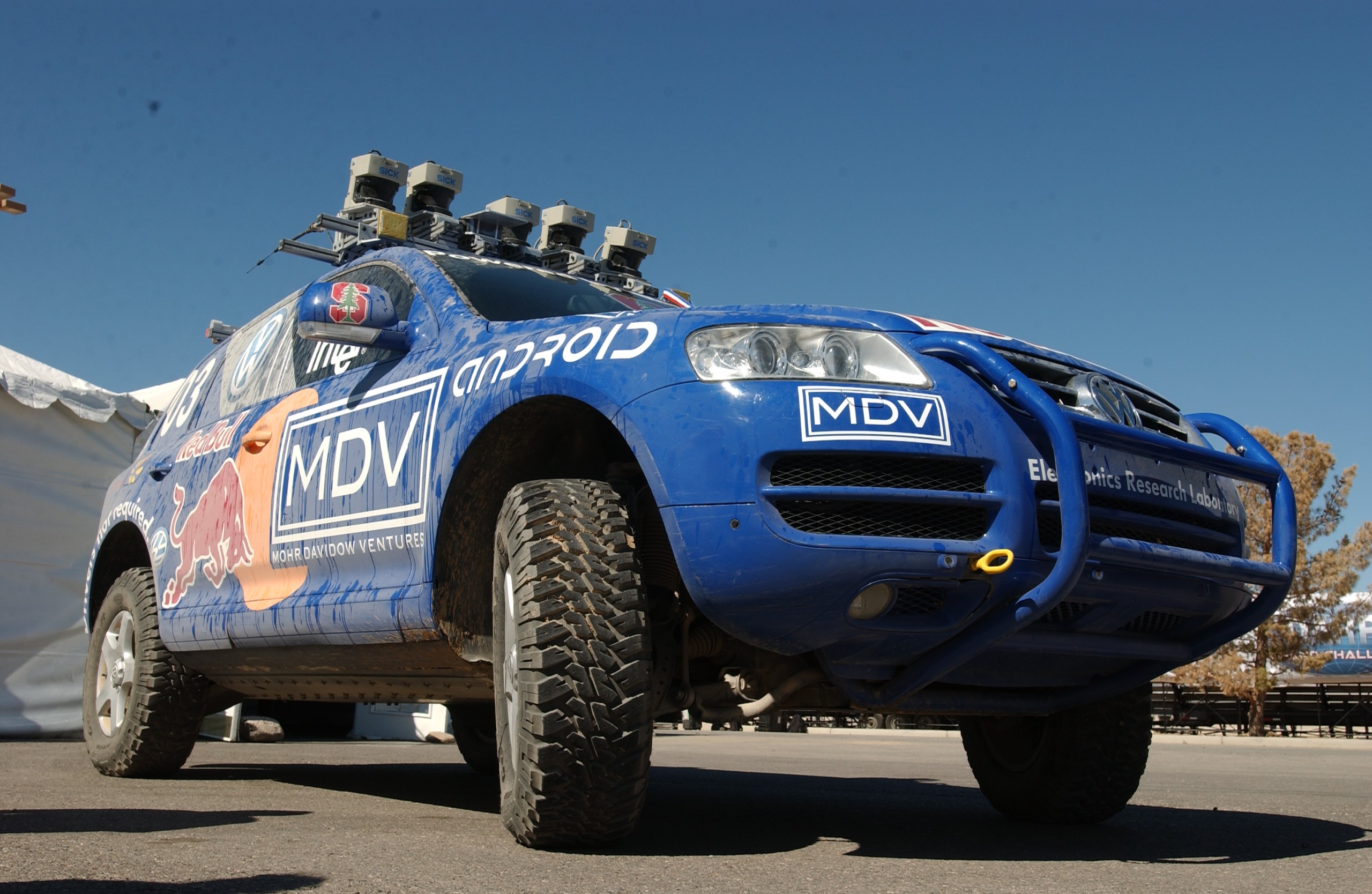
At its core, SLAM involves a continuous feedback loop between sensing the environment and updating the robot's internal state. A robot equipped with sensors like LiDAR, cameras, IMUs, or ultrasonic sensors gathers data about its surroundings. This data is then processed to identify distinct features or landmarks within the environment. Simultaneously, the robot's motion is estimated, often using odometry (tracking wheel rotations) or IMU data. The SLAM algorithm then uses this information to: 1) predict the robot's new position based on its motion, 2) update the map by incorporating new environmental features or refining existing ones, and 3) correct the robot's predicted position based on how well the observed features match the current map. This iterative process, often employing probabilistic methods like particle filters or Bayesian inference, allows the system to converge on a consistent map and accurate localization, even with noisy sensor data and imperfect motion estimates.
📊 Key Facts & Numbers
SLAM algorithms have profoundly reshaped how we interact with and perceive the physical world through technology. The ability of robots to navigate complex, unmapped industrial environments using SLAM has led to increased automation in manufacturing and logistics, impacting supply chains globally.
👥 Key People & Organizations
The current state of SLAM is characterized by rapid advancements in sensor fusion, deep learning integration, and real-time performance. Researchers are increasingly incorporating deep learning models, particularly convolutional neural networks (CNNs), to improve feature detection and robustness in challenging environments, moving beyond traditional geometric approaches. Visual-inertial SLAM (VI-SLAM), which combines data from cameras and IMUs, has become a dominant paradigm due to its accuracy and cost-effectiveness, powering many modern AR devices and drones. The development of collaborative SLAM, where multiple robots share map information to build a more comprehensive and accurate representation of an environment, is another active area of research, particularly for large-scale mapping.
🌍 Cultural Impact & Influence
One of the most persistent debates in SLAM revolves around the trade-off between accuracy and computational efficiency. While algorithms like GraphSLAM offer high accuracy, they can be computationally intensive, making them unsuitable for resource-constrained devices. Conversely, faster methods like EKF-SLAM can suffer from drift and inconsistency over time. Another controversy lies in the reliance on specific sensor modalities; for instance, camera-based SLAM can struggle in low-light conditions or featureless environments, while LiDAR can be expensive and bulky. The ethical implications of ubiquitous SLAM, particularly concerning privacy with devices constantly mapping their surroundings, also spark debate, raising questions about data ownership and surveillance. Furthermore, the robustness of SLAM in highly dynamic or adversarial environments remains a point of contention, with concerns about potential manipulation or failure modes.
⚡ Current State & Latest Developments
The future of SLAM is poised for even greater integration into our daily lives and industrial processes. Expect to see more sophisticated multi-robot SLAM systems enabling coordinated autonomous operations in warehouses, construction sites, and disaster response scenarios. The fusion of SLAM with Artificial General Intelligence (AGI) promises robots that not only map their environment but also understand and reason about it contextually, leading to more adaptable and intelligent autonomous agents. Advancements in event-based cameras and neuromorphic sensors could lead to SLAM systems that are far more energy-efficient and responsive. Furthermore, the continued miniaturization and cost reduction of high-precision sensors will make advanced SLAM capabilities accessible to a wider range of applications, from personal robotics to advanced medical imaging and navigation within the human body. The ultimate goal is to achieve seam
Key Facts
- Category
- technology
- Type
- topic