
Contents
Overview
The term 'apnea' itself, derived from the Greek 'apnoia' meaning 'want of breath,' gained traction much later. Their groundbreaking work, including studies published in the journal Chest, meticulously documented the physiological mechanisms and clinical consequences of airway collapse during sleep, establishing it as a significant medical condition requiring diagnosis and treatment.
⚙️ How It Works
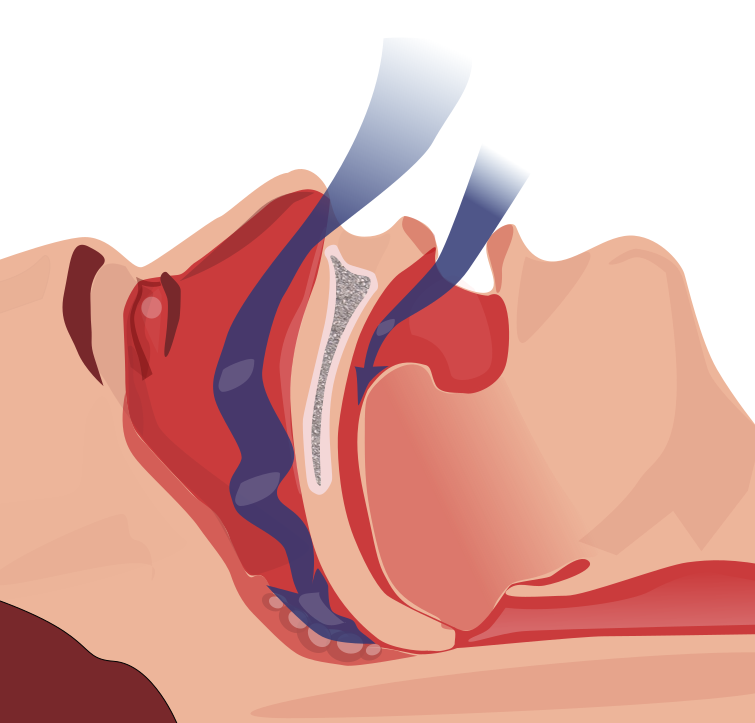
Mixed sleep apnea presents a combination of both obstructive and central events.
📊 Key Facts & Numbers
Symptoms often include loud snoring, daytime sleepiness, morning headaches, and difficulty concentrating.
👥 Key People & Organizations
Organizations like the National Sleep Foundation and the American Academy of Sleep Medicine (AASM) play crucial roles in setting diagnostic criteria, promoting research, and educating the public and medical professionals. Companies such as ResMed and Philips Respironics are major players in developing and manufacturing continuous positive airway pressure (CPAP) devices, the gold standard treatment for OSA.
🌍 Cultural Impact & Influence
Loud, disruptive snoring, a hallmark symptom, has long been a source of domestic discord and comedic fodder in films and television. The rise of sleep tracking devices, from Fitbit wearables to dedicated sleep studies, reflects a broader societal engagement with understanding and optimizing sleep.
⚡ Current State & Latest Developments
Telemedicine platforms are also expanding, allowing for remote consultations and management of sleep apnea patients, particularly those using CPAP therapy. Emerging treatments are exploring novel approaches beyond traditional CPAP, such as implantable devices that stimulate the hypoglossal nerve to keep the airway open, exemplified by Inspire Medical Systems. Research is also intensifying into the complex interplay between sleep apnea and other chronic conditions like Alzheimer's disease and heart failure, potentially revealing new therapeutic targets.
🤔 Controversies & Debates
One ongoing controversy centers on the optimal diagnostic thresholds and treatment indications, particularly for mild OSA. While the AASM has published guidelines, some argue they may lead to over-treatment, while others contend they are insufficient to capture all at-risk individuals.
🔮 Future Outlook & Predictions
The future of sleep apnea management points towards greater personalization and technological integration. Predictive analytics, leveraging AI and machine learning, are poised to identify individuals at high risk for sleep apnea based on genetic predispositions, lifestyle factors, and even subtle physiological cues detected by wearables. The development of 'smart' CPAP devices that automatically adjust pressure based on real-time breathing patterns and patient comfort is also on the horizon. Furthermore, research into the gut microbiome's influence on sleep regulation and breathing may unlock novel therapeutic avenues. We can anticipate a shift towards more integrated care models where sleep apnea management is seamlessly incorporated into broader chronic disease management plans, potentially reducing the incidence of associated cardiovascular and metabolic complications.
💡 Practical Applications
Sleep apnea has a wide range of practical applications and treatment modalities. The cornerstone of treatment for moderate to severe OSA is Continuous Positive Airway Pressure (CPAP) therapy, delivered via a mask worn during sleep, which keeps the airway open. Oral appliances, custom-fitted by dentists, reposition the jaw and tongue to prevent airway collapse and are often used for mild to moderate OSA or for patients intolerant to CPAP. Lifestyle modifications, such as weight loss, avoiding alcohol and sedatives before bed, and positional therapy (avoiding sleeping on one's back), are also crucial components of management. Surgical options, including uvulopalatopharyngoplasty (UPPP) and hypoglossal nerve stimulation, are considered for specific cases where other treatments have failed. Diagnosis typically involves polysomnography (a full sleep study) or home sleep apnea testing (HSAT).
Key Facts
- Category
- science
- Type
- topic