
Contents
Overview
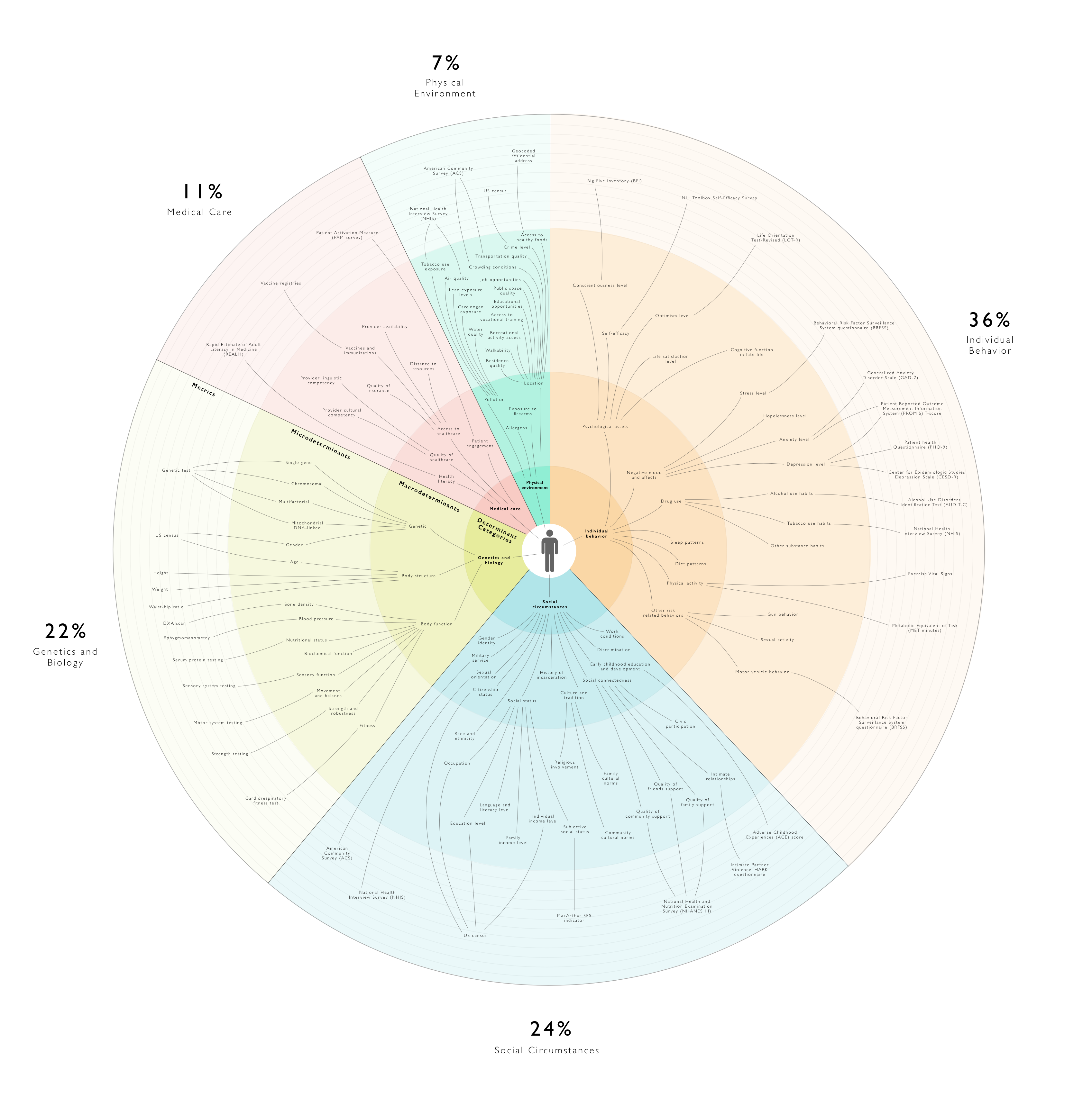
Social factors are the myriad environmental, cultural, and structural influences that shape individual behavior, group dynamics, and societal outcomes. These encompass everything from socioeconomic status and education levels to cultural norms, access to resources, and the built environment. They are not merely background noise; they are potent determinants of health, opportunity, and life trajectories, often operating at a subconscious level. Understanding social factors is crucial for analyzing everything from public health disparities, as highlighted by the WHO's focus on social determinants of health (SDOH), to the success of marketing campaigns and the efficacy of public policy. Their pervasive influence means that interventions in one area, such as economic policy, can have cascading effects across education, health, and community cohesion.
🎵 Origins & History
The formal study of social factors, though implicitly present in philosophical discourse for millennia, gained significant traction with the rise of sociology in the 19th century. Early sociologists like Émile Durkheim explored concepts like 'social facts' – ways of acting, thinking, and feeling external to the individual and endowed with a power of coercion. Thinkers like Max Weber further elaborated on the interplay between social action, economic conditions, and cultural values. This evolution reflects a growing understanding that individual choices are deeply embedded within broader social contexts.
⚙️ How They Operate
Social factors operate through a complex web of direct and indirect mechanisms. Direct influences include tangible resources like income, housing quality, and access to education or healthcare, which directly impact well-being and opportunity. Indirect influences are more subtle, encompassing cultural norms, social networks, community cohesion, and systemic biases such as racism or sexism. For instance, a neighborhood's 'built environment' – its parks, transportation, and availability of healthy food options – can influence physical activity levels and dietary habits. Similarly, social capital, the networks of relationships among people who live and work in a particular society, enabling that society to function effectively, can provide crucial support during times of crisis. The UN's Sustainable Development Goals (SDGs) implicitly acknowledge these interconnected factors by aiming to address poverty, inequality, and access to essential services.
📊 Key Facts & Numbers
Globally, over 700 million people still live on less than $2.15 a day, a stark indicator of economic instability's impact. In the United States, the CDC reports that individuals with lower socioeconomic status experience significantly higher rates of chronic diseases, with life expectancies differing by as much as 10 years between the wealthiest and poorest populations. Educational attainment is also a powerful predictor; individuals with a bachelor's degree earn, on average, 67% more over their lifetime than those with only a high school diploma, according to the BLS. Furthermore, studies by Pew Research Center indicate that over 90% of Americans believe that access to affordable healthcare is a major problem, underscoring the critical role of health system accessibility.
👥 Key Thinkers & Institutions
Key institutions and thinkers have shaped our understanding of social factors. Sociologists like Pierre Bourdieu introduced concepts like 'habitus' and 'cultural capital,' explaining how social class is reproduced through learned dispositions and acquired knowledge. The WHO has been instrumental in popularizing the term 'social determinants of health,' publishing extensive reports and frameworks. Organizations like the Robert Wood Johnson Foundation actively fund research and initiatives aimed at addressing health disparities rooted in social factors. In economics, scholars like Amartya Sen have emphasized the role of 'capabilities' – what people are actually able to do and be – as a measure of well-being, moving beyond mere income.
🌍 Cultural Impact & Influence
Social factors exert a profound influence on nearly every facet of human experience. They shape cultural trends, from the adoption of new technologies like TikTok to the enduring popularity of musical genres like hip-hop. In politics, social factors like demographic shifts and income inequality can drive electoral outcomes and fuel social movements, such as the Black Lives Matter movement. The way societies are structured – their legal systems, educational institutions, and media landscapes – all reflect and reinforce prevailing social factors. Even personal relationships and community bonds are deeply influenced by the social environments in which they are formed, impacting everything from mental health to civic engagement.
⚡ Current State & Latest Developments
The contemporary understanding of social factors is increasingly data-driven and interdisciplinary. Advances in big data analytics and AI are enabling researchers to map complex social networks and identify subtle correlations between social variables and outcomes with unprecedented precision. Initiatives like the UNICEF's focus on child poverty and the World Bank's efforts to measure multidimensional poverty highlight a global push to quantify and address social inequalities. The COVID-19 pandemic brought social factors like housing density, essential worker status, and access to remote work into sharp relief, accelerating research into their direct impact on health and economic stability.
🤔 Controversies & Debates
Debates surrounding social factors often center on causality and the balance of individual agency versus structural determinism. Critics sometimes argue that an overemphasis on social factors can excuse individual responsibility, while proponents contend that ignoring these factors leads to ineffective policies that fail to address root causes. There's also ongoing discussion about how to best measure and operationalize complex concepts like 'social capital' or 'cultural capital.' The precise weighting of different social determinants of health, for example, remains a subject of research, with ongoing debate about whether economic stability, education, or community context plays the most significant role in health disparities.
🔮 Future Outlook & Predictions
The future of understanding and addressing social factors will likely involve greater integration of data from diverse sources, including social media, urban planning data, and health records, to create more comprehensive models of societal influence. Predictive analytics may become more sophisticated in forecasting the impact of policy changes on social outcomes. There's also a growing focus on 'place-based' interventions, tailoring strategies to the specific social and economic conditions of particular communities. As global challenges like climate change and mass migration intensify, understanding and mitigating their differential social impacts will become even more critical for ensuring equitable futures.
💡 Practical Applications
Social factors have vast practical applications across numerous fields. In public health, understanding SDOH informs targeted interventions to reduce health disparities, such as programs providing access to healthy food in 'food deserts' or initiatives improving access to mental health services in underserved communities. In urban planning, insights into social factors guide the design of public spaces, transportation networks, and housing developments to foster community well-being and reduce inequality. Marketers use social factor analysis to understand consumer behavior and tailor advertising campaigns. Policymakers rely on this understanding to design effective social welfare programs, educational reforms, and economic development strategies.
Key Facts
- Category
- culture
- Type
- concept