
Contents
Overview
The study of soil color has roots stretching back to ancient observations of the earth's surface. Early agriculturalists and geologists recognized that different soils had distinct appearances. The development of standardized color charts, like the Munsell Soil Color Charts, introduced by Albert M. Munsel and later adapted for soil science by the U.S. Department of Agriculture (USDA) in the 1930s, allowed for reproducible descriptions and comparisons across different regions and research projects. The historical development of soil science, particularly the work of figures like Hans Jenny in the mid-20th century who emphasized the factors of soil formation (climate, organisms, relief, parent material, and time), provided the theoretical framework for understanding why soils develop these specific colors. Precursors to modern soil classification systems, such as those developed by Vasily Dokuchaev in Russia in the late 1800s, also implicitly recognized color as a key diagnostic property, even before formal colorimetric tools were widely available.
⚙️ How It Works
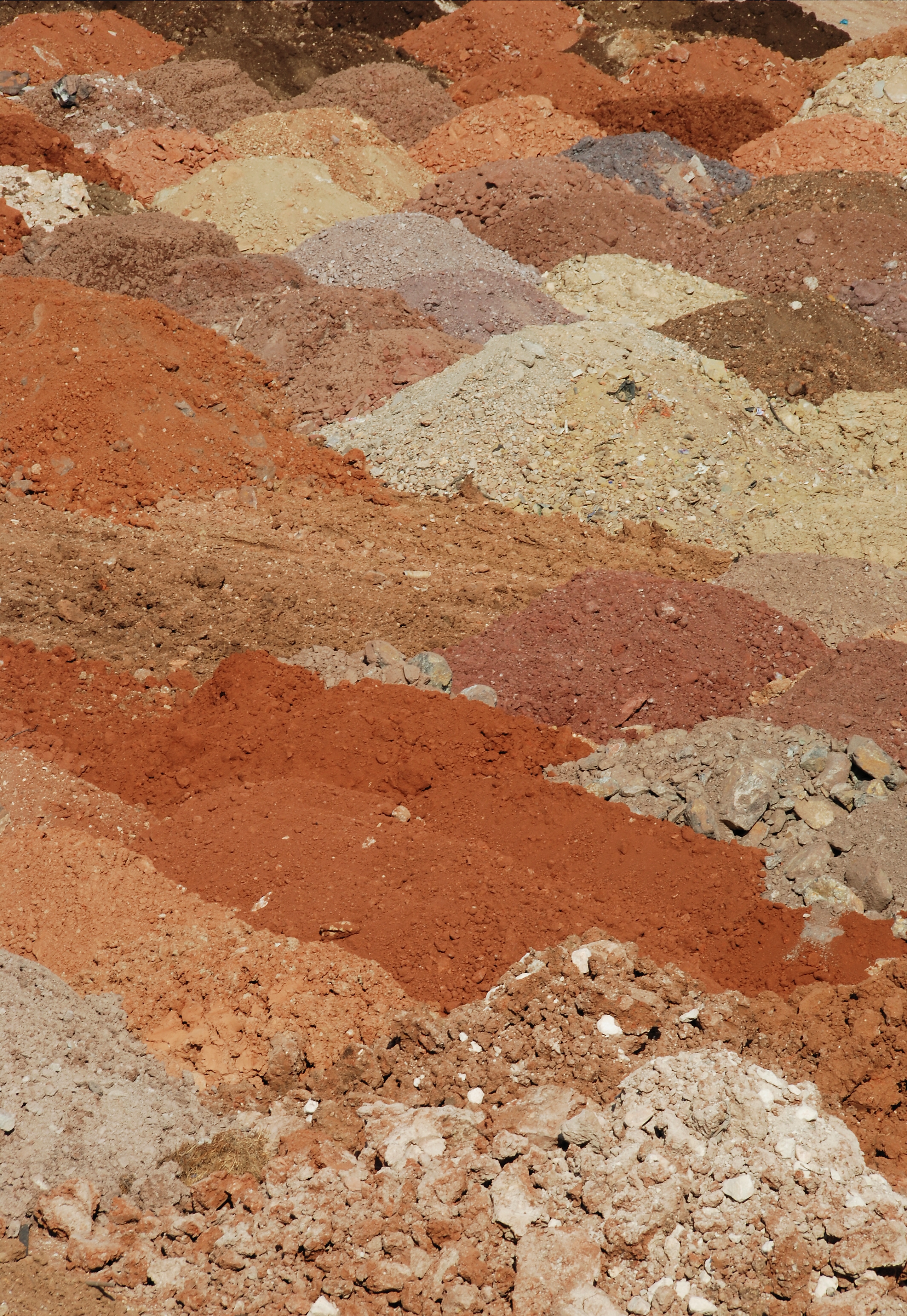
Soil color is primarily determined by the interplay of three main components: hue, value, and chroma, as defined by the Munsell system. Hue refers to the actual color (red, yellow, green, blue, purple), value indicates the lightness or darkness of the color (from black to white), and chroma measures the intensity or purity of the color (from neutral gray to a strong color). Iron oxides, particularly hematite (reds) and goethite (yellows), are dominant pigments responsible for soil color under oxidizing conditions. Organic matter from decomposed plant and animal residues imparts dark colors, typically black or very dark brown, especially in surface horizons. Clay minerals can influence the value and chroma, often making colors appear duller. In waterlogged or anaerobic conditions, iron can be reduced to a soluble, colorless form (ferrous iron), leading to gray or bluish-gray colors, often with distinct mottles of oxidized iron (red or yellow spots) indicating fluctuating water tables. Other minerals, like manganese oxides, can create black or dark brown coatings, and high concentrations of calcium carbonate or soluble salts can appear as white masses or coatings.
📊 Key Facts & Numbers
Globally, soil color varies immensely, but certain colors are more prevalent in specific environments. For instance, soils rich in organic matter, such as Mollisols and Histosols, often exhibit very dark colors. In contrast, arid and semi-arid regions often feature soils with lighter colors (high value, low chroma) due to lower organic matter and the prevalence of mineral dusts and salts. The depth of color penetration can also be significant; some tropical soils show red coloration extending tens of meters below the surface, indicating deep weathering processes.
👥 Key People & Organizations
While no single individual is solely credited with "discovering" soil color, several figures have been instrumental in its scientific understanding and application. Albert M. Munsel (1858-1915), an artist and inventor, developed the Munsell color system, which became the foundational tool for standardized soil color description. His work was later adapted for soil science by researchers at the U.S. Department of Agriculture (USDA), particularly through the efforts of soil scientists like Roy W. Simonson and his colleagues who were involved in developing the first Munsell Soil Color Charts in the 1930s. The foundational work of Vasily Dokuchaev (1845-1903) in Russia, often called the father of soil science, laid the groundwork for understanding soils as distinct natural bodies, with color being a primary observable characteristic. Modern soil scientists, such as those at institutions like the University of Wisconsin-Madison and the Cornell University, continue to refine our understanding of how soil color relates to pedogenesis and soil properties, often collaborating with international bodies like the International Union of Soil Sciences (IUSS).
🌍 Cultural Impact & Influence
Soil color has permeated human culture and language for millennia, often serving as a metaphor for fertility and the earth itself. The deep black of fertile prairie soils, for example, became synonymous with agricultural wealth in regions like the North American Great Plains and Ukraine's Chernozem belt, influencing settlement patterns and agricultural economies. Red soils have been used as pigments for dyes, paints, and pottery since prehistoric times, with archaeological evidence of their use found in sites across Europe, Africa, and Asia. The association of certain soil colors with specific land uses is deeply ingrained; for instance, the term 'terra rossa' (red earth) is used in Mediterranean regions to describe soils often associated with vineyards and olive groves. In literature and art, soil color can evoke a sense of place, history, and the fundamental connection between humanity and the land, from the 'red dirt' of the Australian Outback to the 'black earth' of Russian literature. The visual contrast between different soil colors has also played a role in landscape aesthetics and land management practices, influencing everything from garden design to large-scale agricultural planning.
⚡ Current State & Latest Developments
Current research in soil color is increasingly leveraging advanced technologies for more precise and efficient analysis. Remote sensing and GIS are being used to map soil color variations across vast landscapes, aiding in precision agriculture and environmental monitoring. Spectrophotometry and digital image analysis are providing objective, quantitative measurements of soil color, moving beyond the subjective visual assessment of charts. Researchers are also exploring the use of soil color as a proxy for soil health indicators, such as carbon sequestration potential and microbial activity. For example, studies published in journals like the Geoderma and the Soil Science Society of America Journal in 2023 and 2024 are investigating the correlation between specific soil color parameters and the presence of beneficial soil microbes or the degree of soil degradation. The development of portable, automated soil color sensors is also a growing trend, promising faster on-site assessments for farmers and environmental consultants.
🤔 Controversies & Debates
One of the primary debates surrounding soil color is the extent to which it can be used as a sole indicator for complex soil properties. While color is a strong indicator of iron oxides and organic matter, its interpretation can be confounded by factors like parent material composition, mineralogy, and the presence of other coloring agents. For instance, a dark color might indicate high organic matter, but it could also be due to high concentrations of dark-colored minerals like biotite or hornblende. Similarly, red colors, while often associated with well-drained, fertile soils, can also occur in highly weathered, nutrient-poor soils. Another point of conten
Key Facts
- Category
- nature
- Type
- topic