
Contents
Overview
The genesis of the Lockheed U-2 can be traced back to 1953 when Lockheed Corporation, under the leadership of Clarence "Kelly" Johnson and his famed "Skunk Works" division, began conceptualizing a high-altitude reconnaissance aircraft. The U.S. Air Force and the Central Intelligence Agency (CIA) were seeking a plane capable of flying above 70,000 feet to gather intelligence on the Soviet Union and other communist nations. The initial proposal was approved in 1954, and the first prototype, Article 341, made its maiden flight on August 1, 1955, at Groom Lake, Nevada, an event that was initially intended as a high-speed taxi test but became an unexpected first flight due to the aircraft's efficient wing design. This marked the beginning of a program that would significantly shape aerial reconnaissance, with production continuing until 1989.
⚙️ Operational History & Key Missions
The U-2's operational history is deeply intertwined with the Cold War. Between 1956 and 1962, U-2 aircraft conducted critical covert reconnaissance missions over the Soviet Union, China, Vietnam, and Cuba, providing invaluable imagery intelligence. The most infamous incident occurred on May 1, 1960, when CIA pilot Francis Gary Powers was shot down over Soviet airspace, leading to the cancellation of the Paris Summit and significant diplomatic fallout between the United States and the USSR. Despite this, the U-2 continued to be vital, notably confirming the presence of Soviet missiles in Cuba during the Cuban Missile Crisis in 1962. The aircraft has also seen service in post-Cold War conflicts and supported various scientific endeavors, including atmospheric research for NASA.
🌍 Design & Capabilities
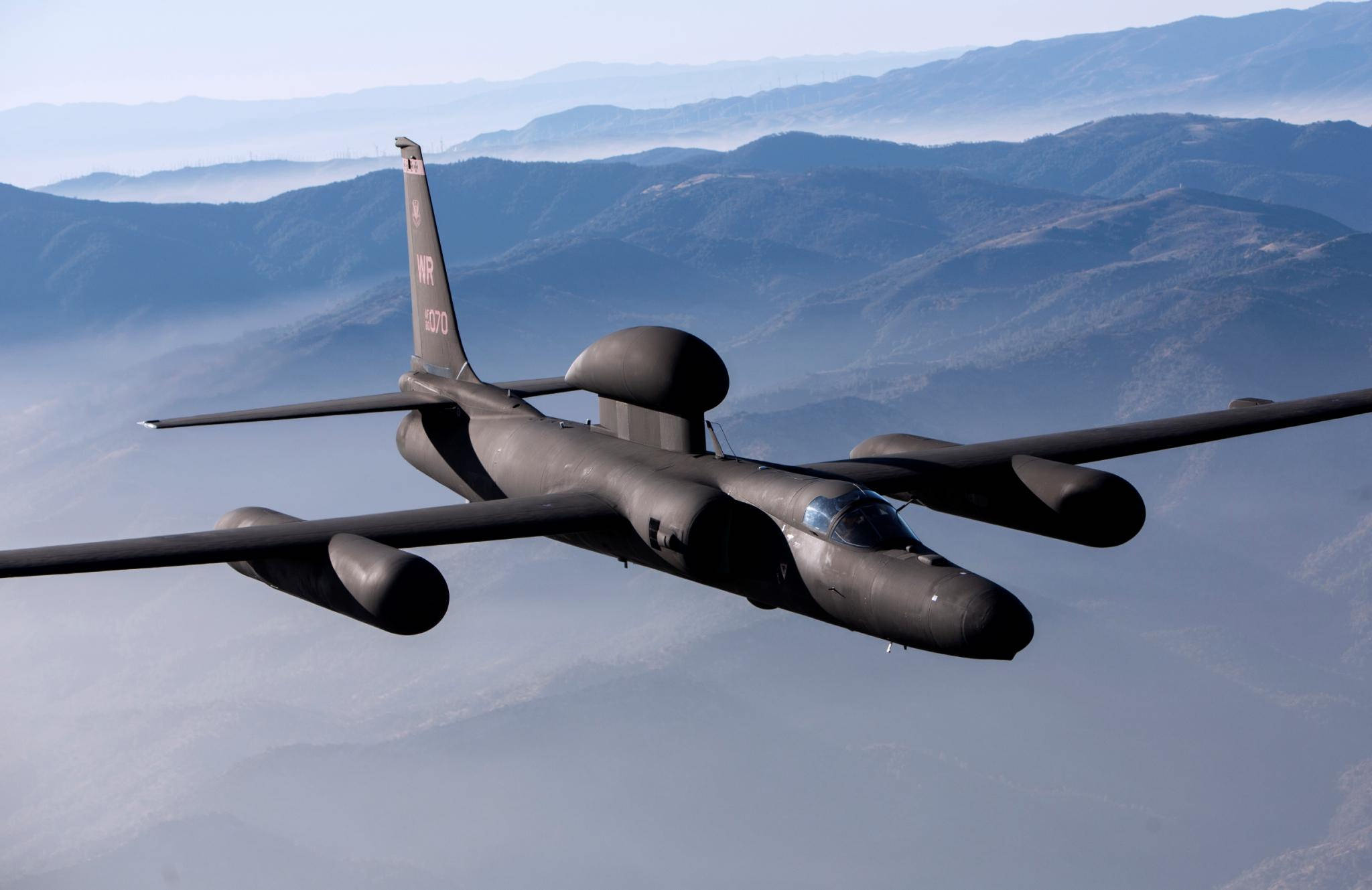
The Lockheed U-2 is characterized by its distinctive long, wide, straight wings, which give it glider-like characteristics and enable sustained high-altitude flight. Powered by a single General Electric F118-101 engine, it is designed for all-weather, day-and-night intelligence gathering. The U-2 can carry a variety of sophisticated sensors and cameras, including electro-optic, infrared, and synthetic aperture radar systems, capable of transmitting data in near real-time. Due to its high-altitude operations, pilots must wear a full pressure suit, similar to those used by astronauts. The aircraft's challenging handling characteristics, particularly during landing, have earned it the reputation of being one of the most difficult aircraft to fly, often requiring a chase plane for assistance.
🔮 Legacy & Evolution
The U-2, nicknamed the "Dragon Lady," has proven to be an exceptionally enduring platform, with some models still in service today, over 70 years after their first flight. Its continuous upgrades, such as the U-2S Block 10 electrical system, have kept it relevant. The aircraft's role has evolved from primarily strategic reconnaissance during the Cold War to supporting tactical surveillance and scientific research. Its legacy is cemented as one of the most iconic and successful spy planes ever built, influencing subsequent generations of intelligence-gathering aircraft and technologies, and demonstrating remarkable longevity alongside other long-serving aircraft like the Boeing B-52 and Lockheed C-130.
Key Facts
- Year
- 1955-present
- Origin
- United States
- Category
- technology
- Type
- technology
Frequently Asked Questions
When did the Lockheed U-2 first fly?
The first prototype of the Lockheed U-2 made its initial flight on August 1, 1955, at Groom Lake, Nevada.
What is the U-2 aircraft's nickname?
The Lockheed U-2 is famously nicknamed the "Dragon Lady."
What was the significance of the 1960 U-2 incident?
The U-2 incident in 1960, where pilot Francis Gary Powers was shot down over the Soviet Union, led to the collapse of the Paris Summit between President Eisenhower and Premier Khrushchev, significantly escalating Cold War tensions.
How high can the U-2 aircraft fly?
The U-2 is designed for high-altitude reconnaissance, routinely flying above 70,000 feet (21,300 meters).
Who designed the U-2?
The U-2 was designed by Clarence "Kelly" Johnson and his team at Lockheed Corporation's "Skunk Works" division.
References
- en.wikipedia.org — /wiki/Lockheed_U-2
- af.mil — /About-Us/Fact-Sheets/Display/Article/104560/u-2stu-2s/
- britannica.com — /technology/U-2
- irp.fas.org — /program/collect/u-2.htm
- airandspace.si.edu — /collection-objects/lockheed-u-2c/nasm_A19820380000
- nationalmuseum.af.mil — /Visit/Museum-Exhibits/Fact-Sheets/Display/Article/197565/dragon-lady-the-u-2-an
- lyonairmuseum.org — /blog/brief-history-u-2-spy-plane-program/
- history.state.gov — /milestones/1953-1960/u2-incident