
Contents
Overview
The roots of the US prison system stretch back to colonial times, evolving from rudimentary jails focused on holding individuals awaiting trial or punishment to more structured penitentiaries. The Quaker-influenced Pennsylvania system, emerging in the late 18th century, championed solitary confinement and penitence as reformative tools, exemplified by the Eastern State Penitentiary opened in 1829. The Auburn system, developed concurrently, favored congregate labor during the day and silent confinement at night. The 20th century saw shifts towards rehabilitation and then, beginning in the 1970s, a dramatic surge driven by the 'War on Drugs' and 'tough on crime' policies. This era, marked by mandatory minimum sentencing and 'three-strikes' laws, led to an unprecedented expansion of the incarcerated population, a phenomenon often termed 'mass incarceration,' significantly influenced by figures like President Richard Nixon and his administration's policies.
⚙️ How It Works
The US prison system operates on a dual federal and state model, with each jurisdiction maintaining its own correctional facilities and policies. Federal prisons, managed by the Federal Bureau of Prisons (BOP), house individuals convicted of federal crimes. State prison systems, governed by individual state departments of corrections, manage the vast majority of incarcerated individuals convicted of state-level offenses. Local jails, operated by county sheriff's departments, typically hold individuals awaiting trial, serving short sentences, or awaiting transfer to state or federal facilities. Private prison corporations, such as CoreCivic and GEO Group, also play a significant role, contracting with governments to operate facilities, a model that has drawn considerable scrutiny.
📊 Key Facts & Numbers
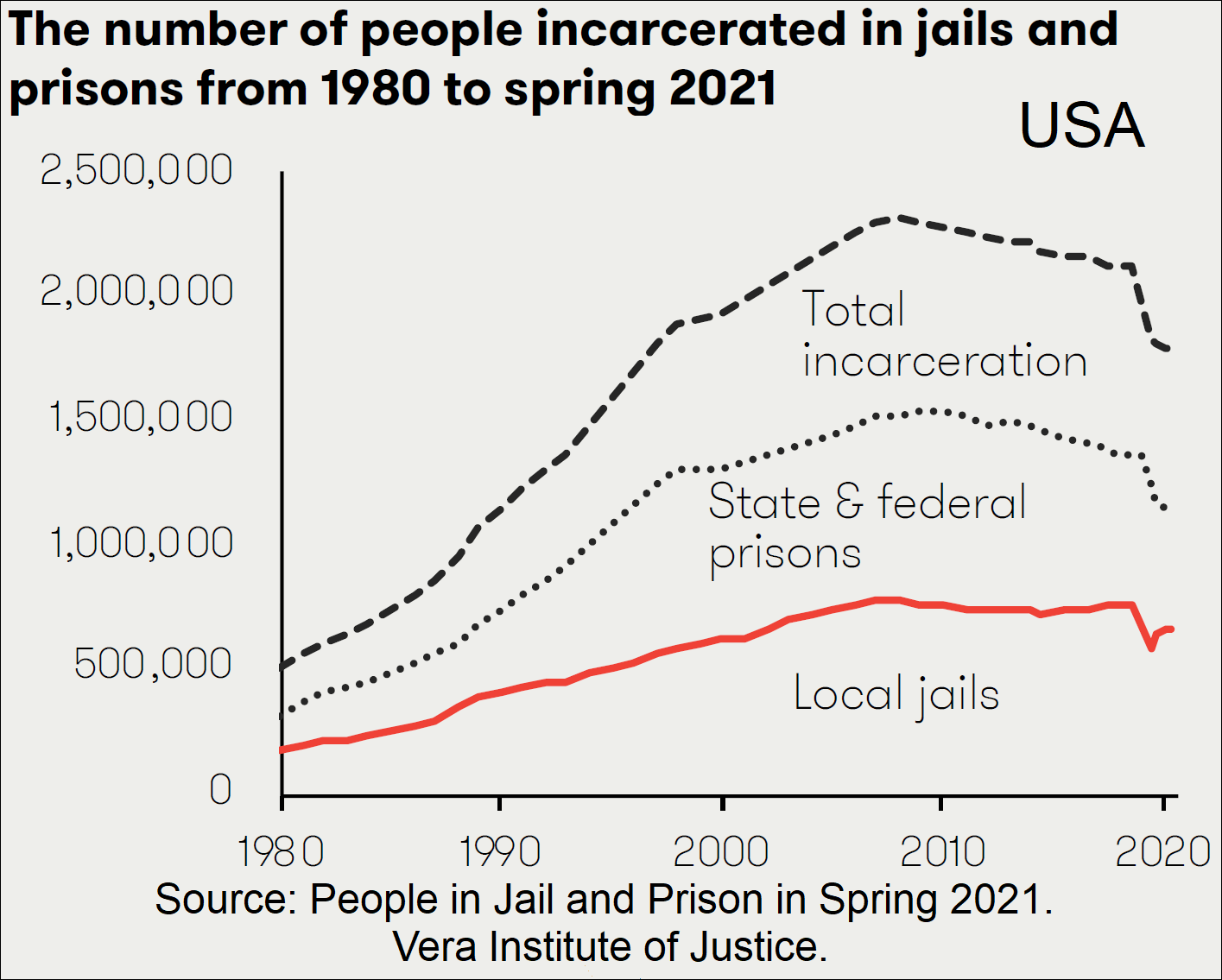
The United States incarcerates a large number of people. This population is distributed across federal prisons, state prisons, and local jails. Drug offenses and violent offenses are significant factors contributing to incarceration. The economic cost is staggering, with annual spending on corrections being substantial. Despite a decline in the incarcerated population in recent years, the scale remains immense.
👥 Key People & Organizations
Key figures and organizations have profoundly shaped the US prison system. Theodore Roosevelt signed the act creating the Federal Bureau of Prisons (BOP). Presidents like Richard Nixon and Ronald Reagan championed 'tough on crime' policies that fueled mass incarceration. Advocacy groups such as the American Civil Liberties Union and The Sentencing Project have been instrumental in pushing for reform and highlighting systemic issues. Organizations like CoreCivic and GEO Group represent the significant private prison industry, while academic researchers like Michelle Alexander, author of "The New Jim Crow," have provided critical analysis of its racial implications.
🌍 Cultural Impact & Influence
The US prison system has deeply permeated American culture, influencing literature, film, and public discourse. Narratives of crime and punishment, often sensationalized, shape public perception and policy. The disproportionate incarceration of minority groups, particularly Black Americans, has led to discussions about systemic racism and its historical parallels, as articulated by scholars like Michelle Alexander. The sheer number of people cycling through the system, and their subsequent reintegration challenges, impacts families and communities nationwide, creating a pervasive social and economic undercurrent. The aesthetic of prison itself, from the stark architecture to the uniforms, has become a recognizable cultural trope in media.
⚡ Current State & Latest Developments
In recent years, the US prison system has seen a notable, albeit gradual, decline in its incarcerated population, a trend attributed to a combination of bipartisan reform efforts, sentencing reform initiatives, and shifting public attitudes. States like California and New York have implemented significant policy changes aimed at reducing recidivism. However, challenges persist, including ongoing debates over private prisons, the impact of solitary confinement, and the persistent racial disparities within the system. The COVID-19 pandemic also highlighted vulnerabilities within correctional facilities, prompting some temporary releases and increased focus on public health within prisons.
🤔 Controversies & Debates
The US prison system is a subject of controversy, most notably concerning its scale and racial disparities. Critics argue that 'mass incarceration' is a form of social control, disproportionately affecting minority communities and perpetuating cycles of poverty and crime, a viewpoint powerfully articulated by Michelle Alexander. The role of private prison corporations, driven by profit motives, is also heavily debated, with concerns about their influence on policy and potential for incentivizing higher incarceration rates. The use of solitary confinement, the effectiveness of rehabilitation programs, and the conditions of confinement are also subjects of ongoing ethical and legal challenges, with organizations like the American Civil Liberties Union frequently litigating these issues.
🔮 Future Outlook & Predictions
The future of the US prison system is likely to be shaped by ongoing reform movements and evolving societal views on justice. Projections suggest a continued decrease in incarceration rates if current reform trends persist, potentially driven by further sentencing reforms and increased investment in diversion programs and community-based alternatives. There is growing interest in restorative justice models, which focus on repairing harm rather than solely on punishment. However, political shifts and potential 'tough on crime' resurgences could also impact these trajectories. The role of technology, from surveillance to rehabilitation tools, will also likely evolve, presenting new opportunities and ethical considerations for correctional facilities and the Department of Justice.
💡 Practical Applications
While primarily a punitive institution, aspects of the US prison system have practical applications and implications beyond incarceration itself. The development of correctional technologies, such as advanced surveillance systems and inmate management software, has found applications in other security-focused industries. Research conducted within correctional settings, though ethically complex, has contributed to understanding criminal behavior and recidivism. Furthermore, the sheer scale of the system has created a substantial economic sector, encompassing private prison management, security services, and the supply chain for correctional facilities, influencing industries far beyond direct law enforcement. The data generated by the system also informs criminological research and policy development.
Key Facts
- Category
- culture
- Type
- concept